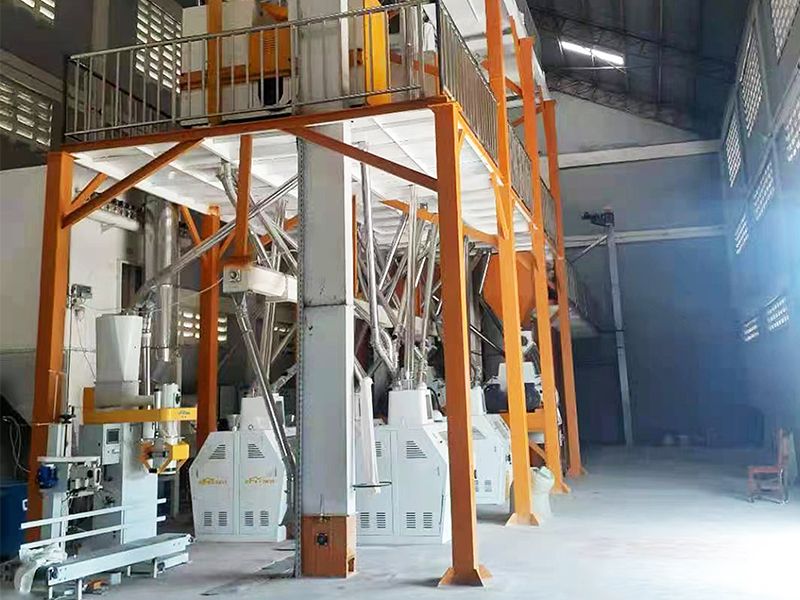
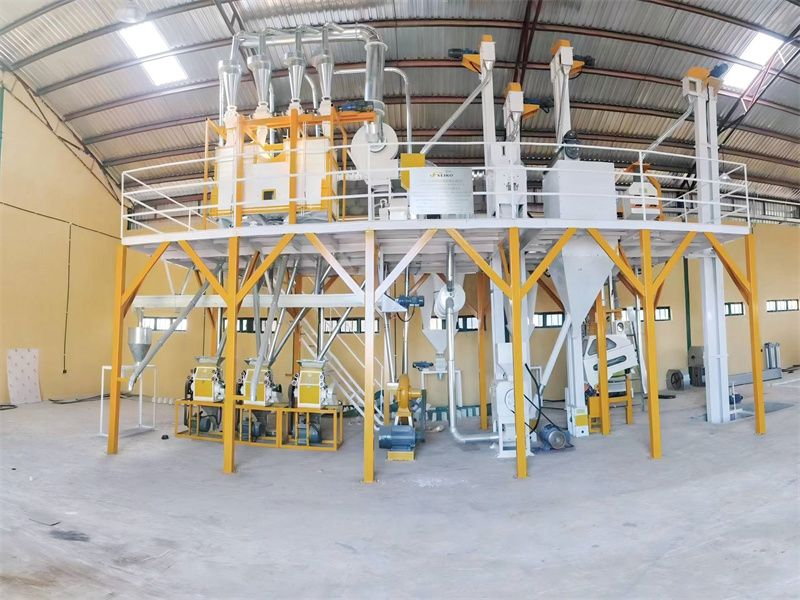
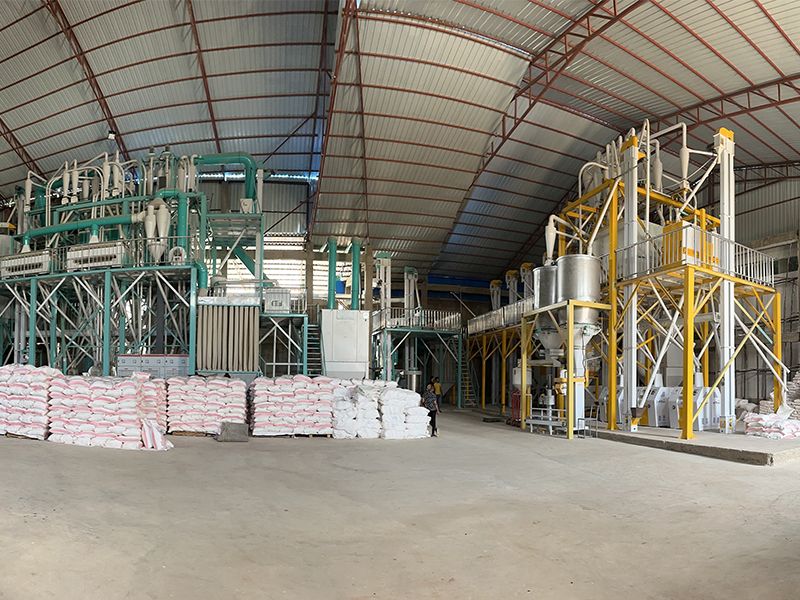
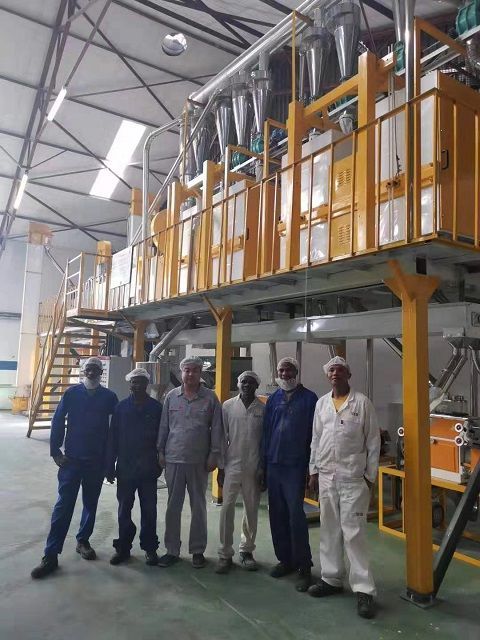
A stable moisture profile is one of the most important production controls in a 100TPD Wheat Flour Mill Plant. When raw wheat enters the cleaning and milling line with uneven moisture—such as 11% in one batch and 13% in another—the mill does not receive a consistent raw material, even if the wheat variety and supplier remain unchanged. This variation changes kernel hardness, bran toughness, endosperm friability, roller-mill load, tempering time, flour extraction rate, ash content, and final flour moisture. In a 100-ton-per-day operation, a 1-percentage-point moisture difference can represent approximately 1 tonne of water across 100 tonnes of wheat. If the issue is ignored, the result may be unstable flour quality, higher energy consumption, rework, customer claims, and avoidable losses every production day. That is why Why Consistent Raw Wheat Moisture Matters in a 100TPD Flour Mill is not a theoretical question—it is a direct production and profitability issue.
!
At Xingfeng, we treat wheat moisture as a process variable rather than a simple receiving inspection figure. Moisture must be measured, corrected, distributed through tempering, and verified before milling.
The objective is not to force every wheat type to one universal moisture value. The correct target depends on:
For many common milling applications, wheat may be conditioned toward an approximate moisture range of 14%–17%, but the actual set point should be established through laboratory testing and pilot or production trials. A hard wheat normally requires different conditioning treatment from soft wheat.
Consistent moisture does not mean every kernel has exactly the same moisture content. In an industrial mill, it means:
This control sequence is essential for a stable 100TPD Wheat Flour Mill Plant, especially when the mill operates multiple shifts and serves bakeries, noodle manufacturers, or food processors with strict specifications.
Wheat harvested in a dry region may arrive at a lower moisture level than wheat harvested during humid weather. Even wheat from the same country can show significant differences because of:
A purchasing team may focus on protein, test weight, or price while overlooking moisture distribution. However, moisture affects how those other quality parameters behave during milling.
Moisture migration can occur inside a silo or warehouse. Warmer grain may move moisture toward cooler areas, creating localized wet zones and dry zones. Poor aeration, condensation, roof leakage, and inadequate stock rotation can further increase variation.
Common warning signs include:
If operators sample only one point, they may receive a misleading result. Representative sampling from different locations and lots is necessary.
Moisture meters can produce inconsistent readings when:
For reference, laboratory moisture procedures may be aligned with recognized methods such as ISO 712 or applicable AACC International methods. The selected method should match local regulations, customer specifications, and the laboratory’s quality system. A handheld meter is useful for fast control, but periodic comparison with a validated reference method is good practice.
Water addition is commonly calculated using the formula:
[ W = \frac{M_t - M_i}{100 - M_t} \times G ]
Where:
For example, if 10,000 kg of wheat at 12.5% moisture must be conditioned to 16.0%:
[ W = \frac{16.0 - 12.5}{100 - 16.0} \times 10,000 ]
The theoretical addition is approximately 417 kg of water, before considering equipment accuracy, evaporation, and actual moisture absorption.
However, adding the correct volume of water does not guarantee correct conditioning. The grain must also receive enough residence time and mixing intensity for moisture to migrate through the bran and endosperm.
During the break system, the objective is to open the wheat kernel while keeping bran in large, recoverable pieces. Properly conditioned wheat generally supports:
If wheat is too dry, bran can become brittle and fragment into fine particles. These particles may contaminate flour with higher ash and darker color. If wheat is excessively wet or unevenly tempered, the kernel may resist grinding, creating unstable break release and increased roller load.
The reduction system is designed to grind purified semolina and middlings into flour. Inconsistent upstream conditioning changes the particle-size distribution entering the reduction passages.
This may result in:
A flour mill can have correctly aligned roller mills and sifters, but still deliver inconsistent output if the wheat conditioning system is poorly controlled.
Moisture variation can influence:
For example, a mill may temporarily achieve a high extraction rate by increasing tail flour recovery, but the additional bran contamination can make the flour unsuitable for a premium customer. Conversely, excessive removal of bran may reduce total saleable flour and increase by-product losses.
A 100TPD mill processes a substantial volume every day. Even a small percentage of instability becomes financially significant when multiplied by continuous operation.
| Moisture-related factor | Possible production effect |
|---|---|
| Wheat processed | 100 tonnes/day |
| 1% moisture difference | Approximately 1 tonne of water across the wheat mass |
| Operating schedule | 8,000–9,000 tonnes/year at 80–90 operating days per 100 days |
| Main risks | Extraction loss, rework, energy variation, customer complaints |
| Control objective | Stable moisture before first break and stable flour specification |
The 1-tonne figure is a mass-balance illustration, not a claim that 1 tonne of water becomes product or loss. Actual results depend on evaporation, tempering efficiency, by-product separation, and flour moisture. Nevertheless, it shows why moisture control deserves management attention.
When the conditioning process is inconsistent, a mill may face:
For an export-oriented milling project, inconsistent quality can also weaken buyer confidence. Customers often evaluate not only laboratory results but also lot-to-lot repeatability. A stable specification is a commercial advantage.
Before unloading, the quality team should record:
Sampling should be representative of the entire lot rather than a single surface sample.
Where possible, wheat should be stored by compatible quality and moisture characteristics. Mixing very dry wheat with high-moisture wheat without a controlled blending plan can make the average value appear acceptable while leaving the kernel distribution uneven.
A controlled blending system is preferable to uncontrolled mixing in a silo.
The dampening system should provide:
Water addition accuracy should be checked regularly. A practical quality program may include documented verification at defined intervals, with corrective action when deviation exceeds the mill’s internal tolerance.
Tempering time varies according to wheat hardness, moisture difference, temperature, and process design. Hard wheat may require longer conditioning than soft wheat. The tempering bin should provide adequate residence time and first-in-first-out movement.
Operators should avoid relying only on clock time. The final decision should also consider kernel behavior, moisture test results, and flour performance.
Before the first break, the laboratory and production team should compare:
This closed-loop approach helps operators correct the process before a full shift of off-specification flour is produced.
Consider a representative 100TPD mill—not a guaranteed Xingfeng production result—that receives wheat varying between 12.0% and 14.0% moisture.
If the mill uses one fixed water-addition setting based on an average value, several problems can develop:
Assume the mill loses only 0.5% of saleable flour yield because of unstable separation. On 100 tonnes of wheat per day, that equals approximately 0.5 tonne of flour per day. The financial impact depends on local flour prices, by-product value, operating days, and whether the lost material is downgraded or discarded. Over a year, even a small yield reduction can exceed the cost of improving moisture measurement, dosing, and tempering control.
The lesson behind Why Consistent Raw Wheat Moisture Matters in a 100TPD Flour Mill is that the loss often appears gradually. It may not look like a single equipment failure, but the cumulative effect can be substantial.
Moisture control should be connected to a documented quality-management system. Depending on the market and contract, a flour mill may reference:
These standards do not replace process control. They provide a consistent basis for testing and reporting.
At Xingfeng, a practical commissioning and after-sales plan should clearly define:
Equipment accuracy claims should always be confirmed against the selected model, operating conditions, and final inspection records. A professional supplier should also provide documented testing rather than relying only on marketing language.
Ignoring moisture variation can lead to:
As customer requirements become stricter, buyers may reject flour that does not meet agreed limits. The mill may then need to discount, reblend, reprocess, or dispose of affected stock.
This risk becomes greater when a company changes its business model—for example:
A moisture-control system designed only for today’s operation may become inadequate after expansion.
Excessively wet grain can increase the risk of heating, mold development, and storage deterioration if not managed correctly. Moisture alone does not determine safety, but it is a critical factor in grain stability. Inadequate monitoring can turn a quality issue into a food safety and inventory problem.
We recommend that operators of a 100TPD Wheat Flour Mill Plant implement the following checklist:
The central message of Why Consistent Raw Wheat Moisture Matters in a 100TPD Flour Mill is simple: moisture consistency protects yield, equipment performance, flour quality, and customer relationships at the same time. A 100TPD operation cannot rely on visual inspection or one average moisture reading. It needs representative sampling, accurate dampening, sufficient tempering, laboratory verification, and disciplined process records.
When planning or upgrading a 100TPD Wheat Flour Mill Plant, we encourage buyers to discuss wheat moisture ranges, conditioning targets, tempering capacity, control instruments, testing procedures, and after-sales support with Xingfeng before finalizing the process design. Taking action at the intake and conditioning stages is far less expensive than correcting off-specification flour after milling has already taken place.

August. 08, 2024
How to Use Wheat Flour Mill Plant Correctly?
This article provides a comprehensive guide on how to use a wheat flour mill plant correctly.

March. 03, 2026

June. 06, 2025

February. 02, 2024

July. 07, 2024

January. 01, 2024