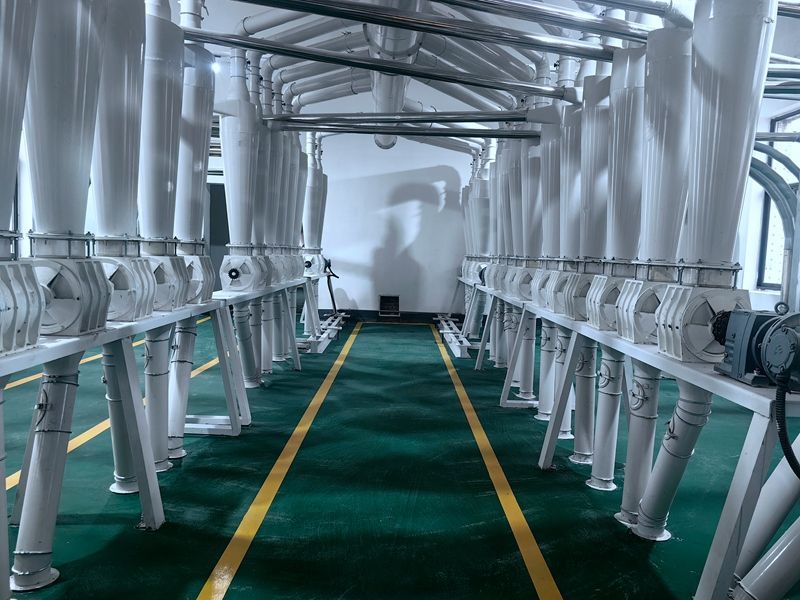
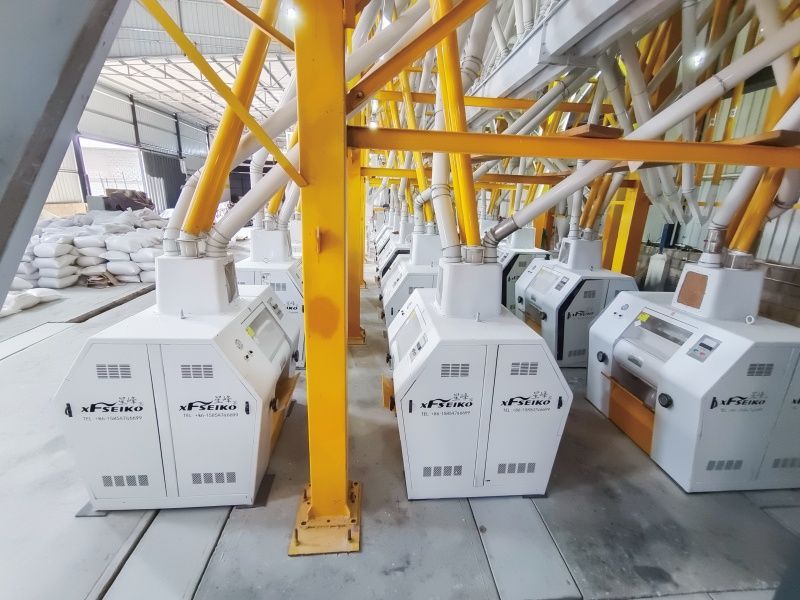
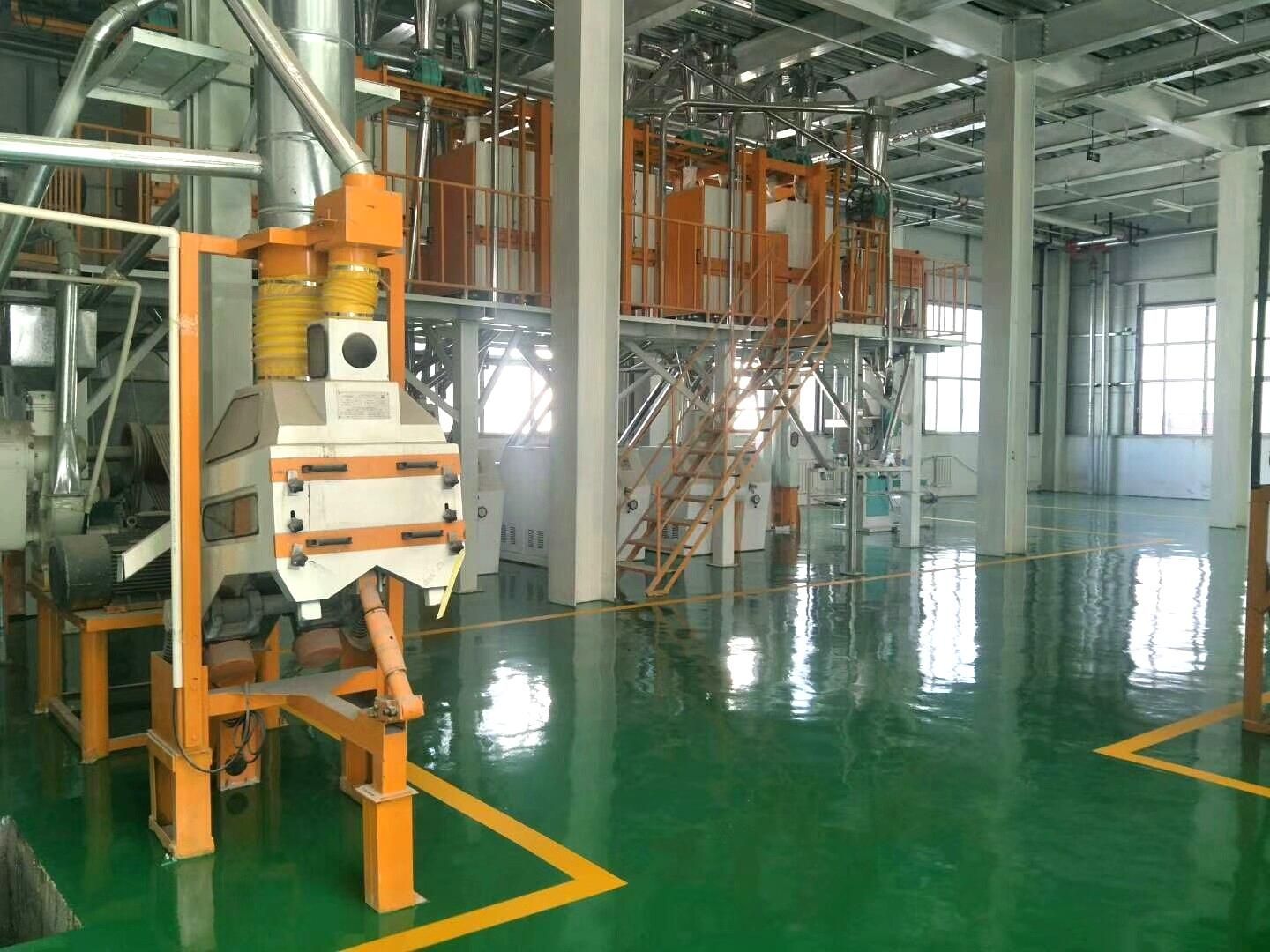
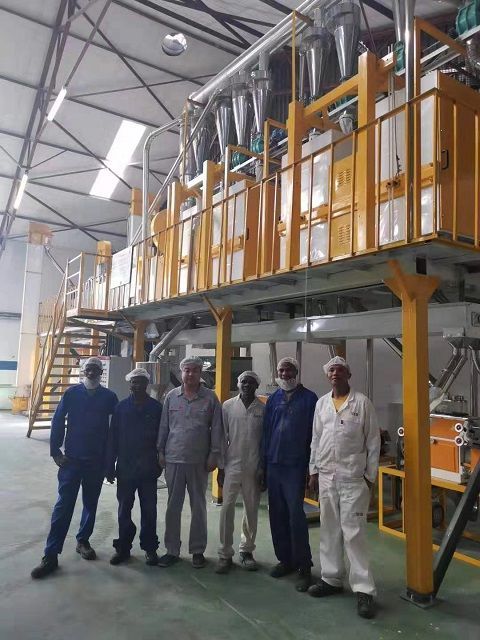
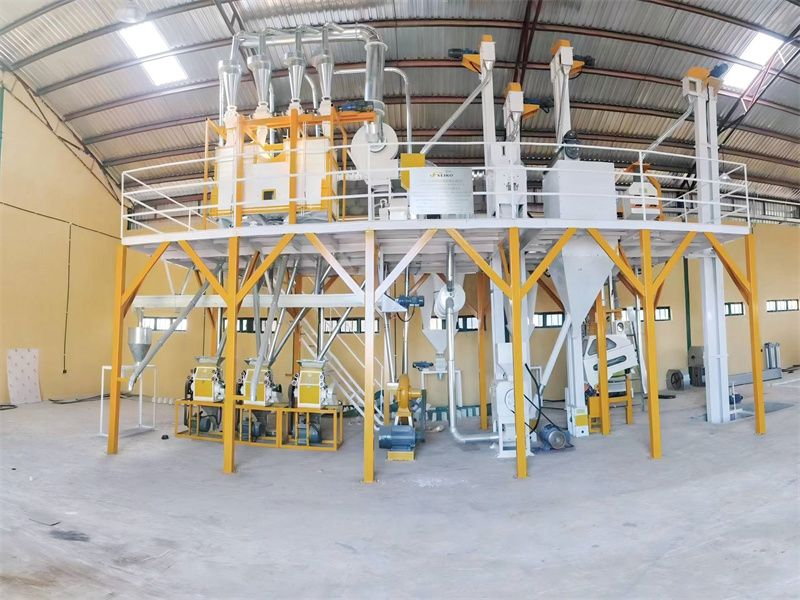
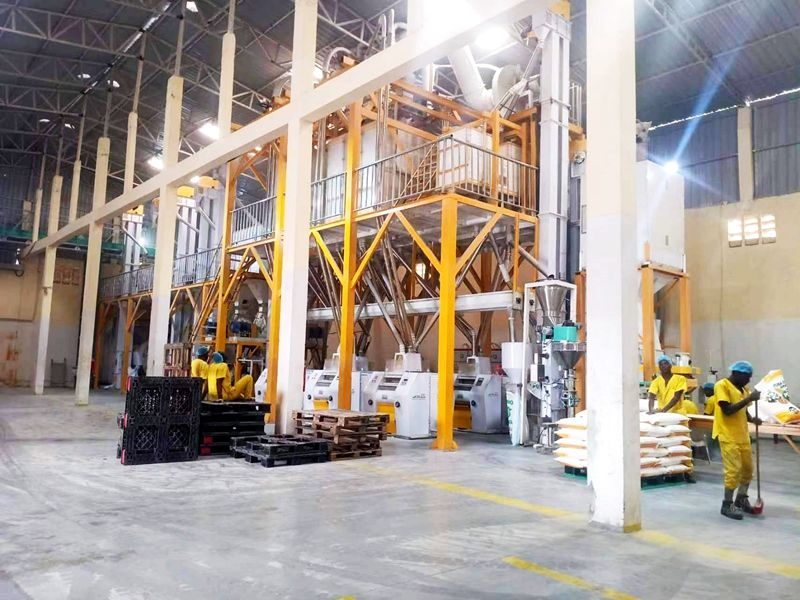
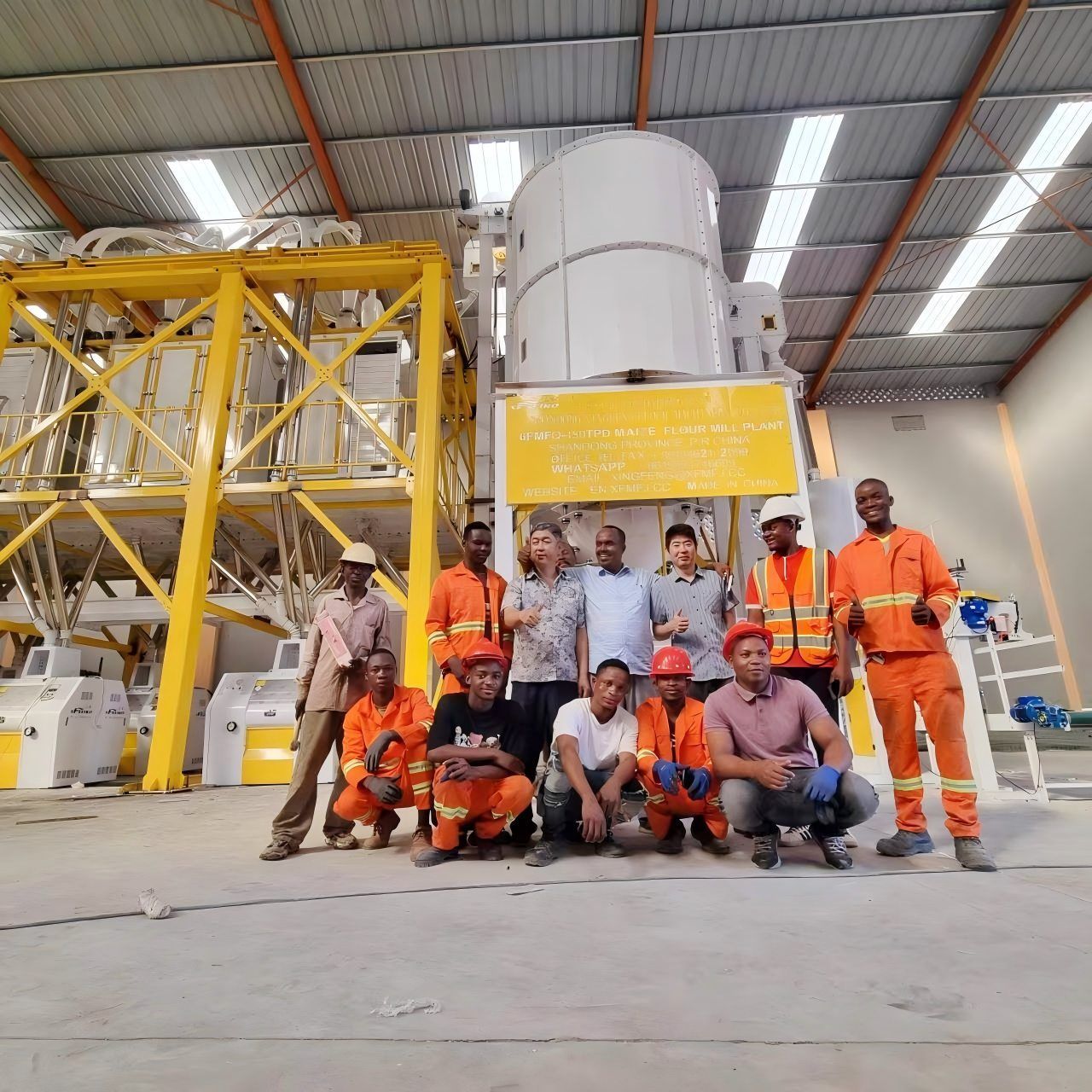
Choosing a 50TPD Maize Flour Mill Plant becomes important when a growing mill cannot meet customer demand with its current line. A maize processing line must control cleaning, degermination, milling, and packaging at the same time. Many mill owners also search for a maize flour production line that can produce a stable product with less manual work. If the mill often receives more orders than it can process, the present equipment may already be limiting growth. A maize milling machine with better separation can also improve flour yield and reduce bran loss. The right upgrade depends on raw material supply, daily sales, product quality, available space, and working capital. A 50 ton per day maize mill is designed for mills that need a clear increase in output without moving to a very large industrial plant.
A growing mill should consider a 50TPD maize flour mill plant when it has a stable demand of about 35 to 45 metric tons of maize products per day, or when its current line is operating above 80 percent of practical capacity for several months. The upgrade is also suitable when the mill needs better food safety control, higher flour yield, multiple flour grades, automated packing, and room for future expansion. Before ordering, confirm raw maize supply, power availability, building space, product specifications, and the expected return on investment.
Equipment capacity is often stated under ideal conditions. Actual output changes with maize moisture, kernel size, cleaning efficiency, product grade, downtime, and operator skill. A mill marked as 30TPD may produce much less when it stops for cleaning, sieve changes, repairs, or manual packing.
A 50TPD plant means a nominal daily capacity of 50 metric tons under the agreed operating conditions. Since 1 metric ton equals 1,000 kilograms, the plant must process about 2,083 kilograms per hour when operated for 24 hours. If the mill runs for 16 hours per day, the required average rate is about 3,125 kilograms per hour.
| Operating plan | Required average throughput | Suitable use |
|---|---|---|
| 24 hours per day | About 2.08 tons per hour | Continuous industrial operation |
| 20 hours per day | About 2.50 tons per hour | Production with daily cleaning and maintenance |
| 16 hours per day | About 3.13 tons per hour | Two-shift operation with more operating flexibility |
For example, a mill selling 38 tons of maize flour per day may need a 50TPD plant. This gives space for cleaning, product changes, minor downtime, and seasonal demand. It is safer than designing a plant that must operate at 100 percent capacity every day.
A plant producing 50 tons of finished products per day does not use exactly 50 tons of purchased maize. Some material becomes bran, germ, screenings, dust, and process loss. A planning model should include the expected extraction rate.
| Planning item | Example value | Why it matters |
|---|---|---|
| Finished products | 50 tons per day | Target output of the plant |
| Planning extraction rate | 70 to 80 percent | Changes with product type and maize quality |
| Estimated maize input | 62.5 to 71.4 tons per day | Needed to produce 50 tons of finished products |
| Annual input at 300 working days | 18,750 to 21,420 tons | Useful for supply contracts and storage planning |
The exact yield must be confirmed by a pilot test. A degerminated maize flour line may produce several streams, including fine flour, meal, grits, germ, bran, and screenings. The commercial value of each stream affects the final business result.
The Codex Standard for Maize, CXS 153-1985, is often used as a reference for maize quality. It includes a maximum moisture value of 15.5 percent for maize, while local laws or customer contracts may require a lower value. Flour specifications must be checked separately because the final product may have different limits.
| Factor | Small or aging mill | 50TPD maize flour mill plant |
|---|---|---|
| Typical process control | More manual adjustment | Centralized control of cleaning, milling, and conveying |
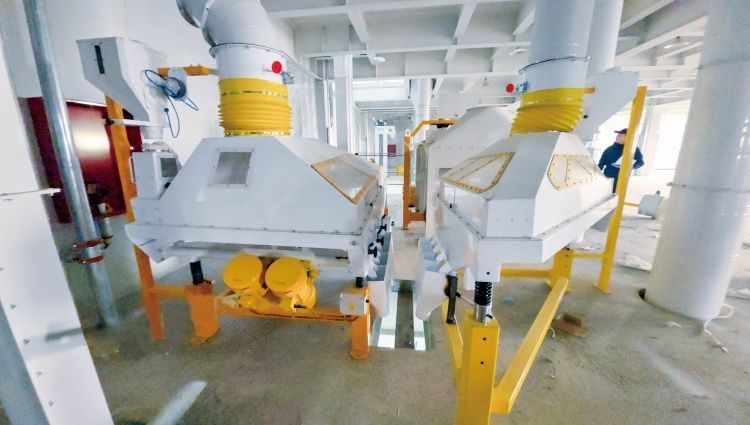
| Raw maize cleaning | Basic screen and manual sorting | Pre-cleaner, vibrating screen, aspiration, destoner, and magnetic separation |
| Degermination | May be incomplete or inconsistent | Dedicated degerminator for improved bran and germ separation |
| Flour grading | One main flour stream | Multiple flour grades, meal, grits, germ, and bran streams |
| Packing | Manual weighing and sewing | Can include automatic weighing, bag filling, sealing, and coding |
| Quality records | Limited batch records | Better traceability by lot, shift, product, and test result |
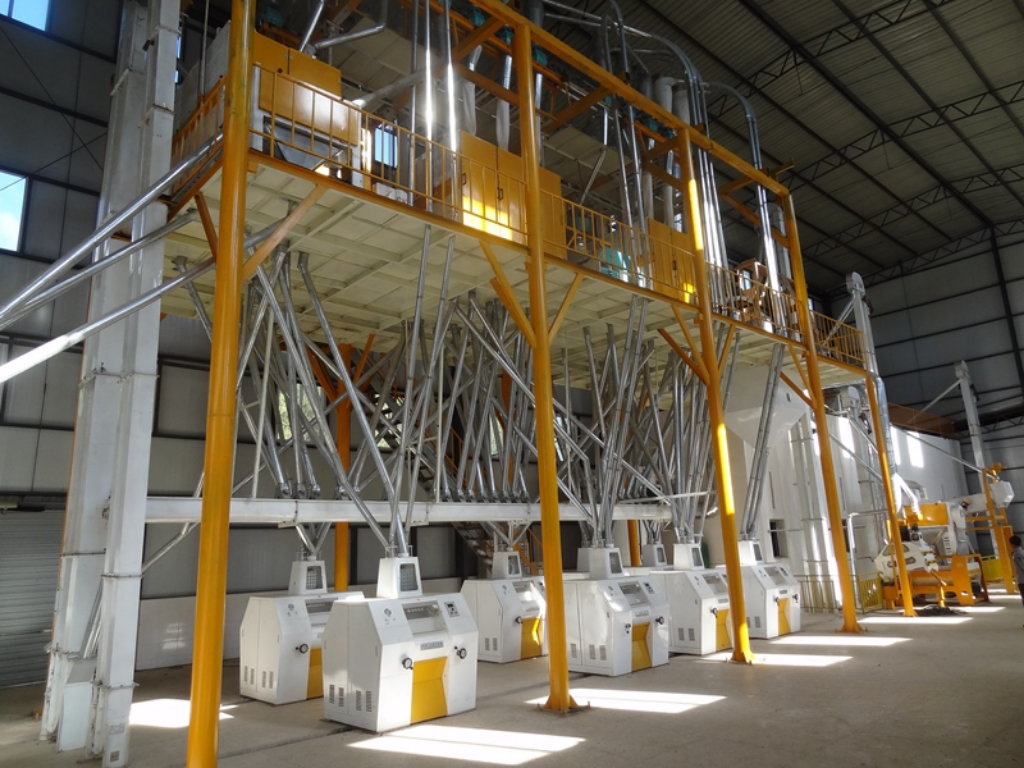
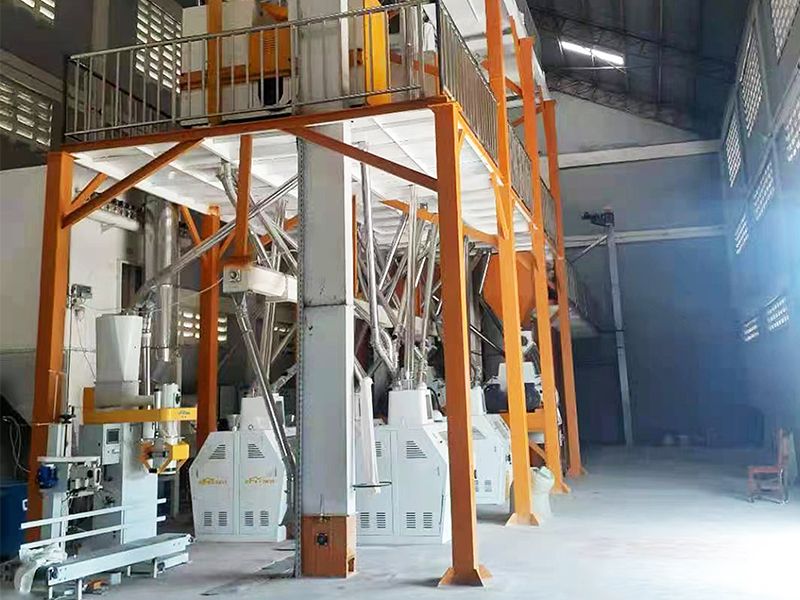
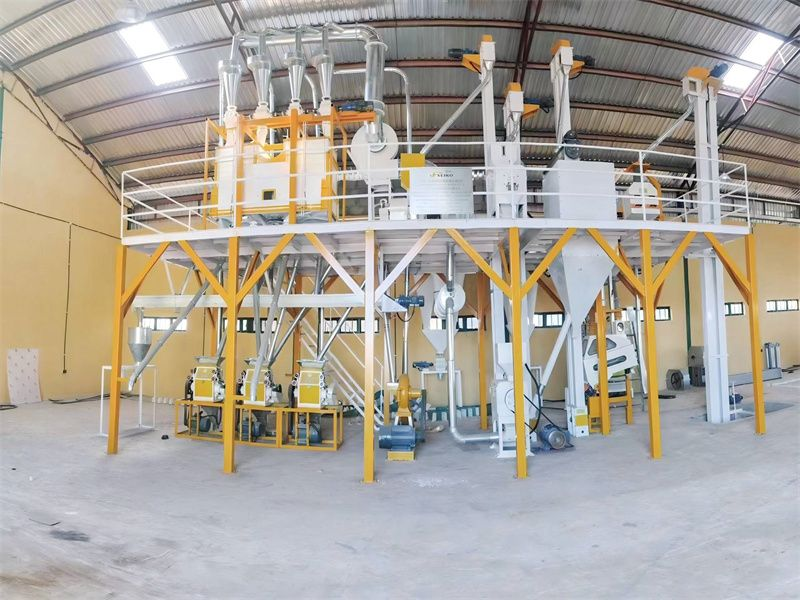
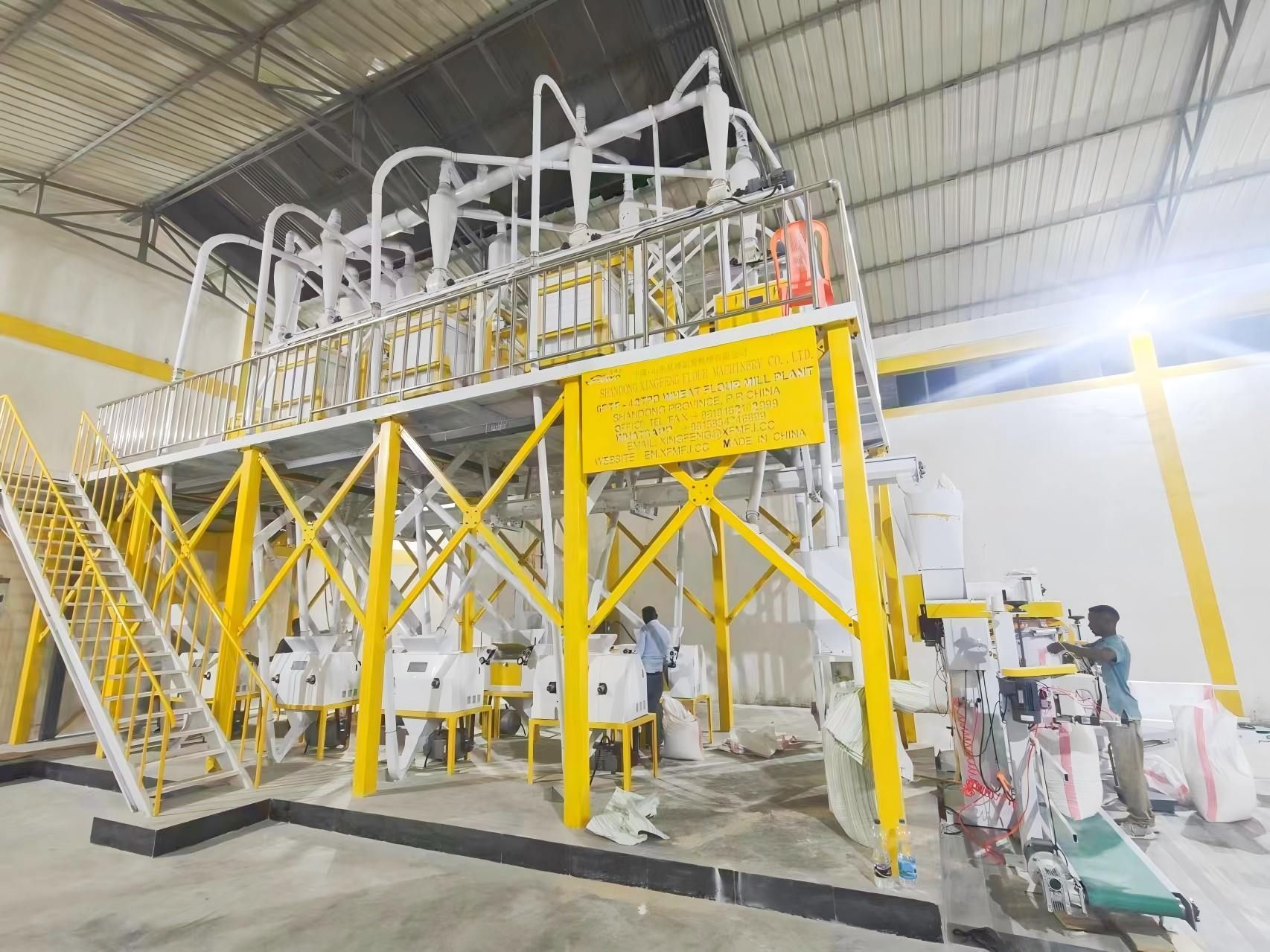
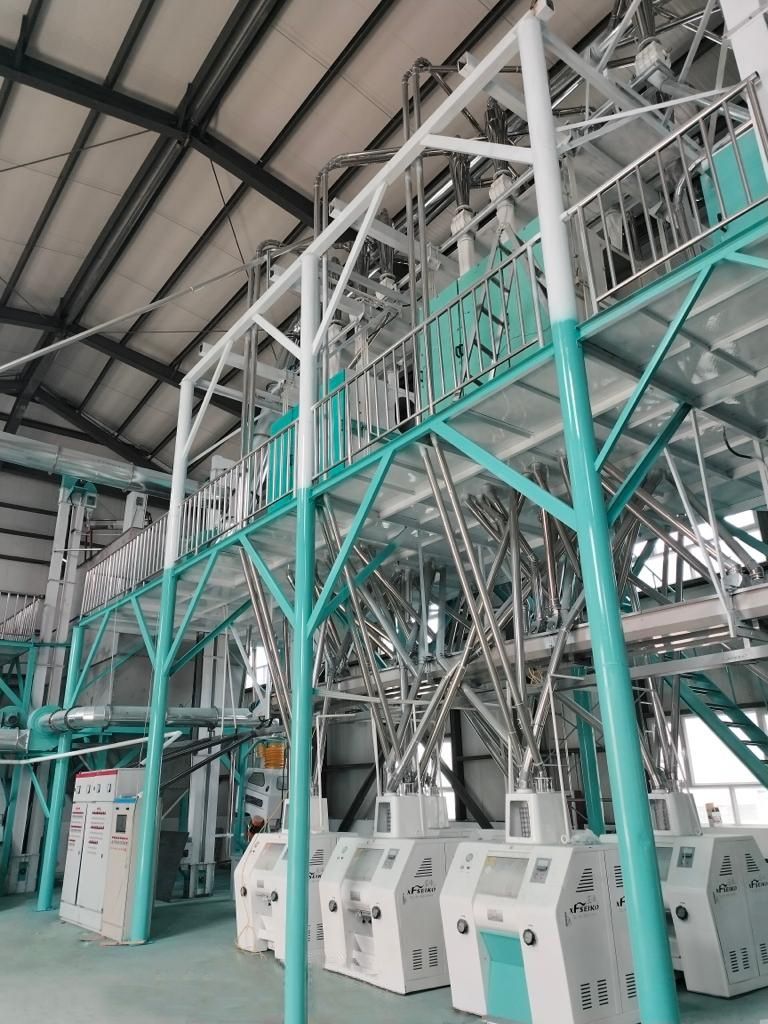
A complete 50TPD maize flour production line normally includes the following sections:
In simple form, the flow is:
Maize receiving, cleaning, destoning, magnetic separation, conditioning, degermination, milling, sifting, quality inspection, packing, and storage.
Stones can damage roller surfaces. Excess dust can reduce workplace safety. Poor degermination can increase bran in the flour and reduce shelf life. Incorrect sifting can create a product that does not meet customer particle size requirements. A balanced process protects equipment and improves consistency.
Before buying equipment, define the finished product. A supplier such as Xingfeng should receive target values for flour grade, extraction rate, package size, and by-product quality. These values should be confirmed by a maize milling test before final acceptance.
| Inspection item | Example target or method | Reason for testing |
|---|---|---|
| Flour moisture | Often targeted at 14 percent or below, subject to local standard | Supports storage stability and product compliance |
| Particle size | Set a sieve specification, such as 95 percent passing a defined sieve | Ensures a repeatable cooking and baking result |
| Aflatoxin | Test against the legal limit in the destination market | Protects consumer safety and market access |
| Foreign material | No visible stones, glass, insects, or metal | Supports food safety and customer confidence |
| Flour color | Define a visual or instrument-based range | Maintains brand consistency |
| Extraction rate | Confirm through a controlled production test | Measures the value recovered from each ton of maize |
A factory acceptance test should use the same maize type that the plant will process. The test should record input weight, product weight, by-product weight, power use, processing time, moisture, particle size, and product losses. A practical acceptance test may run for at least four to eight continuous hours after stable operation is reached. The final contract should state how capacity and quality will be measured.
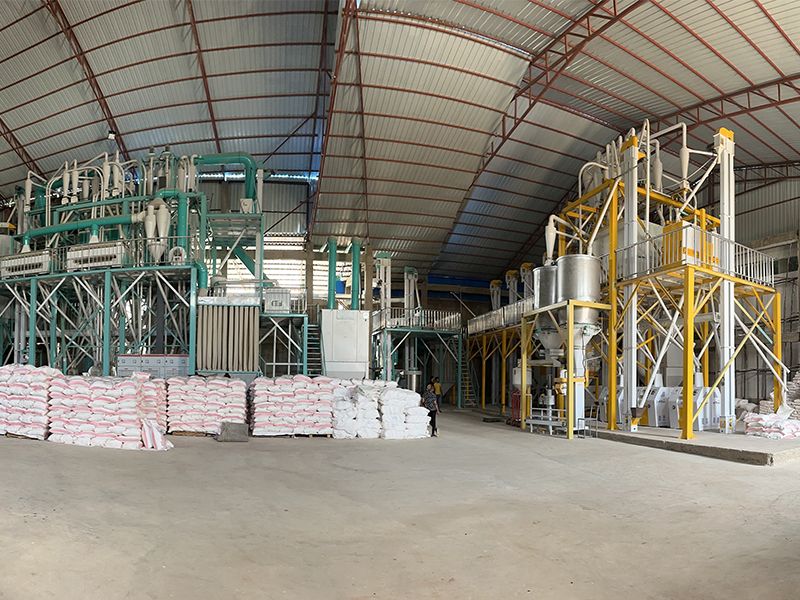
A 50TPD plant requires more than milling machines. It needs space for raw maize, finished flour, by-products, maintenance access, worker movement, and cleaning. The building should keep raw material and finished product flows separate.
| Site item | Planning question | Required action |
|---|---|---|
| Electrical supply | Can the site support the connected load and starting current? | Confirm voltage, frequency, transformer size, and backup power |
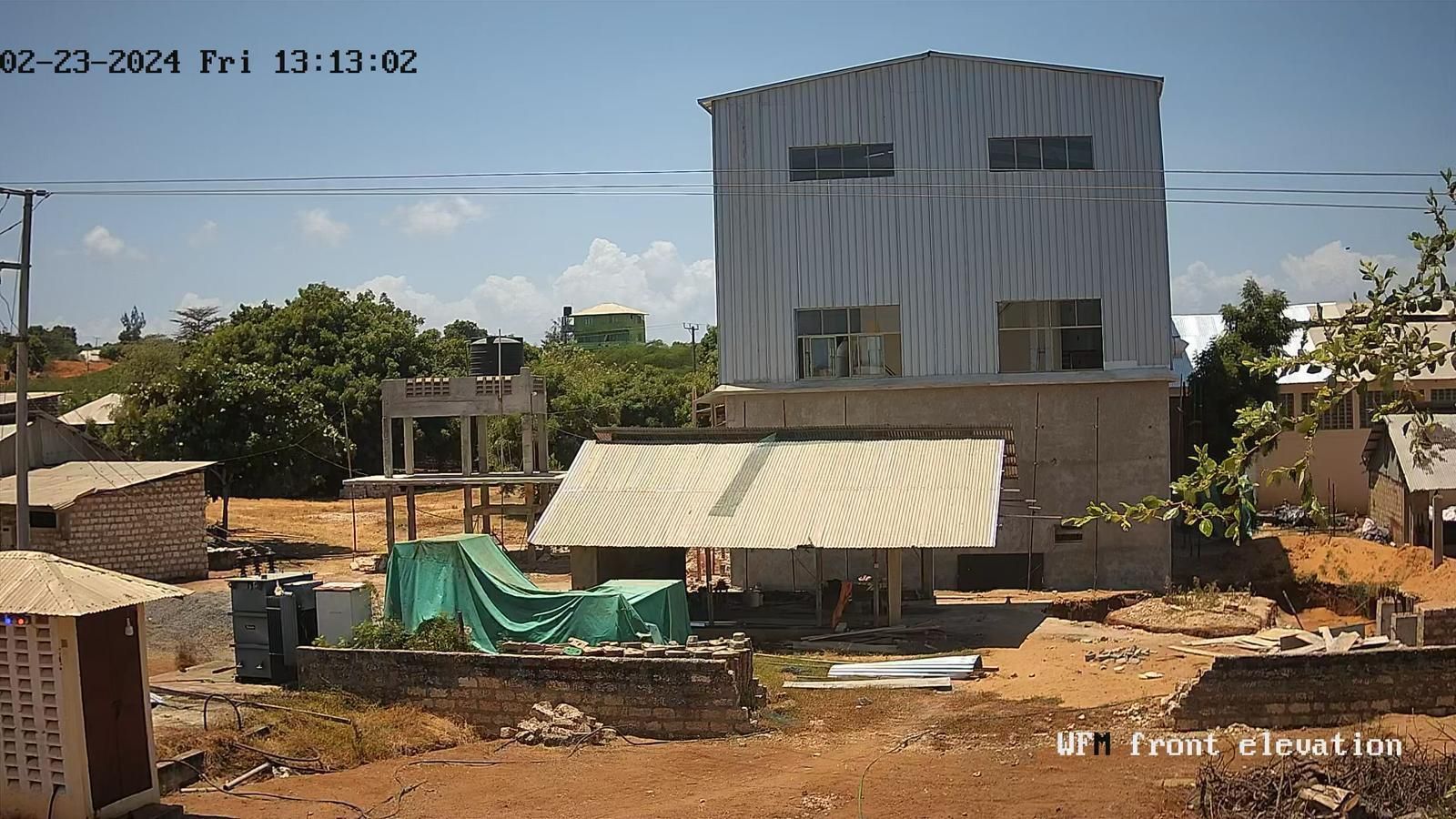
| Building height | Can the plant fit sifters, bins, ducts, and service platforms? | Approve a layout and elevation drawing before construction |
| Raw material storage | Can the site hold several days of maize supply? | Set storage based on local supply risk and delivery time |
| Finished product storage | Can packed flour remain dry and protected? | Use clean pallets and keep bags away from walls and moisture |
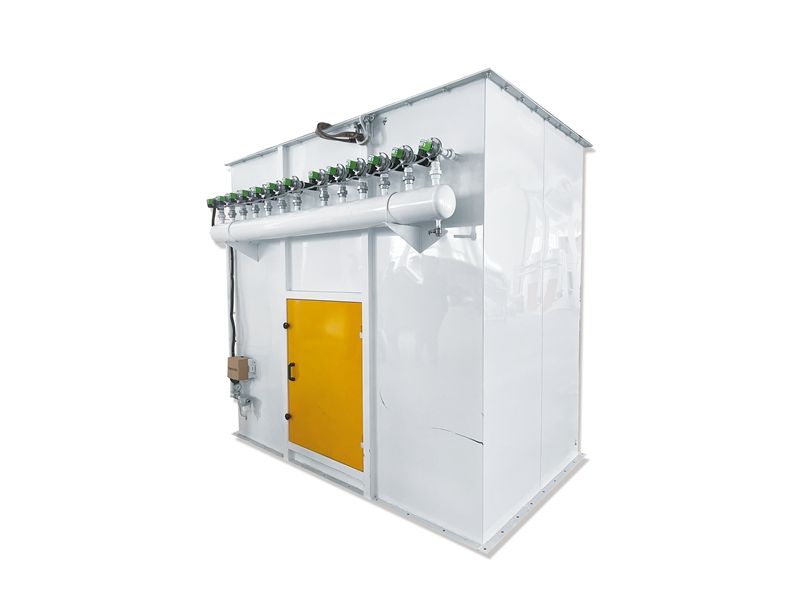
| Dust control | Can dust be collected at transfer and milling points? | Install filters, ducts, grounding, and planned cleaning access |
Power consumption depends on motor selection, product grade, moisture, operating hours, and conveying design. Ask for a complete connected-load list. It should show each motor size, rated current, control method, and expected running load.
Buying a 50TPD plant only because of one large order creates risk. A better decision uses sales records, customer contracts, seasonal trends, and gross margin. The plant should have enough demand to operate at a practical load while keeping some spare capacity.
| Business condition | Recommended decision |
|---|---|
| Demand below 20 tons per day and unstable | Improve sales and maintenance before a major expansion |
| Demand between 20 and 35 tons per day with regular growth | Complete a feasibility study and reserve space for expansion |
| Demand between 35 and 45 tons per day for several months | Strong time to evaluate a 50TPD plant |
| Demand above 45 tons per day with delayed orders | Move quickly if maize supply, finance, and site conditions are ready |
Use the following formula:
Annual operating profit = net profit per ton x saleable tons per day x working days per year.
Simple payback period = total project cost divided by annual operating profit.
Include the value of flour, meal, grits, germ, and bran. Also include electricity, labor, packaging, repairs, transport, laboratory testing, interest, and depreciation. A project that depends on a very high selling price should be tested with a lower-price scenario before approval.
Quantified project records improve accountability. Keep the capacity test result, downtime log, maintenance schedule, energy readings, laboratory results, and training attendance records. A supplier with documented experience in multiple maize milling projects can reduce design risk, but the buyer should still verify references and test results.
A larger plant needs written procedures. These procedures should cover incoming maize inspection, cleaning, pest control, personal hygiene, equipment sanitation, metal control, allergen management where relevant, packing, labeling, and product release.
Important records include:
Packaging accuracy should also be measured. For example, a 25 kilogram bagging system should be checked against the legal average weight and permitted package variation in the target market. The correct tolerance is set by local weights and measures rules, not by the equipment supplier alone.
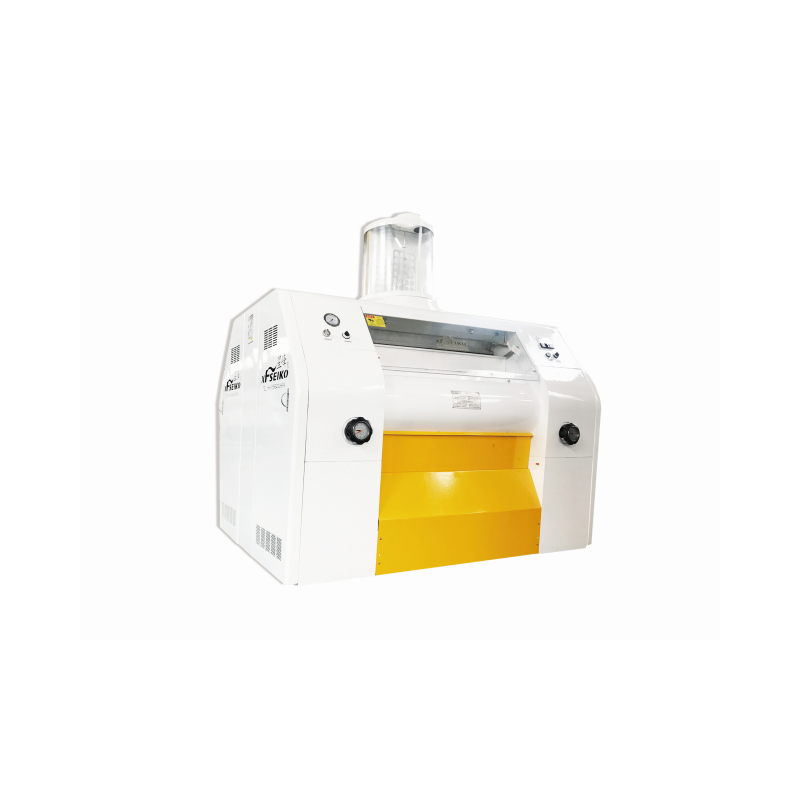
Fine maize flour, breakfast meal, grits, and animal feed require different milling settings. The equipment design should match the product mix.
Germ and bran can provide an important part of total revenue. Their quality, moisture, storage, and buyer demand should be included in the feasibility study.
A larger machine cannot correct mold, high foreign material, or inconsistent moisture. Raw material control must improve with plant capacity.
Rolls, screens, motors, bearings, filters, and conveyors require service access. A crowded layout can increase downtime and safety risk.
Operators must learn start-up, shutdown, product changeover, sieve control, cleaning, lubrication, and emergency procedures. Training should be completed before commercial production.
A 50TPD maize flour mill plant is a practical upgrade for a growing mill with stable demand, reliable maize supply, adequate utilities, and clear product specifications. The best time to invest is usually when the current mill operates above 80 percent of practical capacity and regular demand reaches about 35 to 45 tons per day. Confirm the decision with a raw maize test, pilot milling results, extraction calculations, equipment performance data, quality standards, and a realistic payback model. With proper planning and documented commissioning, a 50TPD maize flour production line can increase output, improve food safety, reduce manual work, and support long-term growth.

February. 02, 2024

January. 01, 2024

July. 07, 2024

August. 08, 2024
How to Use Wheat Flour Mill Plant Correctly?
This article provides a comprehensive guide on how to use a wheat flour mill plant correctly.

March. 03, 2026

June. 06, 2025