A 100–120TPD maize flour mill must balance production capacity, food safety, construction cost, and installation time. Many investors compare a steel-frame maize mill with a concrete maize mill before choosing a building design.
A steel structure can reduce civil work and support a faster maize milling plant installation. The final choice still depends on soil conditions, local building codes, climate, product requirements, and future expansion plans.
This article compares maize flour processing systems, plant construction methods, equipment layout, operating costs, and quality control. It also explains when a modular maize mill is the better business decision.
A 100–120TPD steel-frame maize mill is usually better than a concrete plant when the investor needs faster construction, lower civil engineering cost, flexible equipment layout, and easier future expansion. A concrete plant may be better when the site has strict permanent-building rules, severe weather exposure, high fire-resistance requirements, or a long-term plan for a large fixed facility. The correct choice depends on a full cost study that includes land, foundation work, steel structure, equipment, utilities, maintenance, and local regulations.
In milling projects, TPD means tons per day. A 100–120TPD plant is designed to process about 100 to 120 metric tons of cleaned maize in 24 hours. Actual output depends on maize quality, moisture, product grades, maintenance time, and operating shifts.
The plant may not produce only one flour type. A modern maize flour processing line can separate the grain into flour, meal, grits, germ, and bran. Product proportions change with maize variety and customer demand.
| Product | Indicative share of cleaned maize | Output from 110 tons per day |
|---|---|---|
| Maize flour and meal | 55 to 70 percent | 60.5 to 77.0 tons per day |
| Grits and coarse meal | 10 to 20 percent | 11.0 to 22.0 tons per day |
| Germ | 5 to 12 percent | 5.5 to 13.2 tons per day |
| Bran and other by-products | 8 to 15 percent | 8.8 to 16.5 tons per day |
These figures are planning ranges, not guaranteed results. A laboratory test with local maize is needed before final equipment selection.
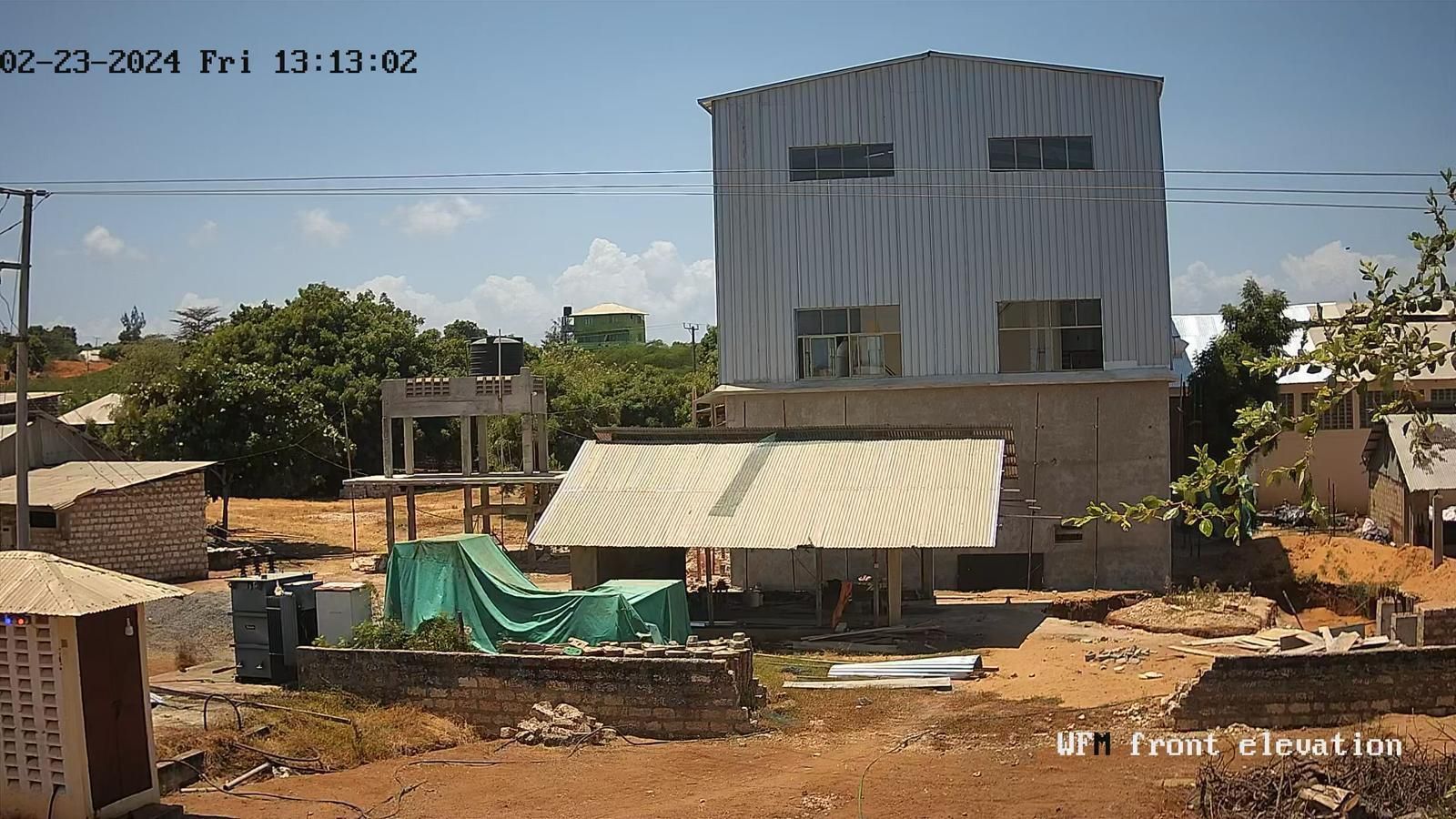
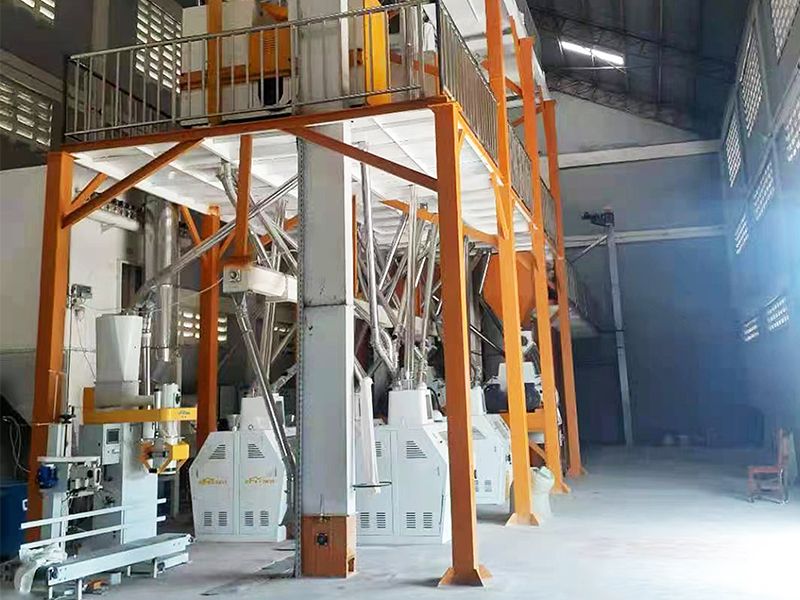
A steel-frame building can be fabricated while the foundation is being prepared. The equipment, platforms, stairs, and support frames can also be produced in parallel. This can shorten the project schedule compared with a fully reinforced concrete building.
A practical schedule for a medium-size project may include 30 to 60 days for design and fabrication, 20 to 40 days for foundation work, and 15 to 30 days for equipment installation. Site conditions and import procedures can change the final schedule.
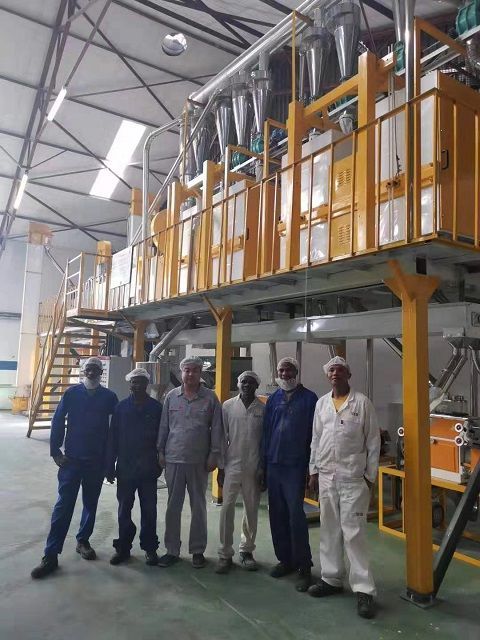
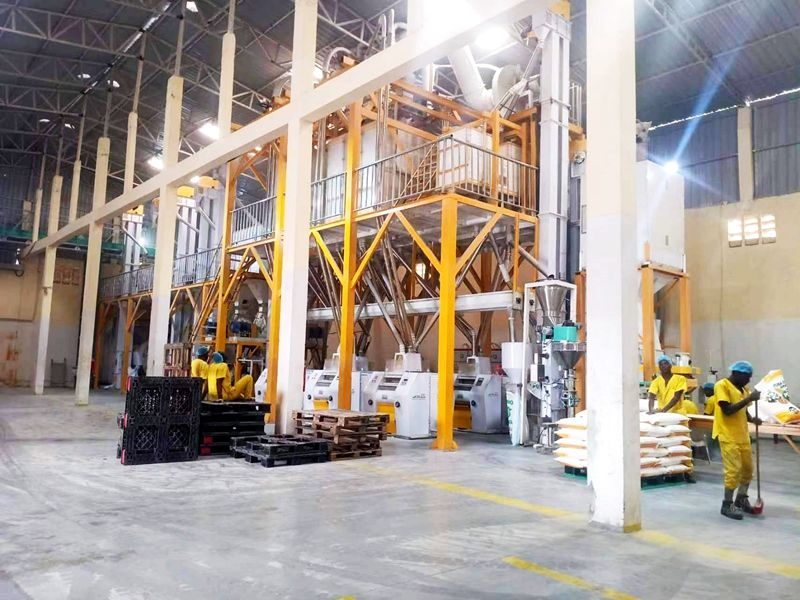
A steel-frame maize mill normally uses concrete for foundations, floor slabs, equipment bases, and loading areas. It does not require every floor and wall to be built from reinforced concrete. This can reduce concrete volume, formwork, brickwork, and wet construction work.
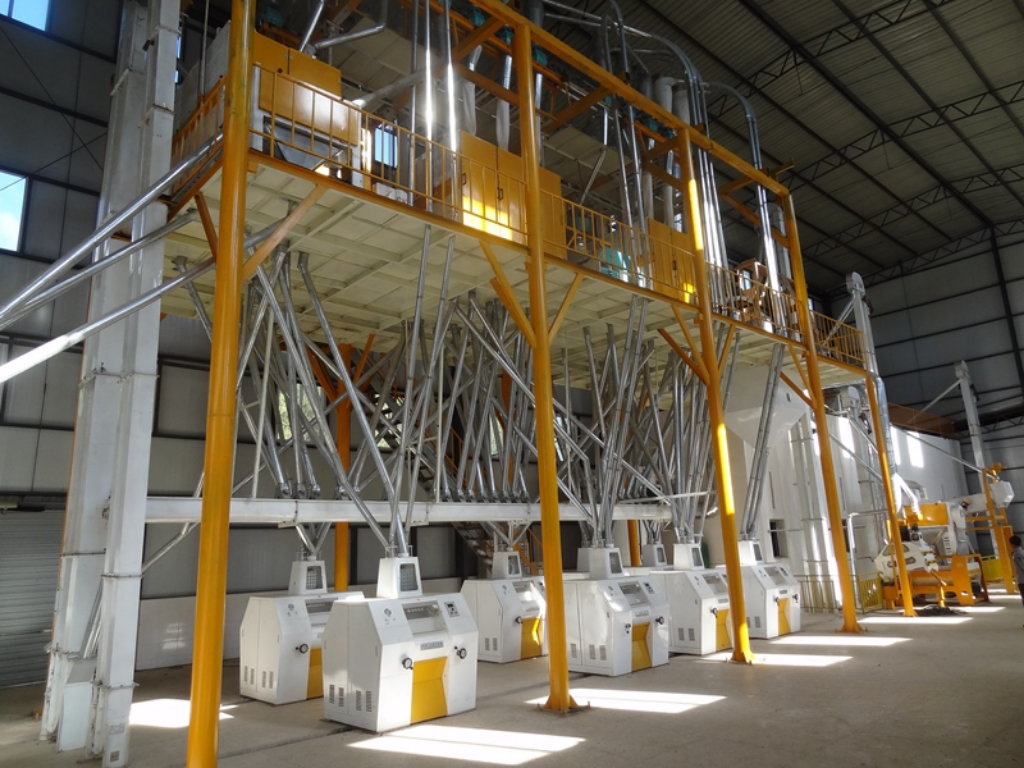
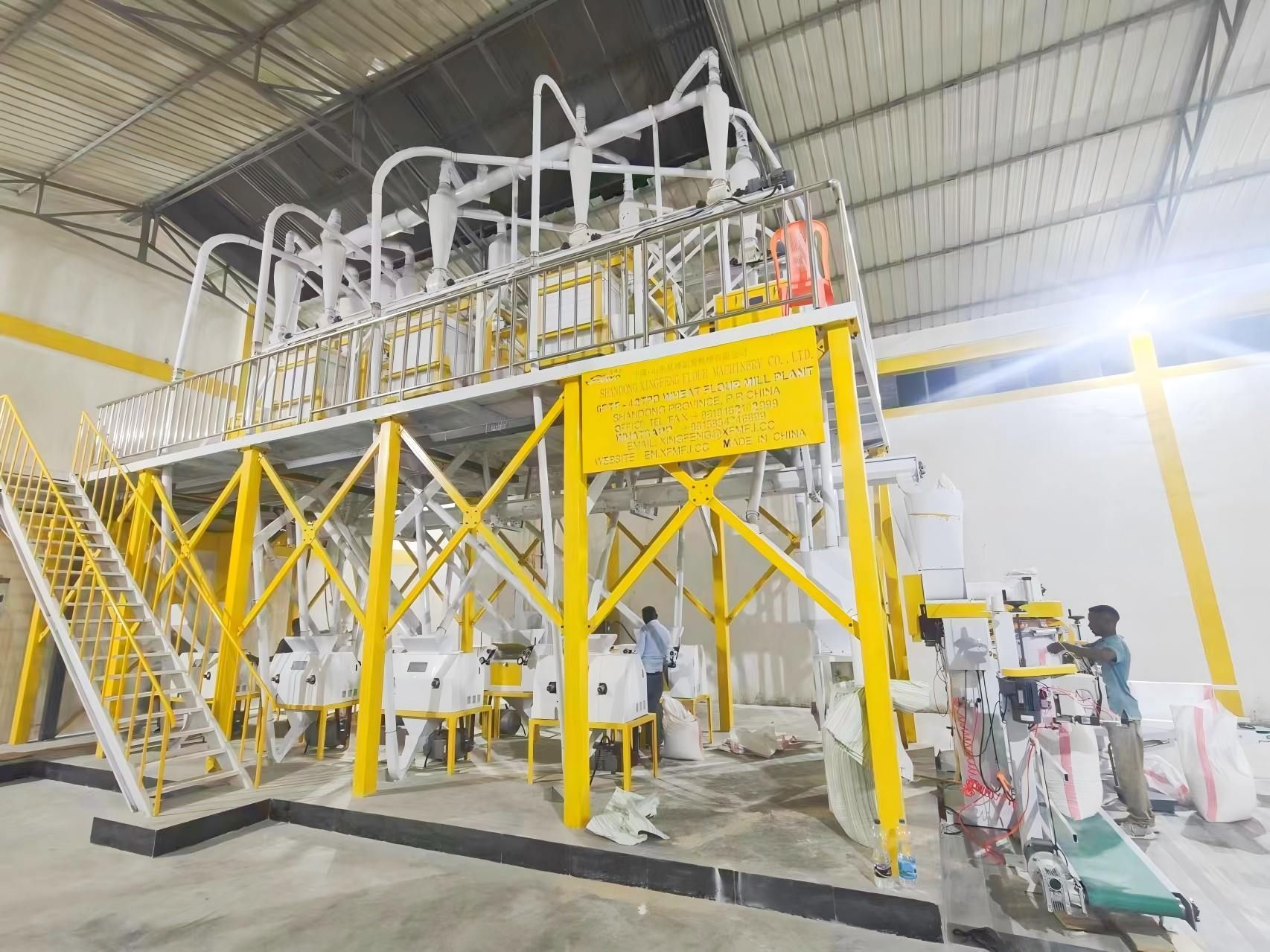
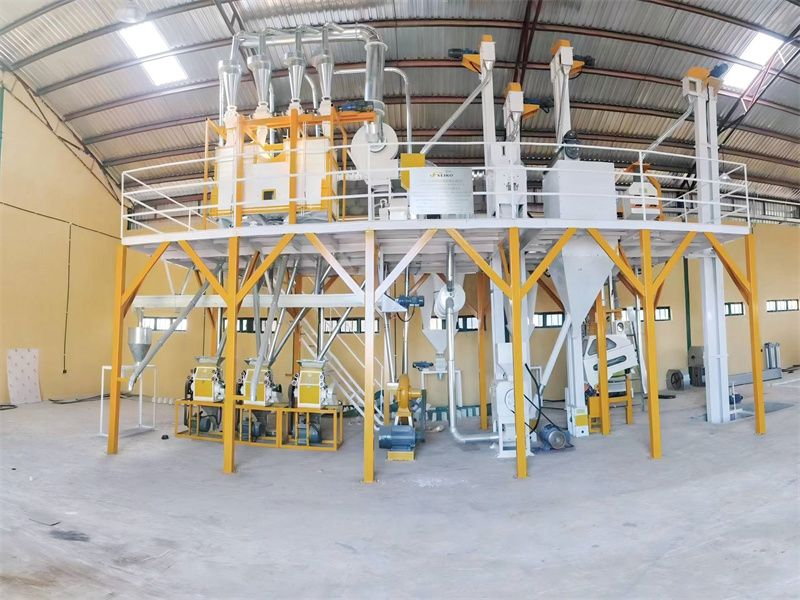
Maize milling equipment is often arranged on several levels. A steel structure allows platforms and access areas to be adjusted with less demolition. This is useful when the owner later adds a maize degerminator, extra roller mills, a new flour sifter, or a fortification unit.
A vertical steel-frame mill can place cleaning, conditioning, milling, and sifting equipment on different levels. This can reduce the building footprint. It also supports a short material route and lower pneumatic conveying distance.
Steel platforms provide clear access to motors, sifters, roller mills, bearings, and air ducts. Maintenance teams can remove a machine through designed service openings instead of breaking walls or floors.
| Item | Typical design consideration | Why it matters |
|---|---|---|
| Structural steel | Grade and section size must follow local structural calculations | Controls load capacity and vibration resistance |
| Platform loading | Must include machine weight, grain load, workers, and maintenance tools | Prevents excessive deflection |
| Stairways and walkways | Designed for safe access and inspection | Reduces maintenance risk |
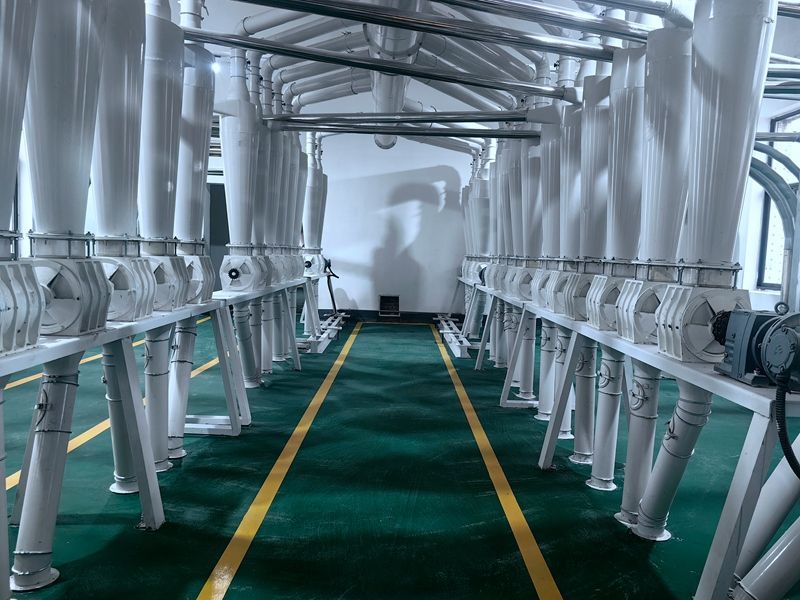
| Dust control | Closed transfer points, aspiration ducts, and dust collectors | Supports worker safety and food hygiene |
| Surface protection | Primer and finish coating selected for the local climate | Reduces corrosion on the frame |
A concrete plant is not the wrong option. It can be suitable for a permanent facility with a long service life and a fixed production plan.
If the owner has secure land rights and plans to operate at the same site for 20 years or more, a concrete building may offer a strong permanent asset.
Areas with high wind, heavy rain, salt exposure, or extreme temperature changes may require special structural protection. Both steel and concrete can work, but the design must follow local codes and soil reports.
Some industrial parks require a permanent concrete structure. Fire separation, wall ratings, sanitation rules, and environmental permits may also affect the decision.
If the owner plans to add several production lines, large warehouses, or a high-capacity packaging center, a concrete building may provide a wider fixed layout from the beginning.
| Comparison point | Steel-frame maize mill | Concrete maize mill |
|---|---|---|
| Construction speed | Usually faster because steel fabrication and foundation work can overlap | Often slower because more work is completed on site |
| Initial civil work | Usually lower in volume | Usually higher because of walls, floors, columns, and multiple concrete levels |
| Layout flexibility | High; platforms and partitions can be modified | Moderate; changes may require demolition |
| Relocation potential | Better for leased land or changing business plans | Low because the building is a permanent asset |
| Maintenance access | Good when platforms and service openings are planned correctly | Good, but changes can be more difficult |
| Corrosion control | Requires coating inspection and periodic maintenance | Still requires protection for steel parts, roofs, and embedded components |
| Best use case | Fast installation, modular expansion, limited civil budget, or leased land | Permanent ownership, fixed layout, and strict building requirements |
The building type does not replace process equipment. A good plant needs a complete process line with stable material flow, dust control, and quality inspection.
| Equipment area | Useful parameter to review | Inspection target |
|---|---|---|
| Screening | Screen aperture and cleaning frequency | Stable separation without screen blockage |
| Destoning | Air volume and deck adjustment | Effective stone removal with limited grain loss |
| Degermination | Rotor speed, clearance, and feed rate | Consistent germ removal and acceptable flour yield |
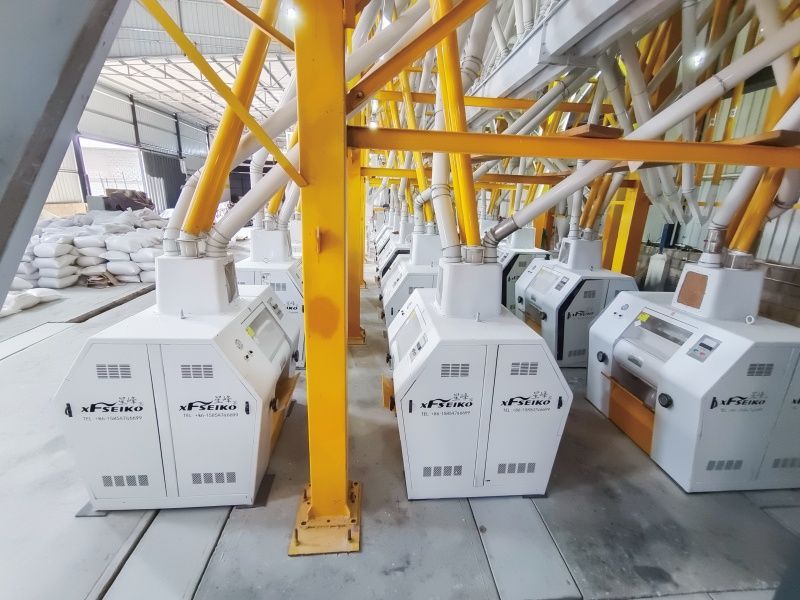
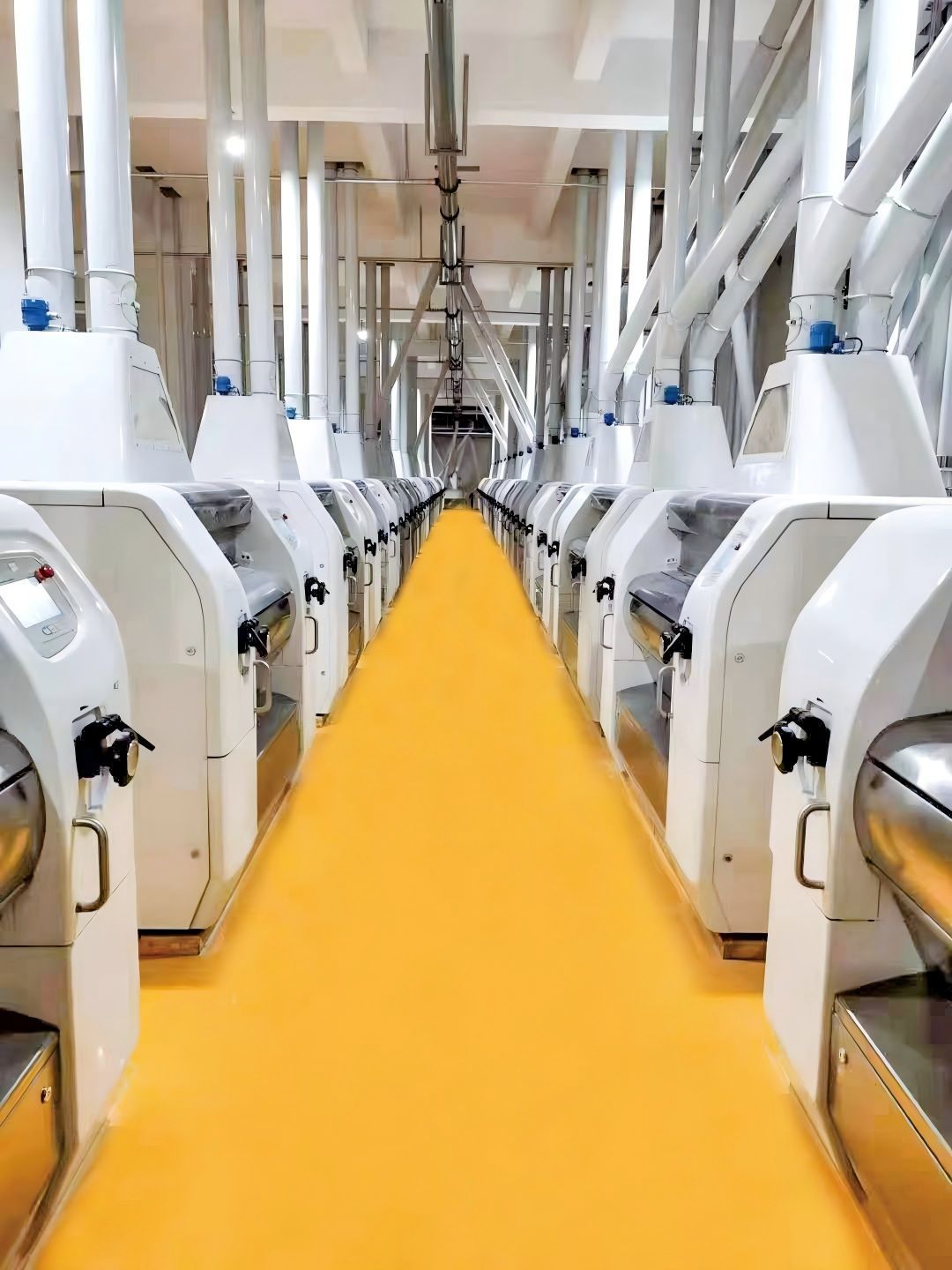
| Roller mill | Roller diameter, differential speed, and gap | Uniform particle size and controlled heat |
| Plansifter | Screen area and mesh selection | Correct flour grades and low product carryover |
| Packaging | Bag size and weighing accuracy | Common target accuracy of plus or minus 0.2 to 0.5 percent, based on machine type |
The following process is suitable for planning a medium-capacity maize milling plant. The final flow depends on the target product and maize quality.
Measure moisture, foreign matter, broken kernels, insect damage, mold risk, and test weight. Reject or isolate maize that fails the plant's buying standard.
Remove dust, straw, stones, metal, and other foreign materials. Cleaning protects the degerminator, roller mill, and sifter.
Add a controlled amount of water when required. Allow the grain to rest in conditioning bins. Resting time may range from 15 to 60 minutes, depending on kernel hardness and the selected process.
Separate part of the bran and germ. This can improve flour color, shelf life, and product stability.
Use roller mills or other milling machines to reduce the cleaned endosperm into meal and flour.
Plansifters separate fine flour, medium meal, coarse meal, and oversize particles. Oversize material returns to the mill for another passage.
Blend product grades to meet customer requirements. Add micronutrients only when required by local law or the product specification.
Pack the finished products in clean bags. Store them on pallets in a dry room with controlled pest and moisture management.
Raw maize receiving
Then cleaning and aspiration
Then destoning and metal separation
Then conditioning
Then degermination and dehulling
Then roller milling
Then sifting and classification
Then blending or fortification
Then weighing and packing
Then finished product storage
A steel-frame plant can meet food safety requirements if the design prevents dust buildup, water leakage, pest entry, and product cross-contamination. The building material alone does not determine flour quality.
Common tests include moisture, color, particle size, ash, acidity, foreign matter, packaging weight, and microbiological condition. Local food laws may also require testing for mycotoxins such as aflatoxin and fumonisin.
| Quality area | Example control point | Suggested record |
|---|---|---|
| Moisture | Test each incoming lot and finished product batch | Moisture percentage and test time |
| Particle size | Check sieve residue against the product specification | Sieve number, sample weight, and residue |
| Metal control | Inspect magnets and metal detectors | Inspection result and corrective action |
| Microbiology | Test according to local food regulations | Laboratory report and batch code |
| Packaging weight | Verify random bags during packing | Average weight and variation |
Useful management systems include HACCP, GMP, and ISO 22000-based food safety controls. Electrical design should follow applicable local codes and recognized machinery safety practices such as IEC 60204-1 where required.
Investors should ask for measurable project evidence instead of relying only on capacity claims. A supplier should provide a process diagram, equipment list, foundation plan, power estimate, dust collection plan, installation schedule, and commissioning checklist.
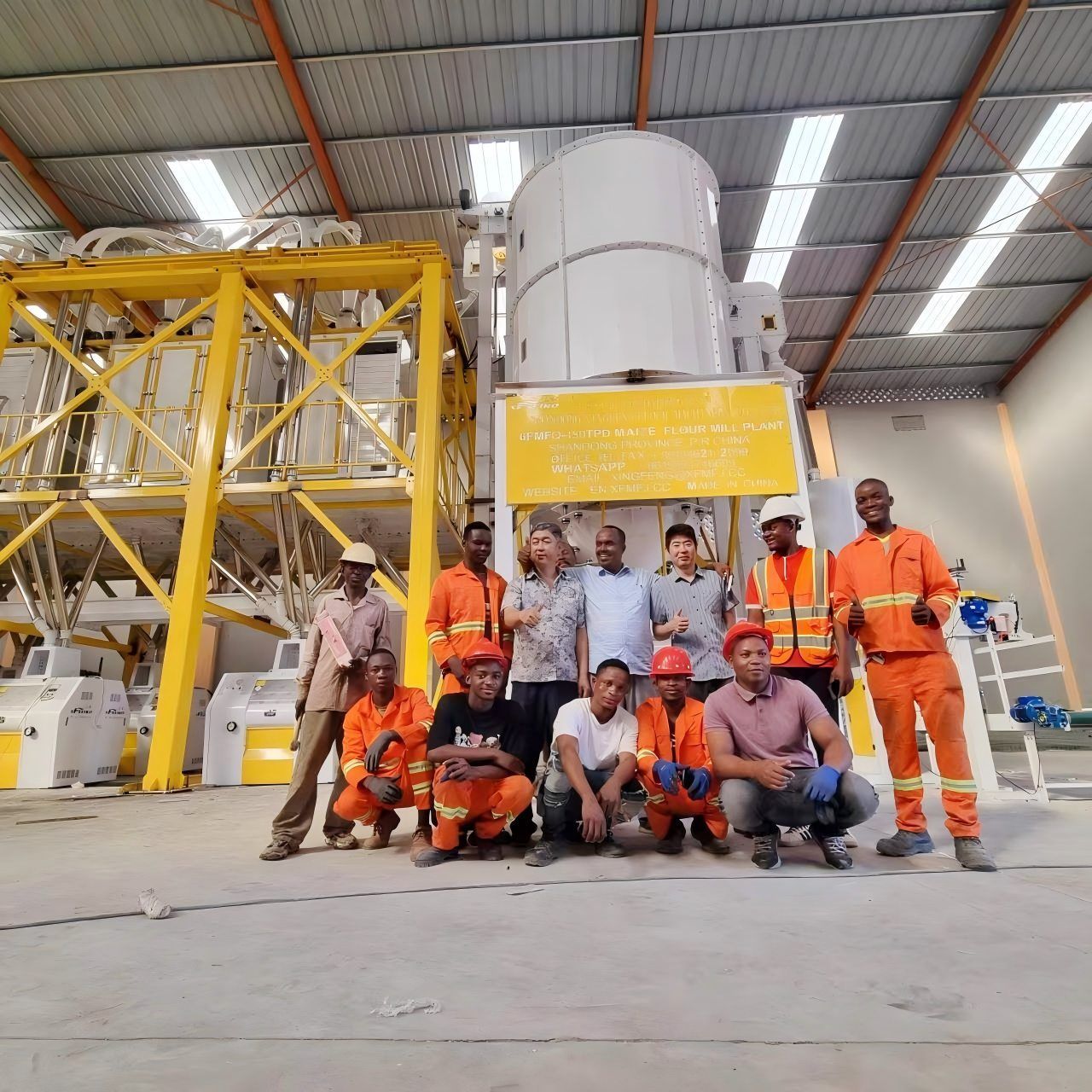
For example, an experienced engineering team such as Xingfeng should be able to show a documented history of at least 20 years in grain processing, more than 300 completed grain projects, and commissioning records for plants in several climate conditions. These figures should be supported by project lists, customer references, drawings, and acceptance reports.
The project review should include at least three design stages:
The lowest construction quote does not always provide the lowest total project cost. Compare the complete investment.
| Cost category | Steel-frame plant question | Concrete plant question |
|---|---|---|
| Foundation | Can the soil support equipment loads with the planned foundation design? | Will deeper foundations or more reinforced concrete be required? |
| Building | Are steel coating, roof, wall panels, and drainage included? | Are formwork, floors, walls, and curing time included? |
| Equipment | Are platforms and service areas included in the quotation? | Are machine bases and embedded parts included? |
| Utilities | Does the design include power, compressed air, water, and dust collection? | Are the same utility systems included? |
| Maintenance | What is the annual coating and corrosion inspection cost? | What is the cost of concrete repair and roof maintenance? |
| Expansion | Can another milling line or packing line be added? | Can the fixed building support the planned expansion? |
Energy use should also be compared. A 100–120TPD plant may use several hundred kilowatts of connected motor power, depending on the cleaning system, milling technology, conveying method, and packing equipment. The final value must come from the equipment motor list and the expected operating load.
A 100–120TPD steel-frame maize mill is better than a concrete plant when speed, flexibility, lower civil work, and staged expansion are the main priorities. It can support a complete maize flour mill with cleaning, conditioning, degermination, roller milling, sifting, packing, and quality control.
A concrete maize mill remains a sound choice for a permanent facility with strict building rules and a fixed long-term plan. Before making a decision, compare soil conditions, local regulations, construction cost, equipment layout, energy use, maintenance, and future capacity.
The best 100–120TPD maize milling plant is not selected by building material alone. It is selected through accurate maize testing, a complete process design, reliable equipment inspection, and a clear commissioning plan from an experienced supplier such as Xingfeng.
< Previous: None
> Next: Preventive Maintenance Tasks That Reduce Maize Mill Downtime

July. 07, 2024

March. 03, 2026

August. 08, 2024
How to Use Wheat Flour Mill Plant Correctly?
This article provides a comprehensive guide on how to use a wheat flour mill plant correctly.

January. 01, 2024

February. 02, 2024

June. 06, 2025