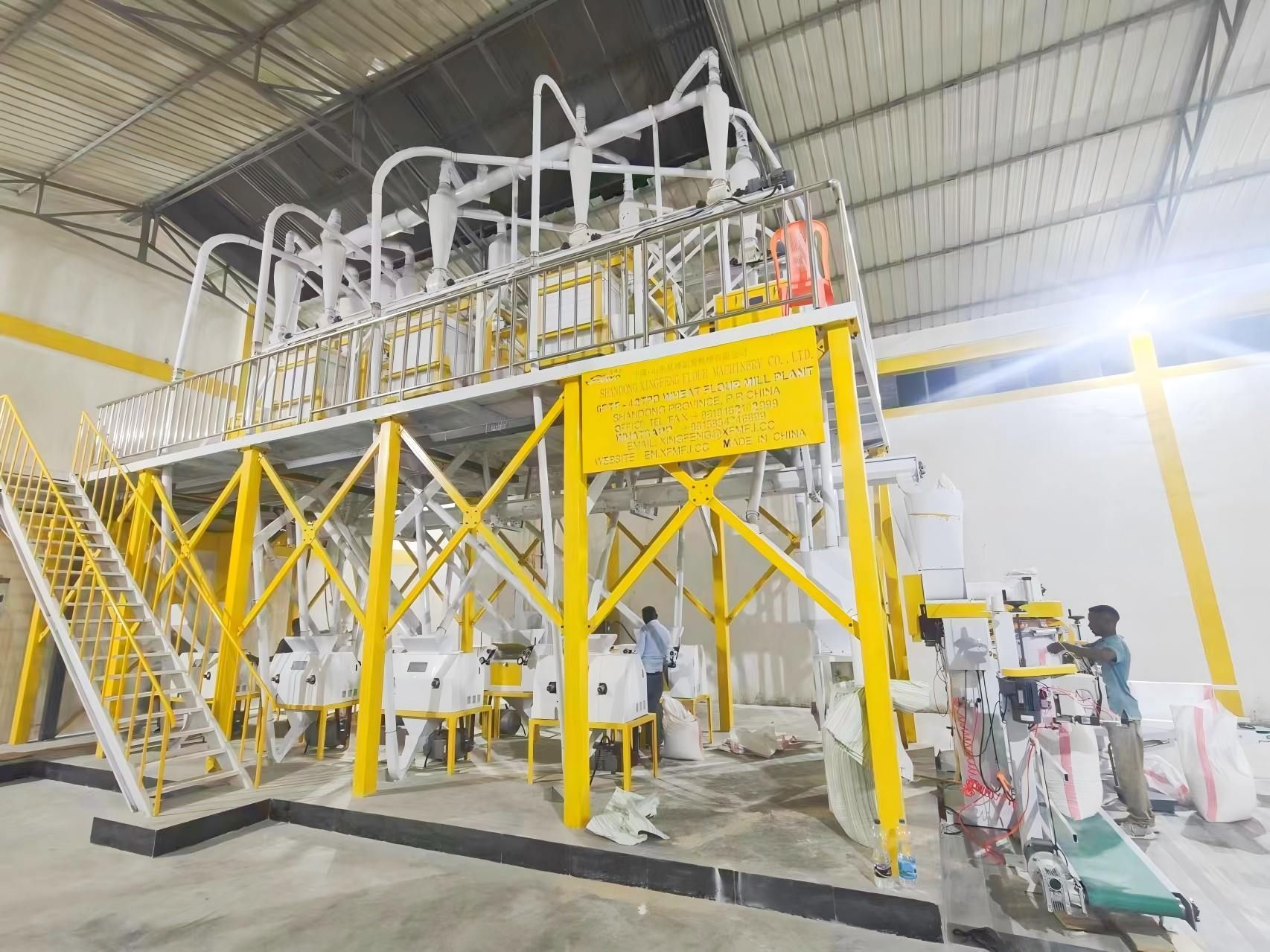
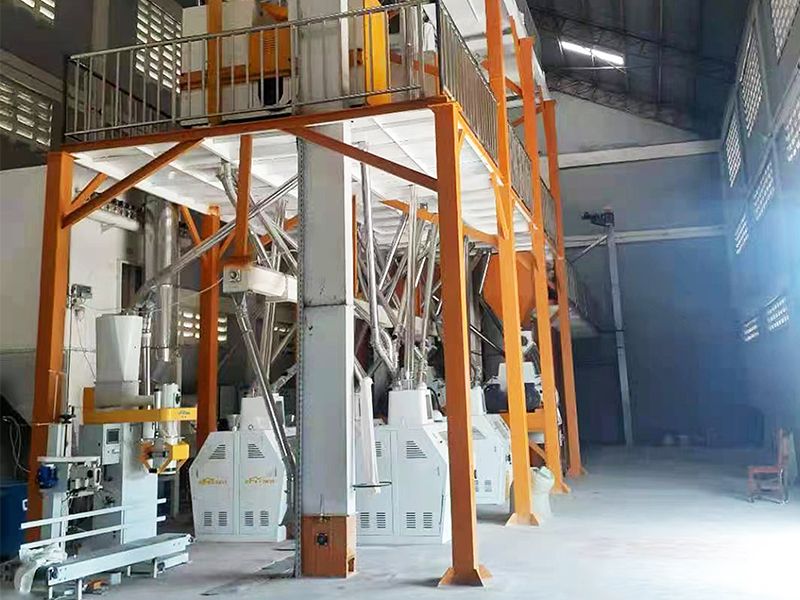
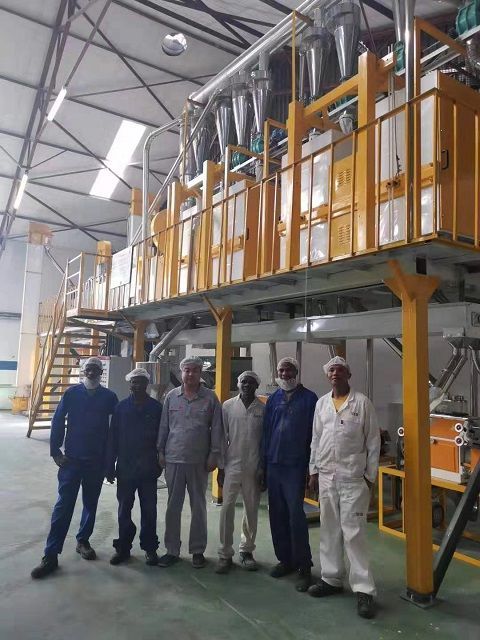
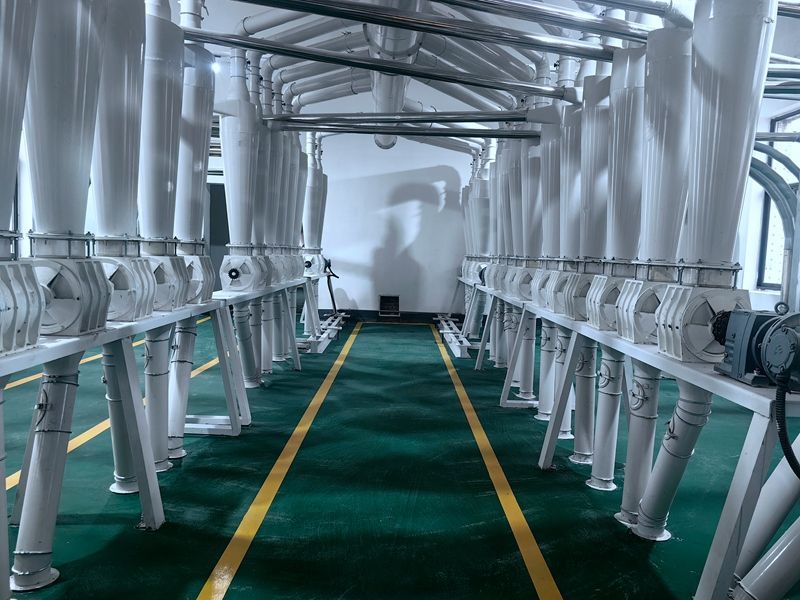
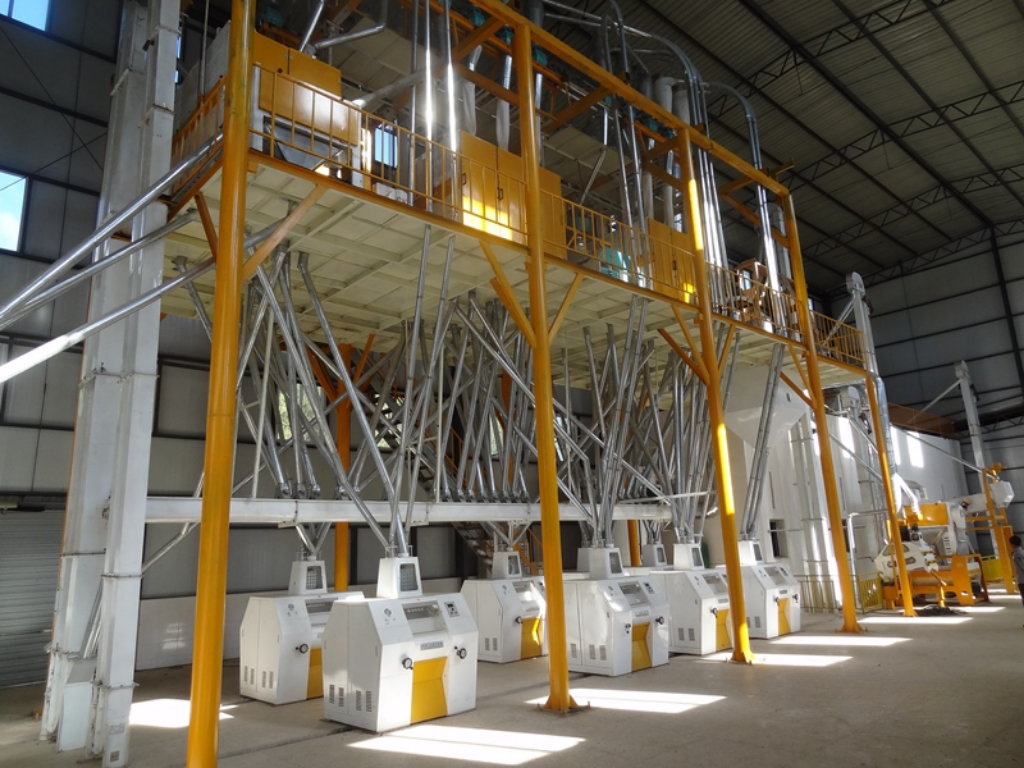
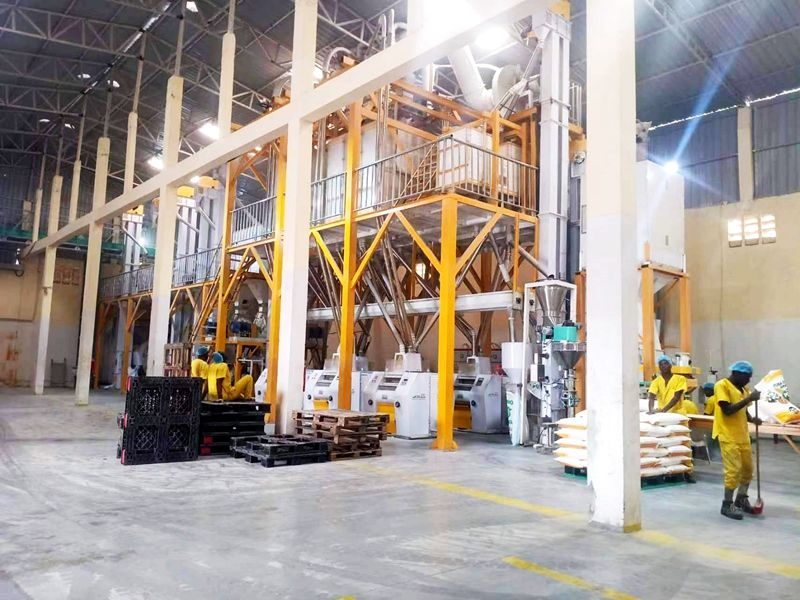
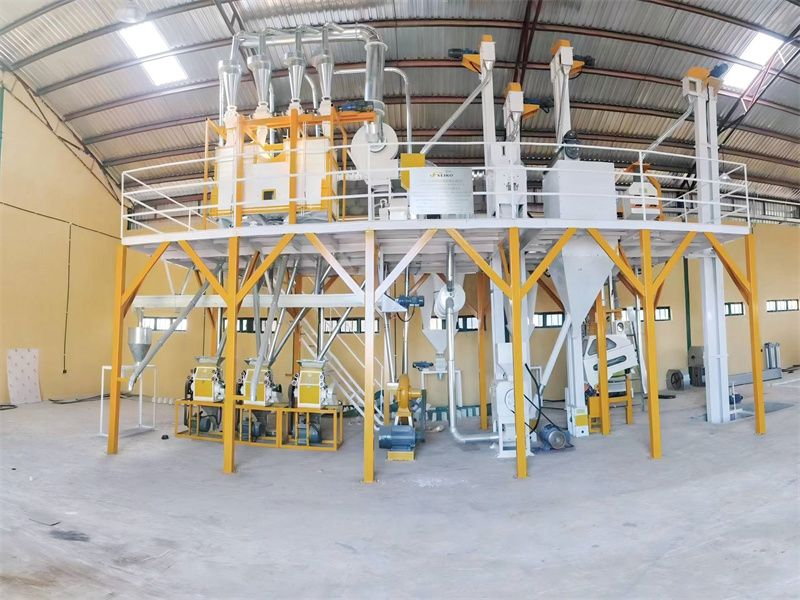
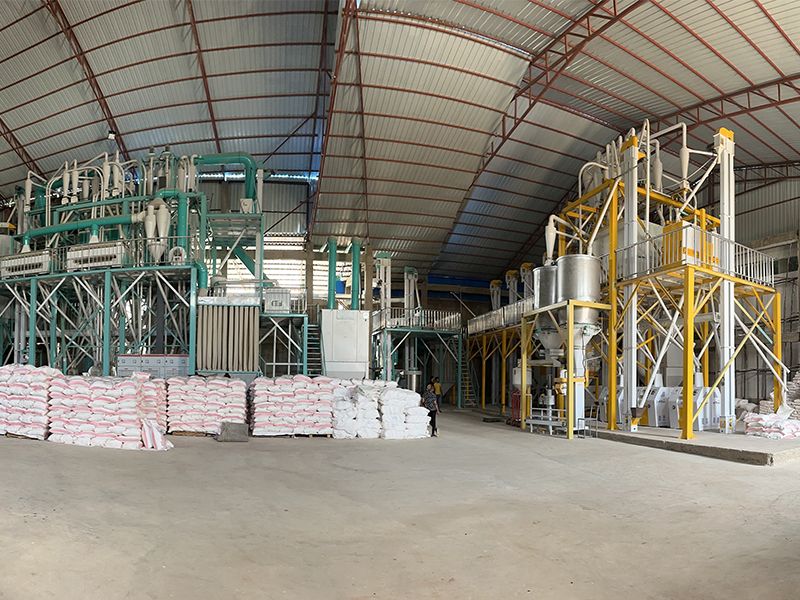
Utility planning is one of the most important steps before building a 120TPD Wheat Flour Mill Plant. The electrical load, water demand, air system, dust control, and backup power must match the real production plan. A correct wheat flour milling process design helps reduce downtime, energy waste, and operating risk. This guide gives practical utility ranges for overseas buyers and distributors who need a clear plan before ordering equipment from Xingfeng.
A 120TPD plant processes about 120 metric tons of wheat per 24 hours. The actual utility requirement changes with wheat type, flour grade, automation level, local climate, and building design. Therefore, the figures below are planning values, not a final electrical or civil engineering certificate.

1. Quick Utility Summary for a 120TPD Wheat Flour Mill
For early budgeting, buyers can use the following utility range. A detailed load list should be prepared after the equipment configuration is confirmed.
| Utility item | Recommended planning range | Main purpose |
|---|---|---|
| Connected electrical load | 750 to 1,000 kW | Roller mills, plansifters, purifiers, fans, conveyors, packing, and auxiliaries |
| Normal operating demand | 500 to 700 kW | Typical running demand after motors start and the line reaches stable production |
| Transformer capacity | 800 to 1,250 kVA | Allows starting current, future expansion, and reasonable reserve |
| Backup generator | 500 to 800 kVA | Emergency operation for key equipment and safe shutdown |
| Process and domestic water | 4 to 8 m3 per day | Tempering, cleaning, staff use, and small utility losses |
| Compressed air | 1.5 to 3.0 m3 per minute at 7 to 8 bar | Pneumatic valves, instrument control, and packing equipment |
| Dust collection air volume | 25,000 to 45,000 m3 per hour | Air cleaning for milling, sifting, conveying, and packing zones |
The table gives a useful starting point for site selection. It does not mean every motor runs at full power at the same time. The final value depends on motor efficiency, production scheduling, fan pressure, filter resistance, and the number of packing lines.
2. Electrical Load Planning
2.1 Main power consumers
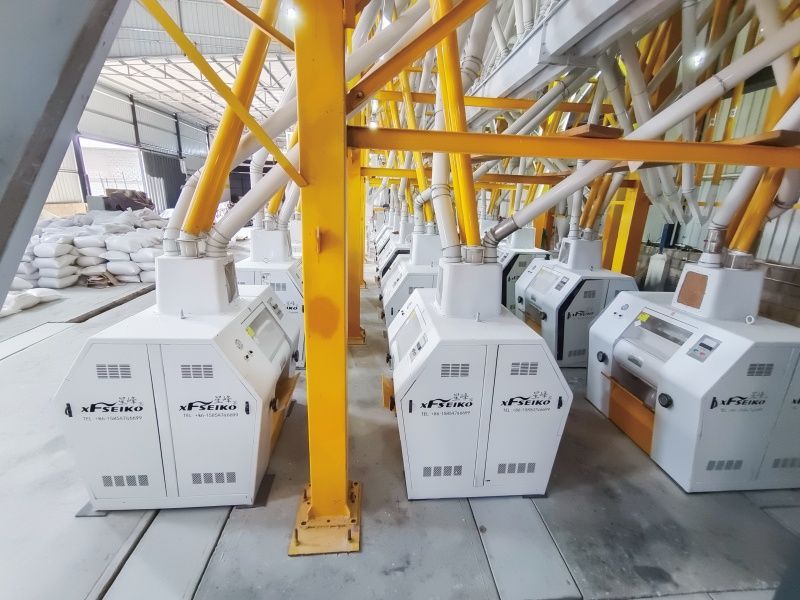
The largest electrical consumers are roller mills, plansifters, pneumatic fans, dust collectors, elevators, screw conveyors, compressors, and packing machines. Fans can use a significant share of the total power because they operate continuously and must overcome pressure losses in ducts and filters.
For a standard 120TPD wheat flour mill plant, a connected load of 750 to 1,000 kW is a practical early estimate. The average operating demand may be 500 to 700 kW. This difference exists because some machines work in sequence, while others start only during cleaning, product change, or packing.
2.2 Suggested power calculation method
- Prepare a motor list for every machine.
- Record motor rating, quantity, voltage, and starting method.
- Separate continuous loads from intermittent loads.
- Apply a demand factor based on the production schedule.
- Add 15 to 25 percent reserve for future needs.
- Check short circuit protection and power factor correction.
Planning formula: connected load equals the sum of motor ratings. Maximum demand equals connected load multiplied by the demand factor. Transformer capacity should then include a reserve for motor starting and future expansion.
2.3 Transformer and distribution advice
An 800 to 1,250 kVA transformer is often suitable for this plant size. The exact selection depends on the local voltage, power factor, generator plan, and whether grain cleaning, warehouse ventilation, and office loads share the same transformer.
Use a main low-voltage distribution board with separate outgoing sections for milling, dust collection, packing, air compression, lighting, and auxiliary buildings. This design makes fault finding faster. It also allows the operator to stop one section without stopping the entire mill.
Variable frequency drives can reduce fan and conveyor energy use. Soft starters or controlled starting systems can reduce voltage drops when large motors start. Power factor correction may also lower electricity penalties, but it must be designed with the local power company requirements.
3. Backup Power and Production Continuity
Power failure can stop production, interrupt wheat tempering, damage product flow, and leave flour inside machines. A backup plan should protect people, equipment, and product quality rather than simply power every motor.
| Backup option | Suitable use | Advantages | Limitations |
|---|---|---|---|
| 500 to 800 kVA generator | Emergency milling, ventilation, packing, and safe shutdown | Strong protection during grid failure | Fuel, noise, maintenance, and installation cost |
| Small generator | Lighting, controls, compressors, and safe shutdown only | Lower purchase and fuel cost | Cannot run the full milling line |
| Automatic transfer system | Fast changeover between grid and generator | Reduces manual operation time | Needs correct protection and testing |
Many buyers choose a generator that supports essential loads instead of the full connected load. Essential loads may include the control system, dust collectors, elevators, selected roller mills, compressors, lighting, and packing. The final emergency sequence should be tested before commercial production.
4. Water Demand and Wheat Tempering
4.1 How much water does the plant need?
A flour mill normally uses much less water than a food processing factory. Most water is added to wheat during tempering. Additional water is used for staff facilities, equipment cleaning, laboratory work, and small losses.
For 120 tons of wheat per day, tempering may require about 2.4 to 4.8 m3 per day when water addition is 2 to 4 percent of wheat weight. With domestic and cleaning use, total daily demand is commonly planned at 4 to 8 m3.
The correct water amount depends on wheat moisture, grain hardness, target flour quality, and tempering time. The water must be clean and suitable for food production. It should not contain a level of salt, oil, or microbial contamination that could affect flour safety.
4.2 Water system components
- Raw water tank sized for at least one day of normal use.
- Water pump with a standby unit for reliable operation.
- Water filter or treatment system based on local water quality.
- Flow meter for accurate tempering control.
- Automatic water dosing system connected to wheat flow.
- Drainage for cleaning water and domestic wastewater.
A water storage capacity of 8 to 15 m3 gives useful operating security for a 120TPD plant. The tank size should be checked against local water supply reliability, fire protection rules, and available space.
5. Compressed Air and Instrument Air
Compressed air supports pneumatic gates, diverter valves, air cylinders, bag filters, weighing systems, and some packing machines. Poor air quality can cause valve failure, product contamination, and unstable packing weight.
A common planning range is 1.5 to 3.0 m3 per minute at 7 to 8 bar. The compressor should include a receiver tank, dryer, filters, pressure regulator, and drain system. Select an oil-free compressor where air may contact flour or food packaging directly.
Recommended compressed air flow
- Atmospheric air enters the compressor.
- The compressor raises pressure to the selected working level.
- The receiver tank reduces pressure fluctuation.
- The dryer removes water from compressed air.
- Filters remove oil particles and solid dust.
- The distribution pipe sends clean air to each user point.
Install the compressor in a clean, cool, and ventilated room. Keep it away from flour dust, steam, direct sunlight, and high ambient heat. A standby compressor is useful when packing must continue during maintenance.
6. Dust Collection and Ventilation
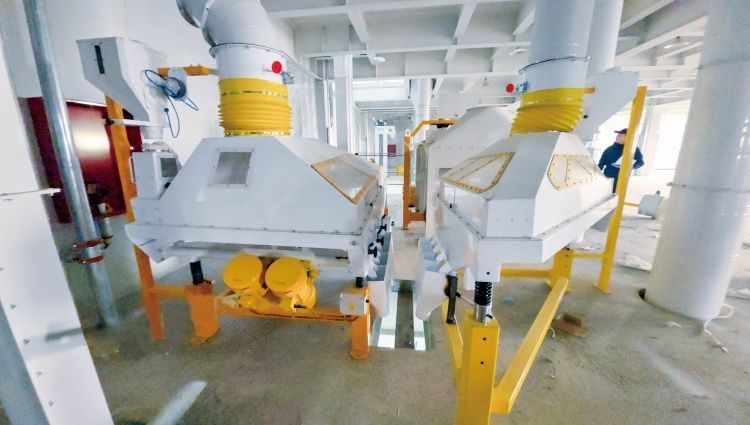
Dust control is a safety, quality, and maintenance requirement. Wheat dust can affect worker health, reduce visibility, enter bearings, and create an explosion risk if it accumulates in the wrong conditions.
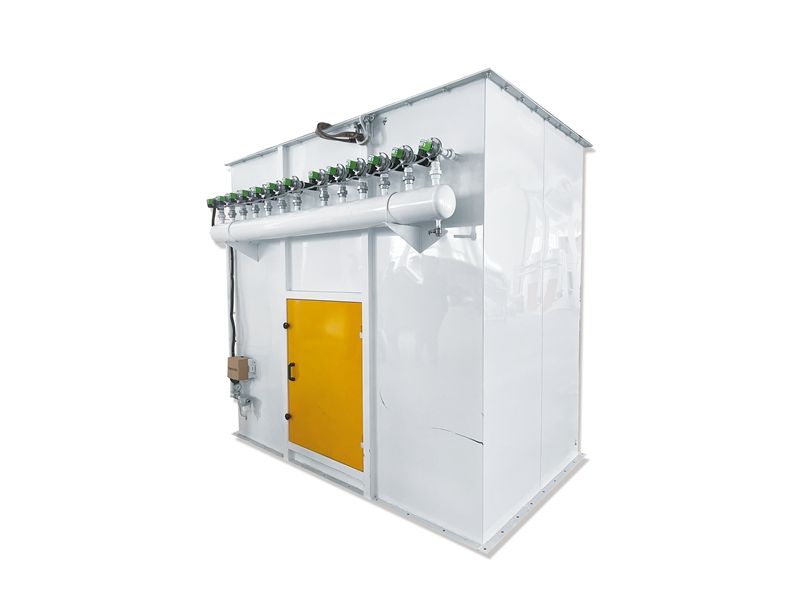
A 120TPD mill may need total dust collection airflow of about 25,000 to 45,000 m3 per hour. The final value depends on the number of aspiration points, duct length, air velocity, filter type, and whether the cleaning section has a separate fan system.
Dust collection flow chart
- Dust is captured at the machine hood or aspiration point.
- Ducts carry the dust-laden air to a central filter.
- A cyclone or pre-separator removes heavier particles where required.
- The pulse jet bag filter removes fine flour dust.
- The fan creates stable negative pressure in the duct system.
- Collected material is discharged into a sealed container or approved recovery line.
Keep ducts short and avoid unnecessary sharp bends. Check access doors, filter cleaning pressure, fan vibration, and discharge seals. The dust collector should be planned together with the flour mill layout, not added after the building is complete.
7. Utility Planning by Plant Area
| Plant area | Power needs | Water needs | Other utility needs |
|---|---|---|---|
| Wheat receiving and cleaning | Elevators, conveyors, cleaners, fans | Limited, except for cleaning | Dust collection and compressed air |
| Tempering section | Conveyors and dosing equipment | Accurate water dosing | Water tank, pump, and control system |
| Milling section | Roller mills, sifters, purifiers, fans | Normally none during production | Dust collection and stable ventilation |
| Flour packing | Weighers, baggers, conveyors, sewing machines | Normally none | Compressed air and clean working air |
| Warehouse | Lighting, ventilation, forklifts, conveyors | Cleaning and staff use | Fire protection and emergency lighting |
8. Utility Installation Sequence
Utility work should follow the equipment layout and construction schedule. The following sequence reduces rework and helps the project team control cost.
- Confirm production data. Define wheat capacity, flour grades, operating hours, packing sizes, and future expansion.
- Prepare the equipment load list. Record every motor, fan, pump, compressor, heater, and lighting circuit.
- Set utility design values. Confirm power, water, air, dust airflow, drainage, and fire water requirements.
- Reserve plant space. Allocate rooms for transformers, generators, compressors, water tanks, filters, and electrical panels.
- Design cable and pipe routes. Keep routes safe, accessible, short, and separate from dusty product flow where possible.
- Install and test systems. Check insulation, grounding, pressure, leakage, airflow, emergency stops, and automatic controls.
- Run a commissioning test. Measure real power, water dosing, air pressure, fan current, and dust collector performance.
During commissioning, compare measured values with the design load. If a fan draws more current than expected, check duct blockage, filter resistance, and damper position. If water dosing is unstable, check wheat flow measurement, pump pressure, and control calibration.
9. Common Utility Planning Mistakes
Using only the average power value
Average operating power does not show motor starting current or future expansion. Selecting a transformer only from the average value may cause voltage drops and repeated trips.
Ignoring dust collector power
Fans and filters are essential parts of the wheat flour milling process. Their power demand can be large, especially when ducts are long or filters are not cleaned correctly.
Underestimating water storage
A plant may use only 4 to 8 m3 per day, but an unreliable water supply can stop tempering. A storage tank and standby pump provide better protection than relying only on the public water line.
Putting the compressor in a dusty room
Dust can damage filters and reduce compressor service life. A separate clean room improves air quality and lowers maintenance frequency.
Leaving no space for maintenance
Transformers, generators, filters, and compressors need safe access. Maintenance space should be shown on the layout before construction begins.
10. Xingfeng Utility Planning Checklist
Before ordering a 120TPD wheat flour mill plant, the buyer and supplier should confirm the following information:
- Local voltage, frequency, phase system, and utility connection rules.
- Available transformer capacity and power supply reliability.
- Whether the generator must run the full line or only essential equipment.
- Wheat moisture, wheat hardness, and target flour extraction rate.
- Water quality, water pressure, and supply hours per day.
- Required flour packing sizes and number of packing lines.
- Local dust, fire, noise, and worker safety regulations.
- Future capacity plans, such as an additional 60TPD milling line.
- Available building height, service platforms, and equipment access.
Xingfeng can use this information to prepare a project-specific load list, utility schedule, equipment layout, and installation proposal. The aim is not to select the largest utility system. The aim is to select a safe system that supports stable production with reasonable operating cost.
Conclusion: Plan Utilities Before You Build the Mill
For a 120TPD wheat flour mill plant, early planning can begin with 750 to 1,000 kW connected power, an 800 to 1,250 kVA transformer, 4 to 8 m3 of daily water, 1.5 to 3.0 m3 per minute of compressed air, and 25,000 to 45,000 m3 per hour of dust collection airflow.
These numbers help overseas buyers compare sites, estimate infrastructure cost, and avoid late construction changes. The final design should be based on the selected milling equipment, local utility conditions, safety rules, and expansion plan. A complete utility plan prepared with Xingfeng supports reliable operation from wheat receiving to flour packing.