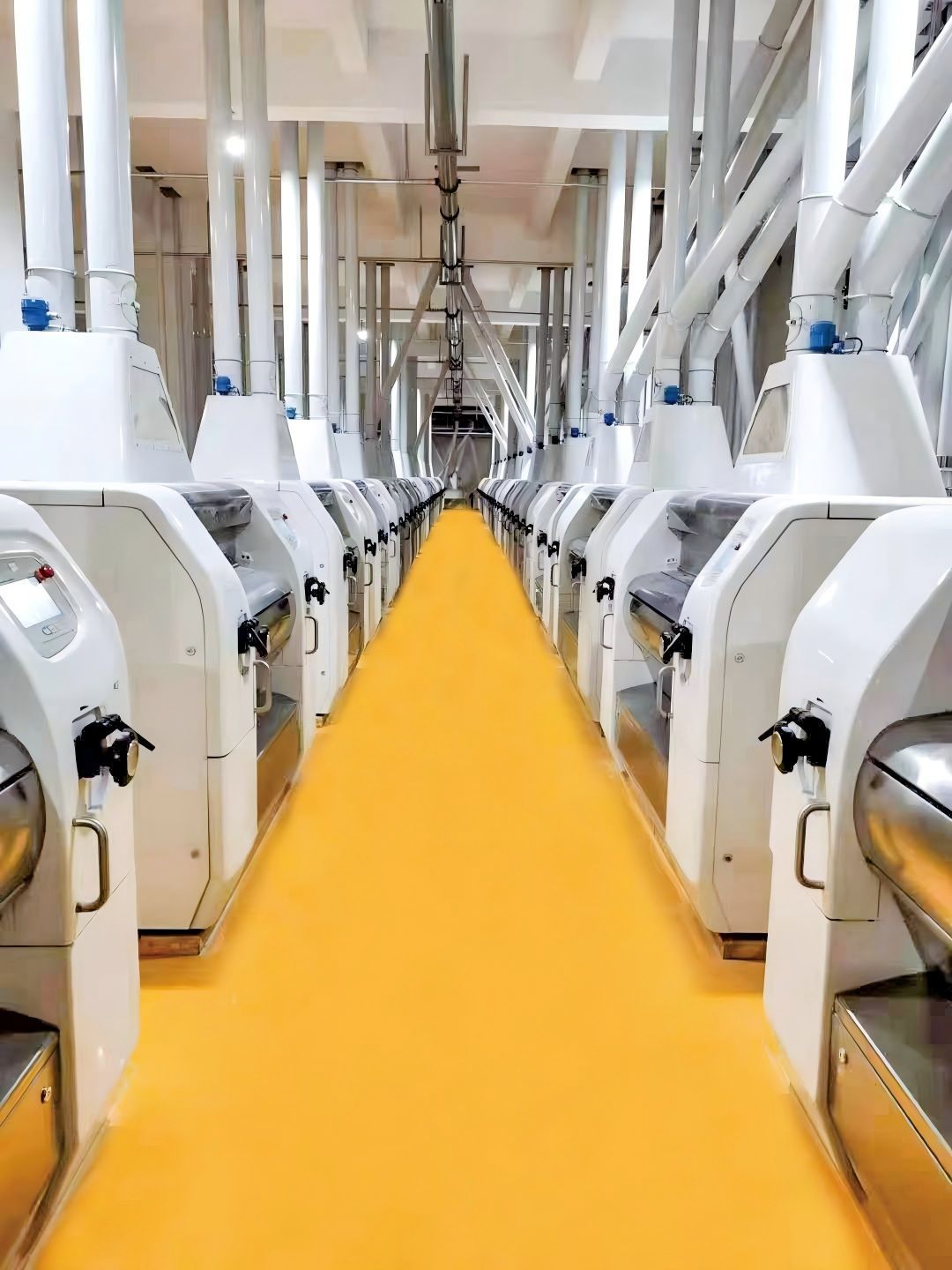
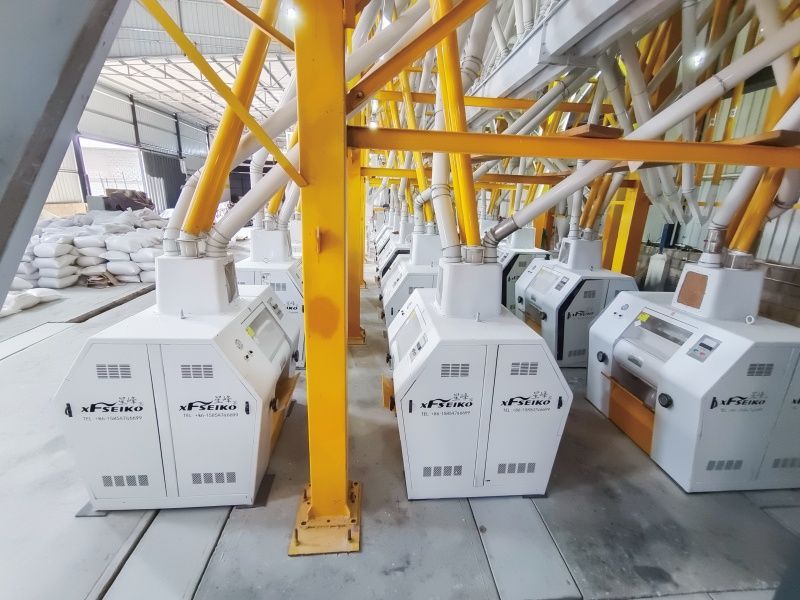
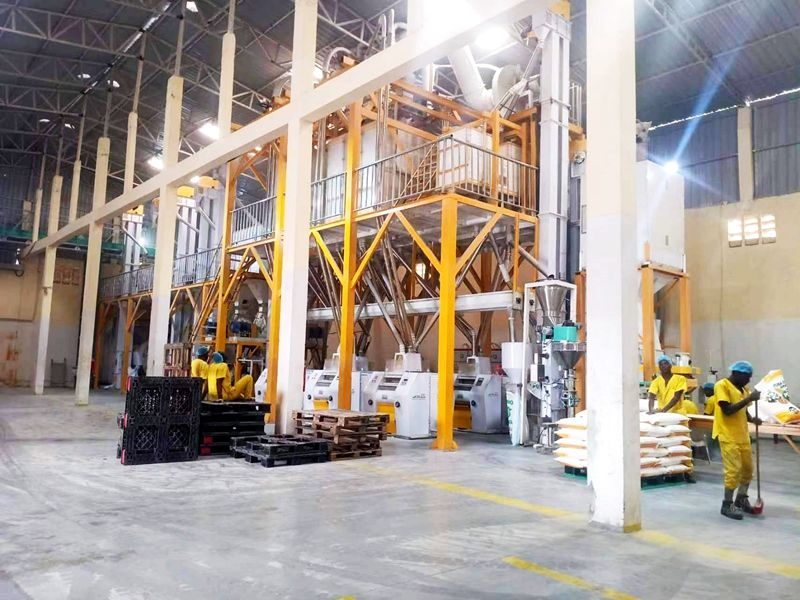
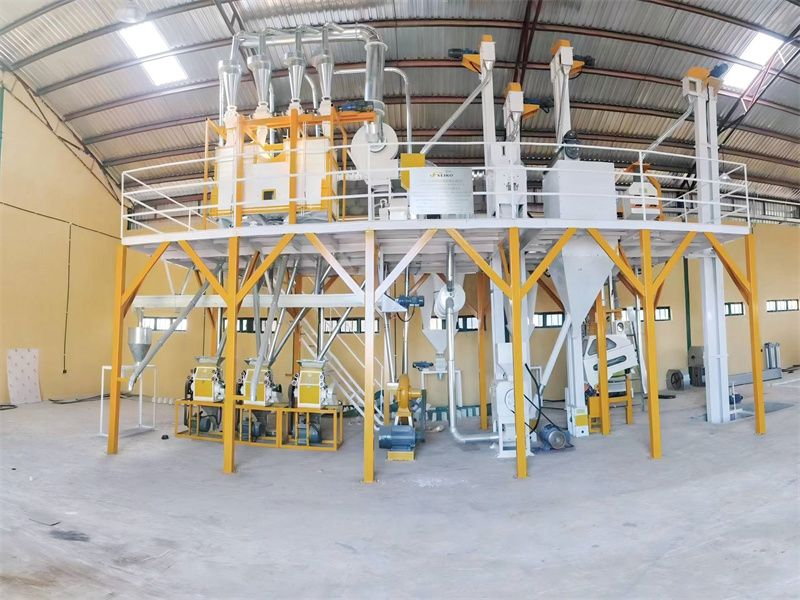
The 30TPD Wheat Flour Mill Plant can produce Grade I, Grade II, and all-purpose flour on one milling line. Modern wheat flour milling uses roller mills, plansifters, and controlled bran separation to manage flour quality. Many producers also need a small scale flour mill that fits local wheat supply and market demand. A flexible wheat flour production line can change the flour grade by adjusting sieve passages, product streams, and blending ratios. Without this control, a mill may produce one basic flour type but lose valuable bran and middlings. A well-designed milling process allows the operator to produce several commercial products from the same wheat batch.
The term 30TPD means 30 metric tons of wheat processed in 24 hours. This equals a nominal capacity of 1.25 tons per hour. If the plant runs for 16 hours each day, the practical hourly rate should be about 1.88 tons per hour to reach the daily target. This difference matters when selecting the flour milling machine, cleaning section, storage bins, and packing system.
Yes. A 30TPD wheat flour mill plant can produce Grade I, Grade II, and all-purpose flour on one milling line when it has separate product streams, adjustable roller gaps, suitable plansifter screens, bran and purifier control, and a blending system. Grade I flour normally uses a lower ash and higher extraction stream. Grade II flour includes more outer endosperm and has a higher ash level. All-purpose flour is made by blending selected streams to meet the required protein, moisture, ash, color, and baking performance. The final product should be confirmed through laboratory testing and local food regulations.
A 30TPD wheat flour mill plant is designed to process 30 metric tons of cleaned wheat per day. The capacity is normally calculated at the wheat inlet, not at the final flour outlet. Wheat moisture, kernel size, cleaning losses, and extraction rate affect the final product quantity.
| Item | Typical design value | Why it matters |
|---|---|---|
| Nominal wheat capacity | 30 metric tons per 24 hours | Defines the plant size |
| Average hourly capacity | 1.25 tons per hour | Used for 24-hour operation |
| Hourly capacity for 16-hour operation | About 1.88 tons per hour | Allows daily cleaning and maintenance |
| Typical flour extraction range | 72 to 82 percent | Depends on wheat quality and flour grade |
| Estimated flour output | 21.6 to 24.6 tons per day | Based on the extraction range |
The balance becomes bran, shorts, germ, dust, and other by-products. These materials can be sold as animal feed or used in other food and feed applications, depending on local rules.
The same wheat flour production line can make several products when the miller controls the product streams. The line does not need a completely separate mill for each grade. It needs the correct separation and blending points.
| Product | Main processing approach | Common quality direction | Typical use |
|---|---|---|---|
| Grade I flour | Use cleaner endosperm streams and remove more bran particles | Lower ash, lighter color, fine particle size | White bread, noodles, cakes, and premium retail flour |
| Grade II flour | Include selected lower reduction streams and more outer endosperm | Higher ash, stronger flavor, darker color than Grade I | Bread, local bakery products, and household flour |
| All-purpose flour | Blend suitable streams to reach the target specification | Balanced protein, ash, color, and baking performance | General household and bakery use |
The process begins with wheat cleaning and ends with flour packing. Each stage has a specific role. Removing stones and metal protects the equipment. Conditioning improves bran elasticity. Roller milling breaks the wheat kernel in controlled stages. The plansifter separates the ground material into different particle sizes.
Step 1: Wheat receiving and weighing
Then:
Step 2: Pre-cleaning with a scalper, magnet, and aspiration channel
Then:
Step 3: Fine cleaning with a separator, destoner, scourer, and intensive dampener
Then:
Step 4: Tempering for about 12 to 24 hours, depending on wheat hardness and moisture
Then:
Step 5: First break with a roller mill
Then:
Step 6: Plansifting of break stock
Then:
Step 7: Purification of middlings
Then:
Step 8: Reduction milling through several roller passages
Then:
Step 9: Final plansifting and product stream collection
Then:
Step 10: Blending, weighing, packing, and quality inspection
The break system opens the wheat kernel and releases the endosperm. The goal is to keep bran in large pieces. Large bran pieces are easier to remove in the plansifter and purifier.
The reduction system gradually reduces purified middlings into flour. Several light grinding steps are better than one aggressive grinding step. Excessive grinding can create bran powder and raise the ash level of the flour.
A typical compact line may include four to five break passages and four to six reduction passages. The final number depends on wheat hardness, desired extraction, floor space, and product requirements.
The plansifter separates flour, semolina, middlings, and bran by particle size. A compact 30TPD plant may use a plansifter with several sections and multiple screen decks. Screen areas and mesh sizes should be selected after pilot testing because wheat varieties produce different stock conditions.
The purifier uses controlled air movement to separate light bran particles from heavier endosperm particles. Air speed must be adjusted carefully. Too much air can carry useful flour into the bran stream. Too little air can leave bran particles in the flour.
For a stable process, operators should check at least three points during production:
The cleaning section protects food safety and improves milling performance. Common equipment includes a receiving hopper, bucket elevator, vibrating feeder, pre-cleaner, magnetic separator, air aspiration channel, wheat scourer, destoner, and dampener.
| Equipment | Function | Control point |
|---|---|---|
| Separator | Removes large and small impurities | Screen condition and feed rate |
| Destoner | Removes stones with different density | Air volume and deck angle |
| Magnetic separator | Removes ferrous metal particles | Magnet cleanliness and position |
| Scourer | Removes surface dust and loose dirt | Rotor speed and wheat residence time |
| Dampener | Adds water evenly before tempering | Water dosage and mixing accuracy |
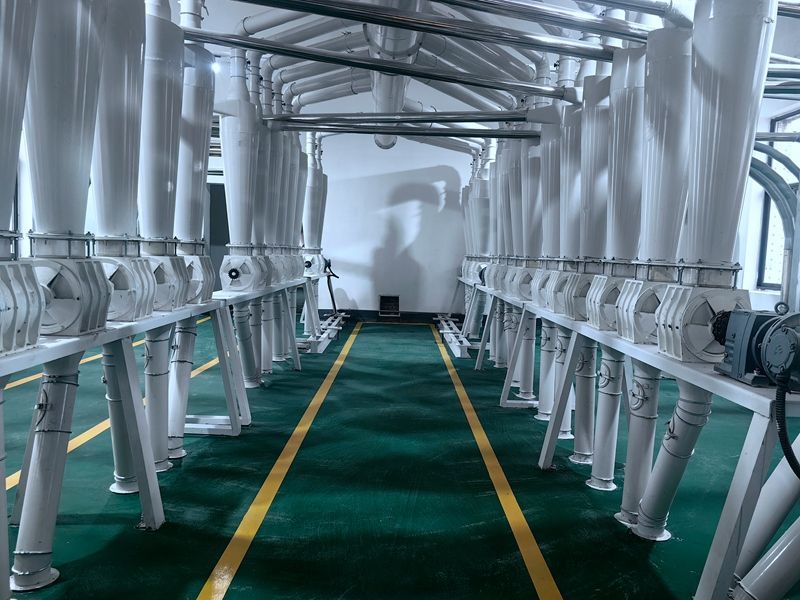
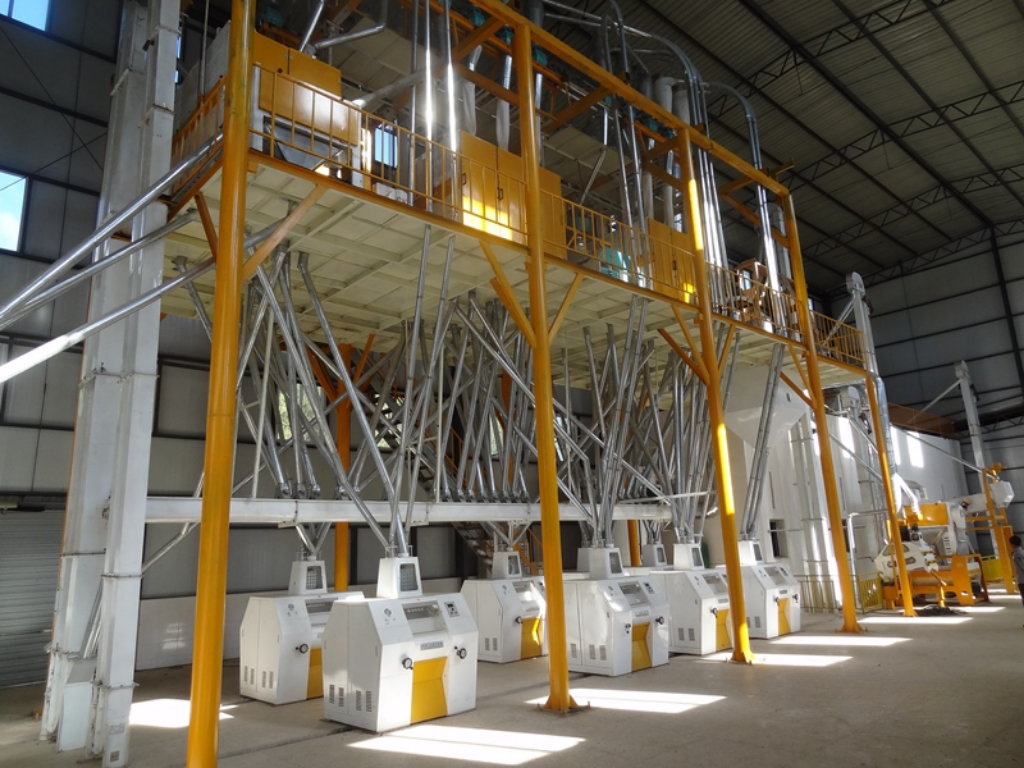
The core flour milling machine group normally includes roller mills, plansifters, purifiers, bran finishers, impact detachers, elevators, pneumatic pipes, and product bins. Roller mills should have adjustable roll gaps and stable feeding. Differential roll speed helps create the required grinding action.
Electrical motors, bearings, belts, and roll surfaces should be selected for continuous operation. The control cabinet should include overload protection, emergency stops, motor protection, and interlocks. Interlocks can stop the feed when a downstream machine is not running.
Separate flour bins allow the operator to store different streams. A Grade I flour recipe may use selected reduction streams. A Grade II recipe may include more of the middle and lower extraction streams. An all-purpose flour recipe can combine both types in a fixed ratio.
For accurate production, the blending system should use load cells or a calibrated dosing device. A practical target for a small plant is to keep blend variation within the buyer's agreed tolerance. Many plants use a batch size of 250 to 1,000 kilograms, depending on the bin design and packing plan.
Flour grades are not defined by color alone. Moisture, ash, protein, wet gluten, particle size, falling number, and baking performance can all affect the final specification. The exact values vary by country and customer.
| Test item | Grade I direction | Grade II direction | All-purpose direction |
|---|---|---|---|
| Extraction | Often 72 to 75 percent | Often 78 to 82 percent | Set by the final recipe |
| Ash | Lower target | Higher target than Grade I | Middle target or customer specification |
| Color | Lighter | Usually darker | Balanced for general use |
| Protein | Depends on wheat blend and extraction | May be higher due to greater extraction | Adjusted through wheat selection and blending |
| Particle size | Fine and uniform | Fine with more outer endosperm material | Fine and suitable for several recipes |
Wheat blending can improve consistency. A mill may combine hard wheat and soft wheat before cleaning. The blend should be based on protein, moisture, kernel hardness, test weight, and falling number.
For example, a bakery flour may need stronger gluten than a cake flour. An all-purpose product needs a middle performance level. The miller can adjust the wheat blend and then make smaller changes through flour stream blending.
Before milling, inspect each wheat lot. Record the supplier, lot number, delivery date, moisture, test weight, foreign material, damaged kernels, insect damage, and falling number when required.
Moisture is especially important. Many wheat milling operations condition wheat to about 13.5 to 16.0 percent moisture, depending on wheat hardness and tempering time. The correct value must be confirmed by a laboratory test and a milling trial.
Operators should inspect the cleaned wheat, conditioned wheat, break stock, bran, middlings, and final flour. A basic plant laboratory can use a moisture analyzer, laboratory scale, sieve set, ash furnace, gluten tester, and color measurement device.
| Inspection | Example control method | Recommended frequency |
|---|---|---|
| Moisture | Calibrated moisture analyzer | Each wheat lot and each flour batch |
| Particle size | Laboratory sieve analysis | At least once per shift and after screen changes |
| Ash | Laboratory furnace method | Each product lot or according to the quality plan |
| Protein | Kjeldahl or approved rapid analyzer | Each wheat blend and product change |
| Gluten | Wet gluten test | When baking performance is important |
| Falling number | Approved falling number method | For wheat receiving and bakery flour control |
| Metal control | Magnet inspection and metal detection | At start-up, product change, and end of shift |
The plant layout should support dry cleaning, inspection, and pest control. Food contact surfaces should be accessible. Dust collection is also important because flour dust can affect worker health and create a combustible atmosphere.
The mill should follow a documented food safety plan. Depending on the market, the plan may align with HACCP principles, ISO 22000 requirements, Codex food hygiene guidance, or local flour standards. The buyer should confirm the required standard before equipment production.
Power consumption depends on the machine list, pneumatic conveying distance, dust collection system, and operating schedule. A 30TPD plant often requires a connected motor load in the approximate range of 100 to 180 kilowatts. The final electrical load must be confirmed through the equipment motor list.
The building should provide space for wheat receiving, cleaning, tempering, milling, flour storage, packing, laboratory work, and maintenance. A multi-floor layout can reduce the footprint by using gravity flow. A single-floor layout may simplify construction but require more conveyors and elevators.
Air aspiration removes light impurities and controls flour dust. The system should include filters, air ducts, rotary valves, and safe discharge points. Duct velocity must be high enough to carry dust but not so high that it wastes energy or carries useful product away.
Operators should clean dust collection equipment according to a written schedule. The plant should also use grounding, suitable electrical components, and emergency procedures for combustible dust control.
Xingfeng can design a 30TPD wheat flour mill plant around the wheat type, product grades, building size, local power supply, and packing method. The design should begin with a product specification sheet rather than only a daily capacity number.
A useful design document should state:
A controlled commissioning plan reduces start-up problems. Xingfeng's recommended approach is to complete mechanical inspection first, then conduct no-load testing, wheat cleaning tests, conditioning tests, milling tests, and product blending tests.
| Commissioning stage | Minimum check | Output record |
|---|---|---|
| Mechanical inspection | Check alignment, fasteners, belts, bearings, and guards | Signed inspection list |
| No-load test | Run each motor and check vibration, noise, and current | Motor test record |
| Cleaning test | Measure impurity removal and stone separation | Cleaning performance record |
| Milling test | Check throughput, extraction, bran quality, and flour ash | Milling test report |
| Product test | Test at least three product streams and one blend recipe | Product quality report |
| Operator training | Train operators in start-up, shutdown, cleaning, and sampling | Training attendance record |
During product trials, record feed rate, roll gap, roll differential speed, air setting, screen arrangement, extraction, moisture, ash, protein, and particle size. These records help the operator repeat the same flour quality after the plant enters regular production.
One common mistake is selecting equipment only by the nameplate capacity. A machine rated at 30TPD may not achieve that output with hard wheat, high moisture, or long daily shutdowns.
Another mistake is using one flour bin for all streams. This prevents accurate product blending. A third mistake is ignoring laboratory testing. Without ash, moisture, protein, and particle size data, the operator cannot control Grade I, Grade II, or all-purpose flour consistently.
A 30TPD wheat flour mill plant can produce Grade I, Grade II, and all-purpose flour on one milling line. The key is not only the roller mill. The complete system must include effective wheat cleaning, controlled tempering, staged break and reduction milling, plansifting, purification, separate product bins, and accurate blending. A nominal 30TPD capacity equals about 1.25 tons per hour over 24 hours, while a shorter operating schedule requires a higher hourly rate. With suitable equipment, documented quality inspections, and a controlled commissioning plan, Xingfeng can help build a flexible wheat flour production line for retail, bakery, and local food markets.
< Previous: None
> Next: Why Consistent Raw Wheat Moisture Matters in a 100TPD Flour Mill

January. 01, 2024

July. 07, 2024

March. 03, 2026

August. 08, 2024
How to Use Wheat Flour Mill Plant Correctly?
This article provides a comprehensive guide on how to use a wheat flour mill plant correctly.

June. 06, 2025

February. 02, 2024