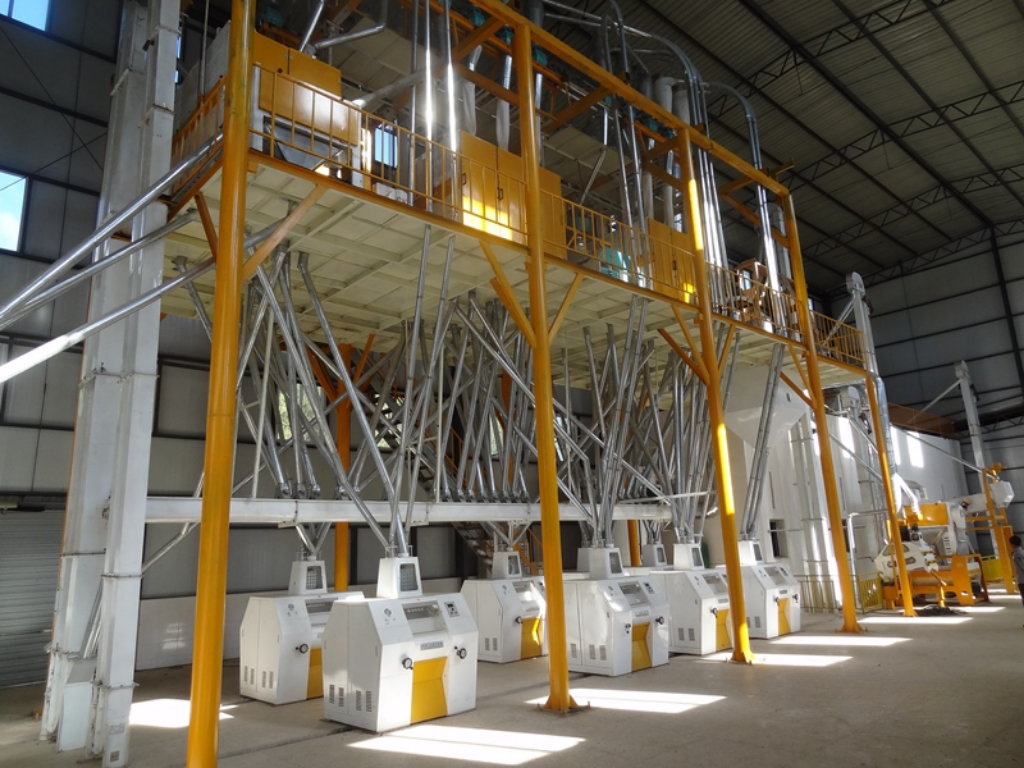
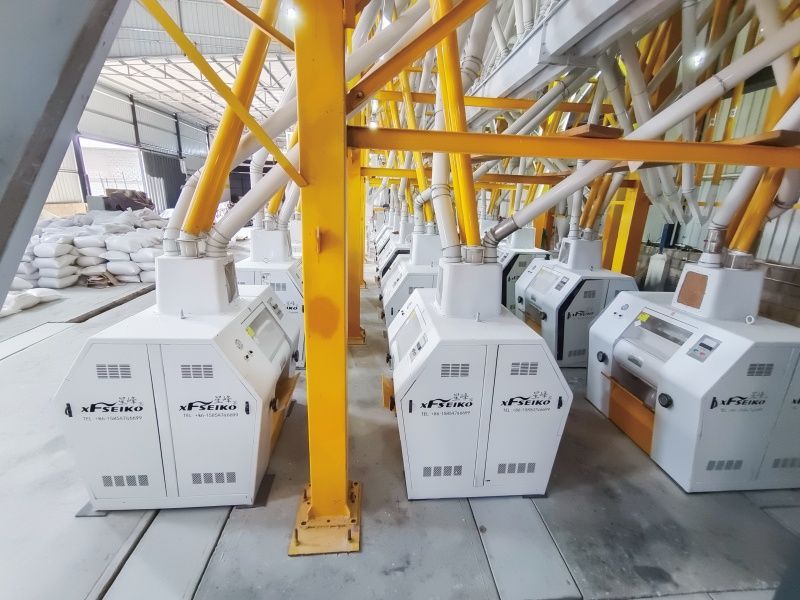
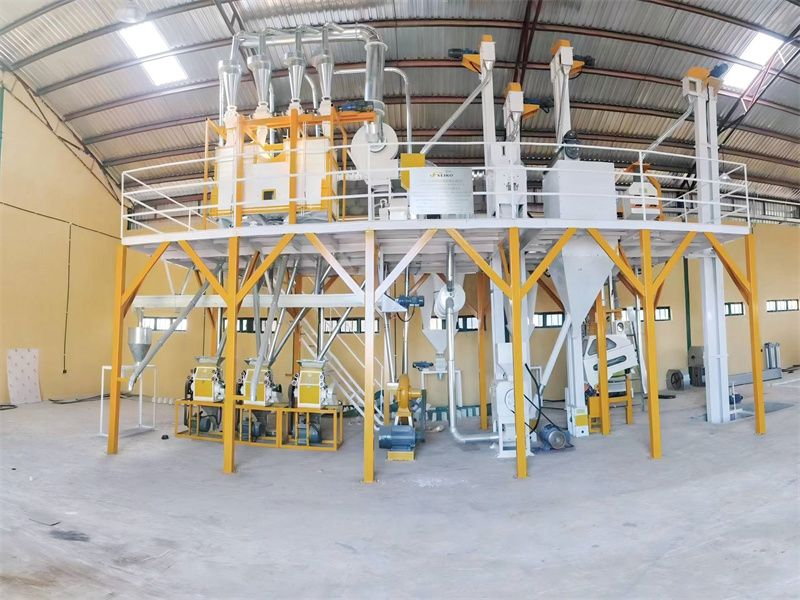
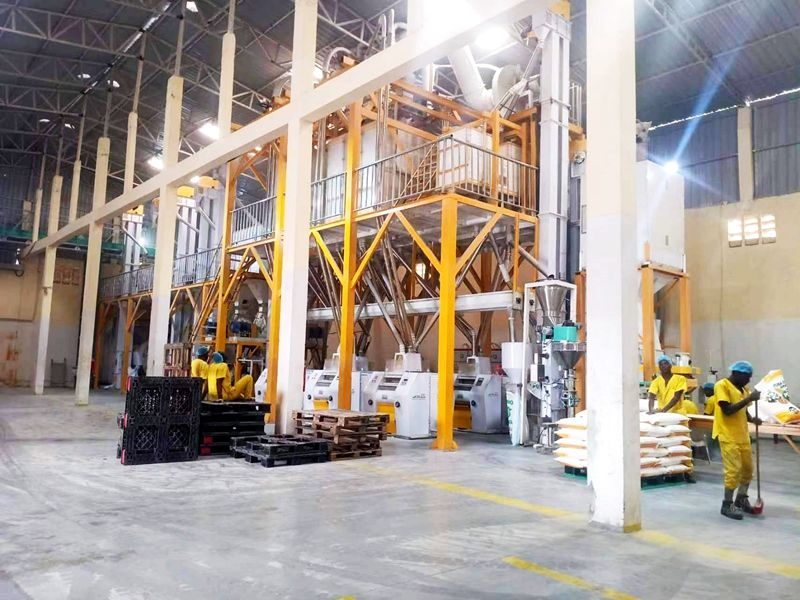
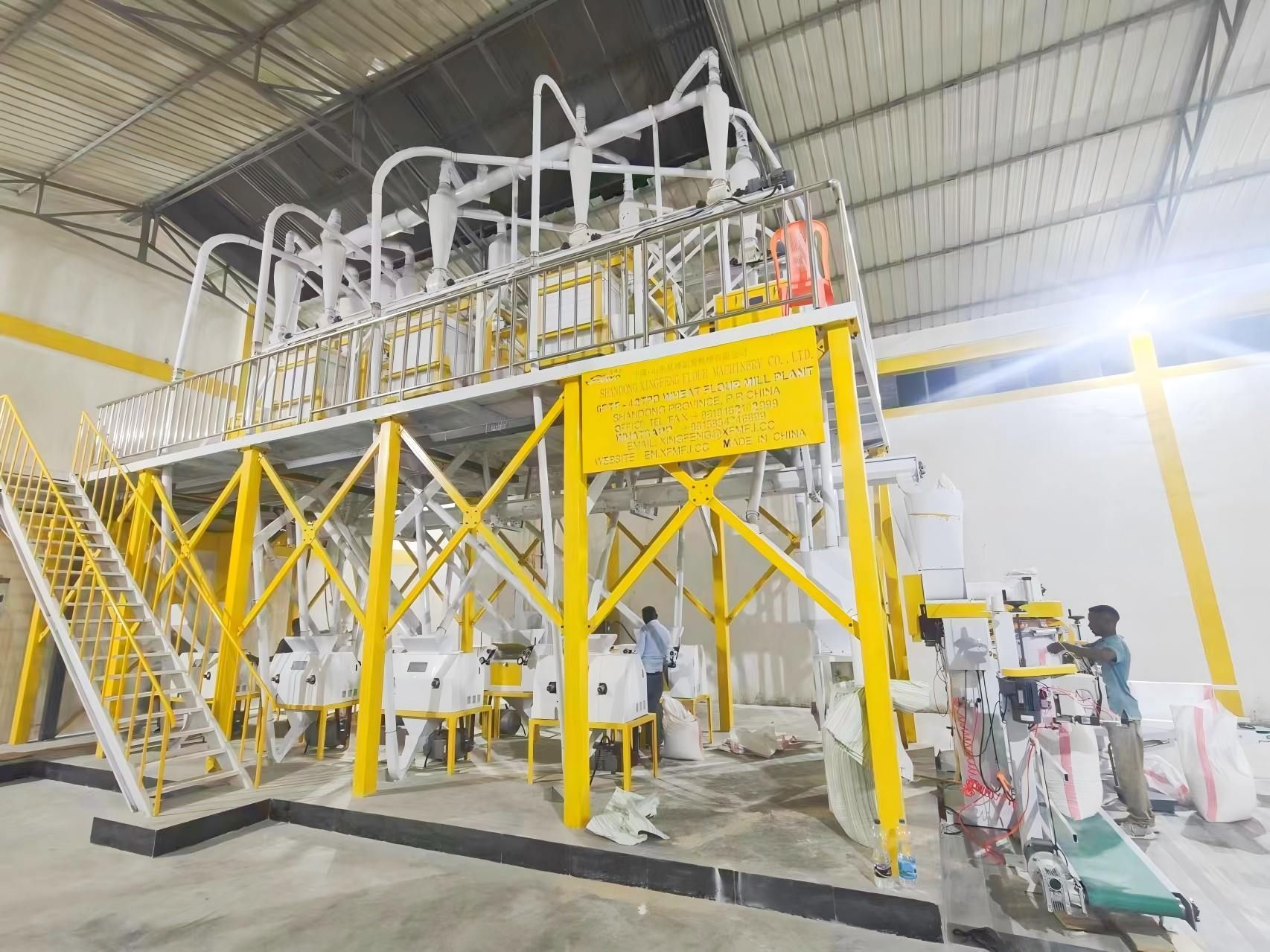
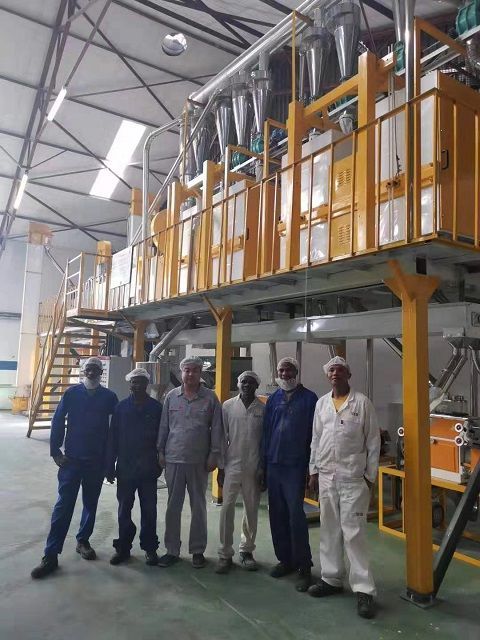
Unexpected downtime can reduce output, delay deliveries, and increase the cost of every ton of maize flour. A planned maintenance program helps a maize flour mill protect production capacity and product quality. Regular roller mill inspection is one of the first tasks because worn rolls can cause poor grinding and high power use. Maize cleaning, degermination, sifting, aspiration, pneumatic conveying, and electrical control checks must also follow a clear schedule. This guide explains the daily, weekly, monthly, and annual preventive maintenance tasks for a 150-200 TPD maize milling plant. When a mill uses maintenance records, spare parts planning, and condition checks, it may reduce unplanned downtime by 30-50 percent compared with an unplanned repair approach.

1. Understand the Main Causes of Maize Mill Downtime
Most production stops do not come from one major failure. They often begin with small problems that are ignored. A loose bearing creates heat. A blocked screen reduces flow. A worn roller increases energy use. If the issue is not corrected, it can stop the whole line.
| Common problem | Early warning sign | Possible production effect | Preventive action |
|---|---|---|---|
| Worn grinding rolls | Uneven flour size and higher motor load | Low extraction rate and poor flour quality | Check roll surface, gap, and bearing temperature |
| Blocked sieve or sifter | Reduced flow and product leakage | Lower capacity and more rework | Clean screens and inspect the sieve frame |
| Dirty aspiration filter | Weak air flow and dust around machines | High dust risk and unstable separation | Clean filters and check fan pressure |
| Loose belt or chain | Noise, vibration, and slipping | Unexpected machine stop | Adjust tension and replace damaged parts |
| Foreign material in raw maize | Metal noise or high reject volume | Damage to the cleaner, degerminator, or roller mill | Inspect magnets, screens, and intake equipment |
Why small defects become costly failures
A 150-200 TPD plant processes a large volume of maize every day. If the line stops for two hours, the mill may lose 12.5-16.7 tons of planned production, depending on the actual operating rate. The final loss also includes labor, power used during restart, delayed shipment, and possible customer complaints.
Maintenance goal: Find abnormal heat, noise, vibration, dust, or product flow before it becomes a shutdown.
2. Complete Daily Preventive Maintenance Tasks
Daily checks take less time than emergency repairs. Operators should complete the inspection before startup, during operation, and after shutdown. Every result should be written in a simple log. A written record helps the maintenance team compare machine conditions from one day to the next.
Before startup
- Walk around the complete production line and look for oil, flour, water, or air leaks.
- Check guards, access doors, covers, and emergency stop devices.
- Confirm that the maize intake hopper, cleaning screens, magnets, and conveyors are free of foreign material.
- Inspect belts, chains, couplings, and visible fasteners for looseness or damage.
- Check lubricant levels according to the equipment manual. Do not mix different grease types without confirmation.
- Make sure electrical panels are closed and dry.
During operation
Listen for a new sound from the cleaning machine, degerminator, roller mill, plansifter, fan, or pneumatic conveying line. A high-pitched sound may show bearing wear. A knocking sound may indicate a loose part. Operators should check motor current and compare it with the normal reading. A sudden increase may mean overload, blockage, or incorrect feed.
The operator should also inspect product flow. Flour should move smoothly through each passage. Uneven flow can come from a blocked spout, damaged valve, full filter, or incorrect air balance. Dust escaping from a connection is a sign that the sealing or aspiration system needs attention.
After shutdown
Remove spilled maize and flour from floors, platforms, motors, and electrical cabinets. Do not use compressed air to blow dust into bearings or control panels. Clean the work area with an industrial vacuum or an approved dry cleaning method. Record the operating hours, faults, corrective actions, and parts used.
3. Schedule Weekly Maintenance for High-Wear Components
Weekly maintenance focuses on parts that experience constant movement, pressure, heat, or dust. The maintenance team should isolate electrical and mechanical energy before opening any machine. Lockout and tagout procedures protect workers from unexpected startup.
Roller mill and grinding section
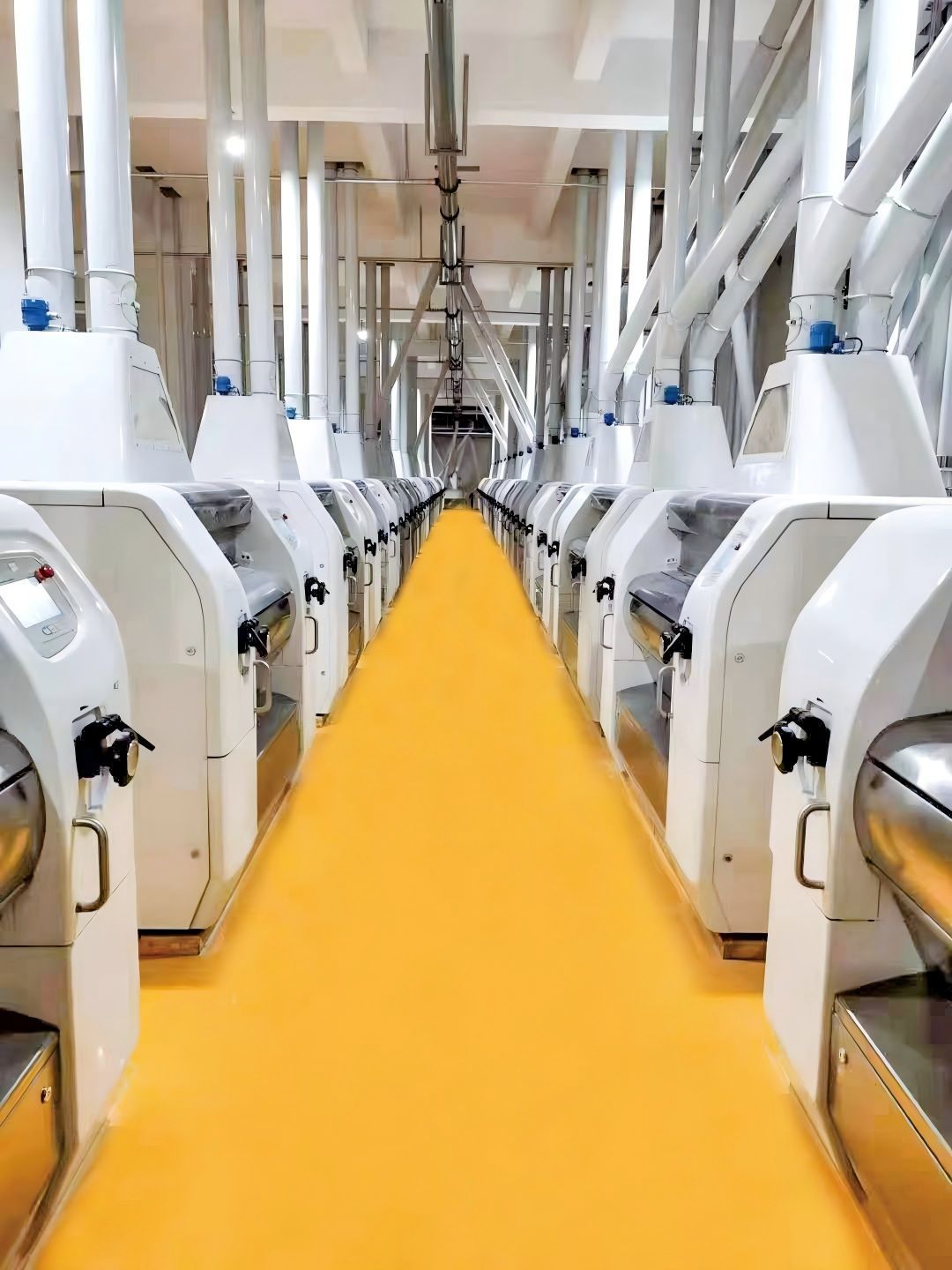
Inspect the roller surface for grooves, cracks, uneven wear, and maize buildup. Check the roll gap and the adjustment mechanism. Inspect bearings for temperature and leakage. Roller bearings should not be washed with water. If the roll surface is worn, flour particle size may become inconsistent and the mill may need more power to reach the same result.
Plansifter and flour separation equipment
Open the sifter inspection doors and check screens, frames, brushes, sealing strips, and clamping devices. A broken screen can send coarse particles into the finished flour. A loose frame can create vibration and reduce separation accuracy. Replace damaged screen cloth instead of using temporary repairs that may affect food safety.
Maize cleaning and degermination equipment
Clean the cleaner screens and inspect the aspiration channel. Check the rubber parts, paddles, impact surfaces, and discharge gates in the degerminator. Remove stones, metal, and other foreign material from the reject system. A clean raw material section protects downstream equipment and supports stable flour extraction.
Conveyors and pneumatic conveying
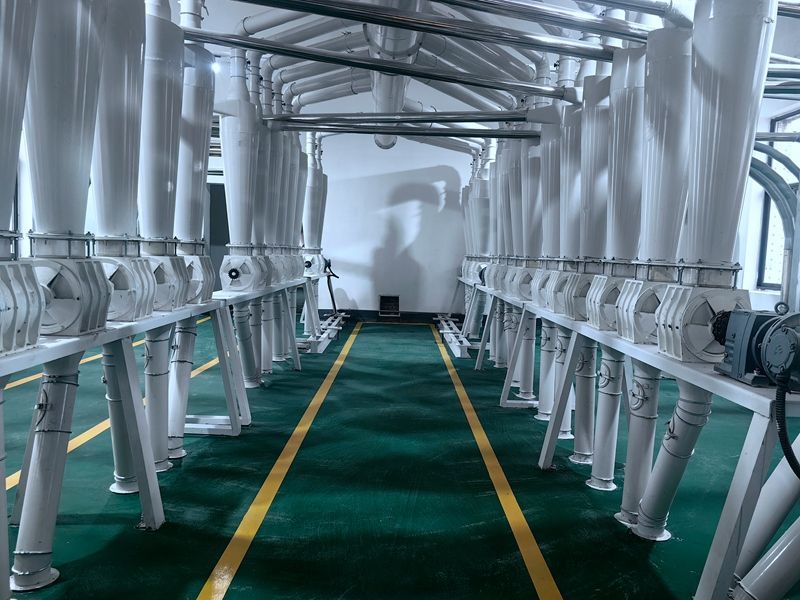
Check screw conveyor flights, bucket elevator belts, cups, pulleys, and chain drives. Look for belt tracking problems or material leakage. For pneumatic conveying, inspect elbows, pipes, airlocks, and flexible connections for wear. A small hole can reduce air pressure and increase dust leakage.
4. Use a Monthly Inspection to Control Performance
Monthly maintenance should include measurements, not only visual checks. Compare current values with the original commissioning data and recent records. This approach helps the team find slow changes before they become urgent repairs.
| Inspection item | What to measure or check | Reason for the check |
|---|---|---|
| Motor and gearbox | Current, temperature, oil level, and vibration | Find overload, poor lubrication, or alignment problems |
| Roller mill | Roll gap, bearing temperature, and grinding result | Maintain stable particle size and capacity |
| Plansifter | Screen condition, balance, seals, and vibration | Protect flour purity and separation accuracy |
| Aspiration system | Air flow, filter condition, and fan vibration | Control dust and maintain cleaning efficiency |
| Electrical system | Terminal tightness, cabinet dust, and alarm history | Reduce electrical trips and control failures |
Check lubrication correctly
Too little lubricant creates friction and heat. Too much lubricant can damage seals and raise bearing temperature. Use the correct grease or oil, the correct quantity, and the correct interval. Mark each lubrication point with its service date. Xingfeng maintenance documentation should be kept with the plant records so operators can follow the recommended service plan for each machine.
Check alignment and vibration
Misalignment between a motor and gearbox can damage couplings and bearings. Unbalanced fans, sifters, and rolls can create vibration that spreads to the machine frame. A handheld vibration meter gives more useful information than hearing alone. If vibration increases over three monthly checks, schedule a planned repair during the next production break.
5. Plan Quarterly and Annual Maintenance
Some tasks need more time and should be planned during a low-demand period. Quarterly work may include a deeper inspection of wear parts. Annual work should include a complete review of the production line, safety devices, electrical control system, and spare parts inventory.
Quarterly tasks
- Inspect and clean all dust collection filters and air ducts.
- Check the calibration of temperature, pressure, weighing, and moisture instruments.
- Inspect bucket elevator belt joints, cups, bearings, and backstop devices.
- Check the condition of pneumatic valves, seals, and air preparation units.
- Inspect flour contact surfaces for corrosion, loose fasteners, and damaged seals.
- Review the most frequent alarms and repeat failures from the previous quarter.
Annual tasks
- Replace high-wear parts according to operating hours and condition data.
- Inspect roller reconditioning needs and verify the roll adjustment system.
- Open gearboxes for oil condition checks and seal inspection.
- Test emergency stops, overload protection, fire equipment, and safety interlocks.
- Clean electrical panels and inspect cable connections by a qualified electrician.
- Review the maintenance budget, spare parts use, downtime hours, and production loss.
Planning rule: Schedule major work before the busiest selling season. A controlled 10-hour shutdown is usually easier to manage than an unplanned 10-hour failure during a delivery period.
6. Follow a Simple Troubleshooting Flow Chart
A standard response prevents operators from changing several settings at the same time. The following process helps the team find the cause and restore production safely.
- Detect an abnormal sound, alarm, temperature, vibration, dust leak, or product flow.
- Reduce feed if needed and inform the shift supervisor.
- Stop the affected machine using the normal procedure.
- Isolate electrical, mechanical, pneumatic, and gravity energy before inspection.
- Check for blockage, loose parts, belt damage, bearing heat, and foreign material.
- Repair or replace the failed part using an approved spare.
- Remove tools and confirm that all guards and covers are installed.
- Start the machine without product and check sound, vibration, and current.
- Introduce maize slowly and confirm stable flow and product quality.
- Record the cause, repair time, parts used, and recommended follow-up task.
Do not restart without finding the cause
Resetting an alarm without checking the machine may create a second failure. For example, a motor overload may result from a blocked conveyor, not from a faulty motor. The blockage must be removed before restart. If the same alarm appears twice in one shift, the maintenance supervisor should review the condition instead of relying on repeated resets.
7. Compare Reactive and Preventive Maintenance
| Maintenance approach | Typical action | Effect on a 150-200 TPD plant | Best use |
|---|---|---|---|
| Reactive maintenance | Repair only after failure | Longer stops, urgent freight, and uncertain production | Unexpected faults that cannot be predicted |
| Preventive maintenance | Service by time, hours, or production volume | More planned work and fewer sudden failures | Belts, screens, lubrication, and routine inspections |
| Condition-based maintenance | Repair after measuring vibration, heat, or wear | Better part life and more accurate repair timing | Bearings, motors, fans, rolls, and gearboxes |
The most effective maize mill maintenance program combines all three approaches. Preventive tasks control known wear. Condition checks identify hidden changes. Reactive repair remains necessary for rare events, but it should not be the main maintenance strategy.
8. Build a Maintenance Checklist and Spare Parts Plan
A checklist should show the machine name, inspection point, frequency, standard result, actual result, technician name, and corrective action. Use clear words such as normal, needs attention, and stop for repair. Digital forms can help managers view repeated problems, but a paper checklist is also effective when it is completed correctly.
Recommended critical spare parts
- Roller mill bearings, seals, and adjustment components.
- Sifter screen cloth, frames, brushes, and sealing strips.
- Conveyor belts, bucket elevator cups, chains, and sprockets.
- Airlock seals, flexible connectors, filter bags, and fan belts.
- Motor contactors, overload relays, sensors, fuses, and control switches.
- Food-grade lubricants, approved fasteners, and common gaskets.
Keep critical parts in a dry, clean storage area. Label each item with its part number and equipment location. The correct spare part reduces repair time because technicians do not need to wait for emergency purchasing or overseas delivery.
9. Track Maintenance Results with Simple Data
A mill cannot improve what it does not measure. Track total operating hours, planned maintenance hours, unplanned downtime hours, repeated failures, mean time between failures, and mean time to repair. Also record tons produced and the main reason for every stop.
Useful maintenance formulas
Availability percentage: Operating time divided by planned production time, multiplied by 100.
Downtime percentage: Unplanned downtime divided by planned production time, multiplied by 100.
Mean time to repair: Total repair hours divided by the number of failures.
For example, if a plant has 720 planned operating hours in a month and 18 hours of unplanned downtime, its unplanned downtime rate is 2.5 percent. The maintenance team can then set a practical target, such as reducing the rate to 1.5 percent over the next three months. Targets should be based on actual plant records, product type, raw maize quality, and local operating conditions.
10. Final Checklist for Lower Downtime
Preventive maintenance is not a single repair. It is a daily operating habit supported by weekly inspections, monthly measurements, planned shutdowns, trained workers, and available spare parts. For a 150-200 TPD maize flour mill, the highest priority areas are the roller mill, plansifter, cleaning section, degerminator, conveyors, aspiration system, motors, bearings, and electrical controls.
- Inspect the line before every startup.
- Record abnormal noise, heat, vibration, dust, and product flow.
- Clean screens, filters, magnets, conveyors, and work areas on schedule.
- Lubricate each point with the correct product and quantity.
- Measure motor current, bearing temperature, vibration, and air pressure.
- Replace wear parts before failure when inspection data shows a risk.
- Keep critical spare parts in stock.
- Use a safe isolation procedure before every repair.
- Review downtime data every month and correct repeat causes.
Xingfeng helps overseas buyers and distributors plan complete maize flour mill projects with equipment selection, process design, installation support, and maintenance guidance. A well-designed plant combined with disciplined preventive maintenance can protect production capacity, flour quality, worker safety, and delivery schedules for many years.