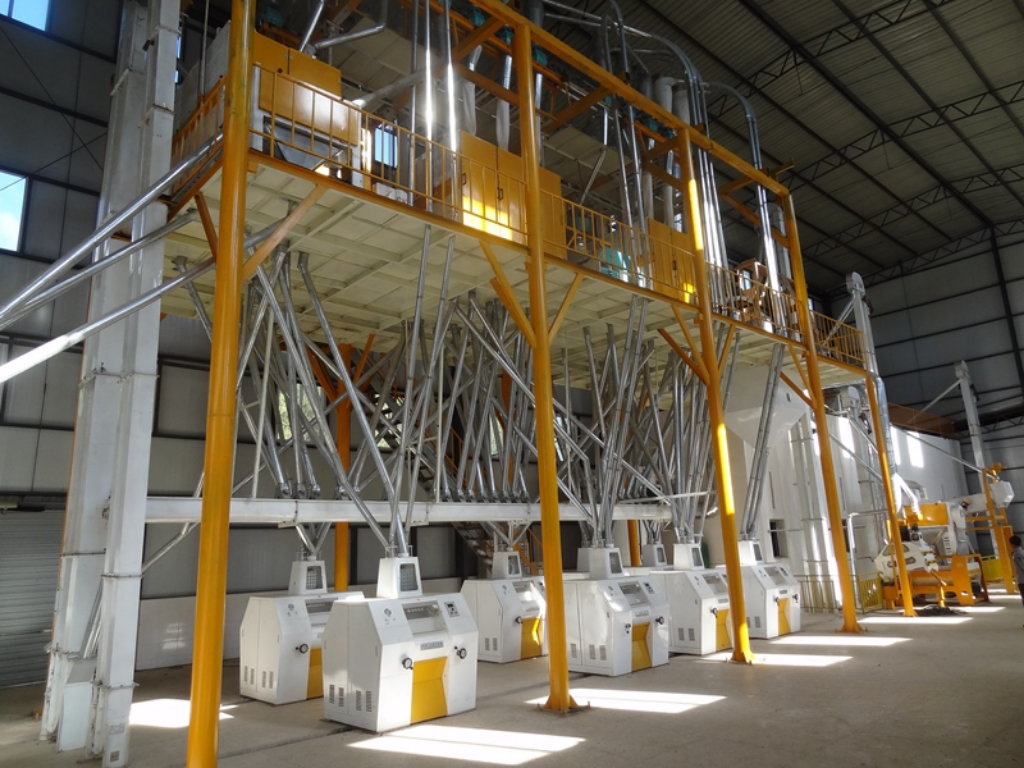
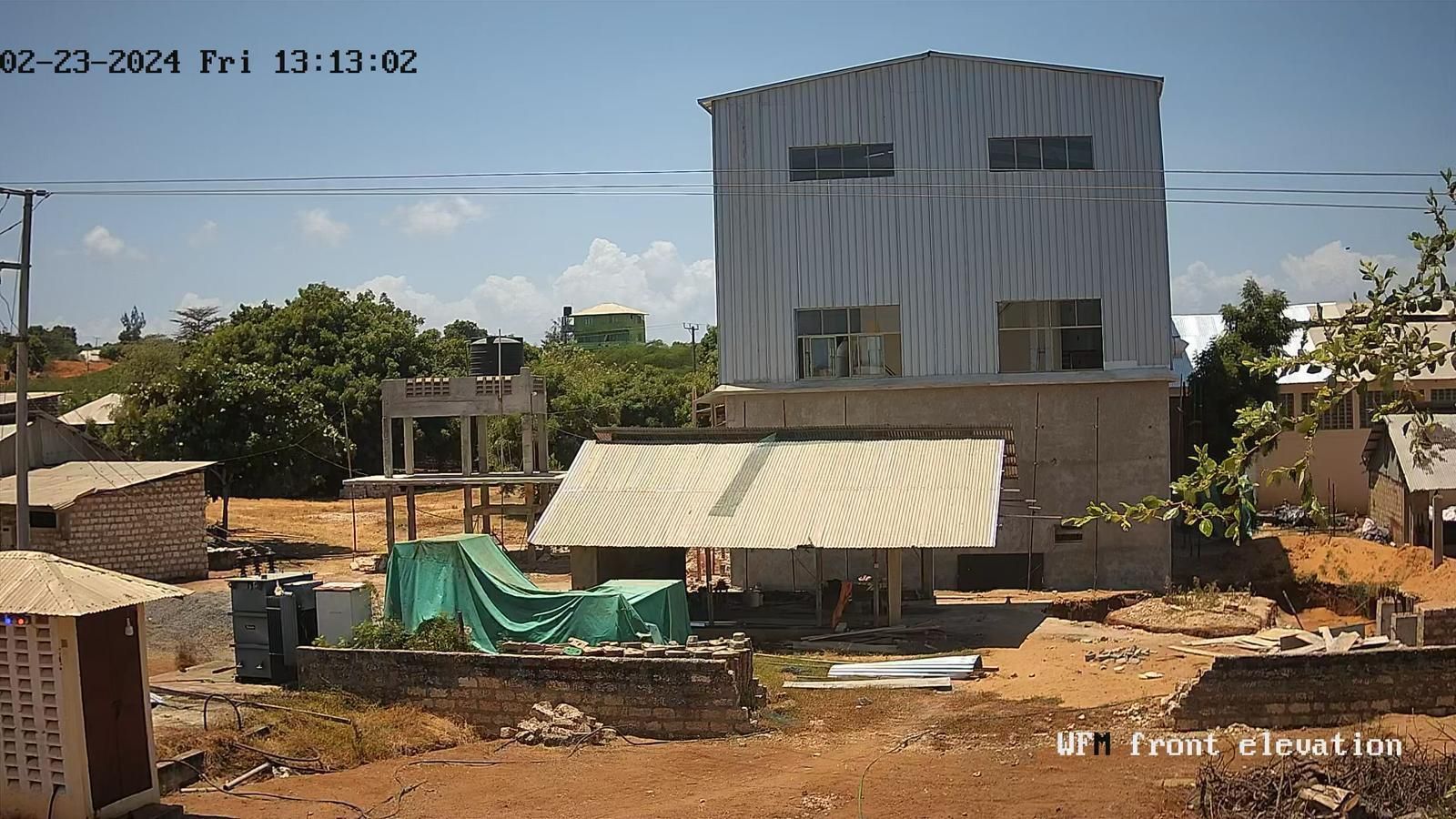
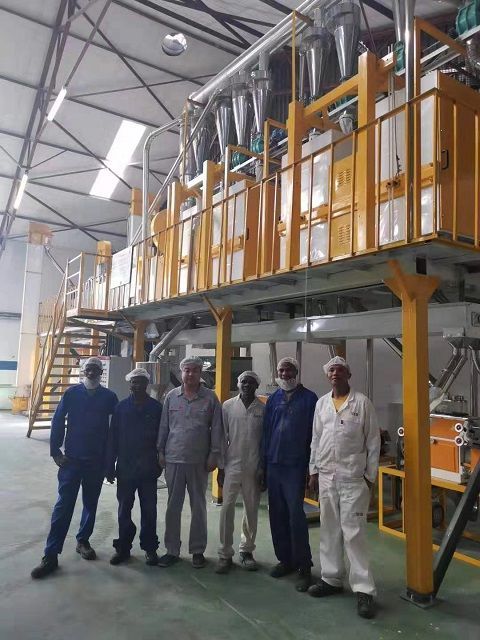
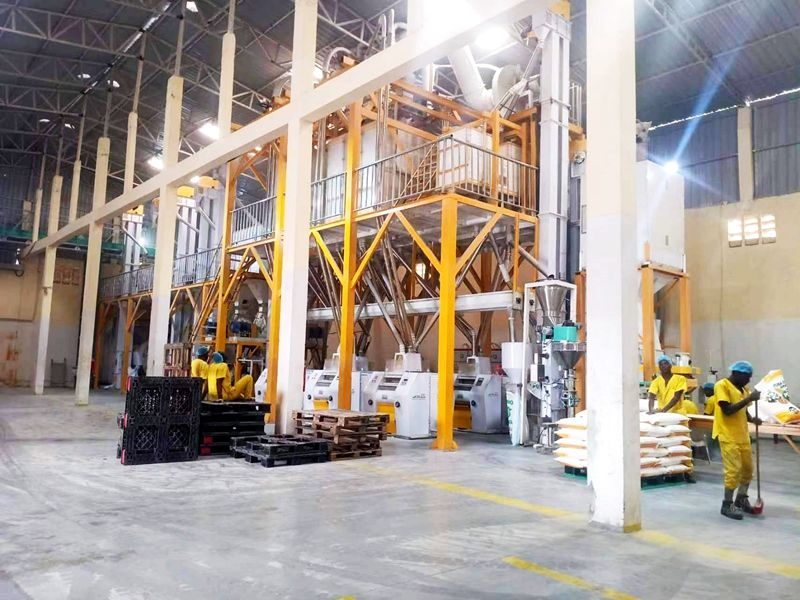
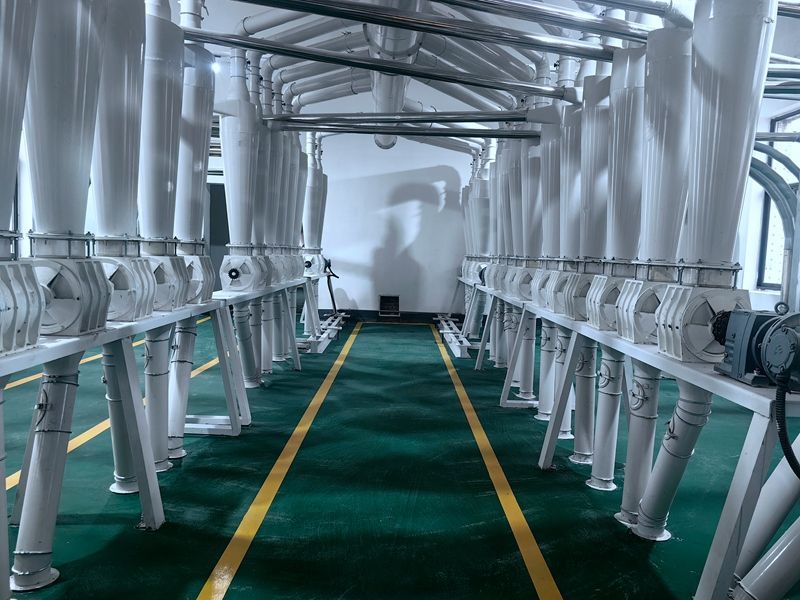
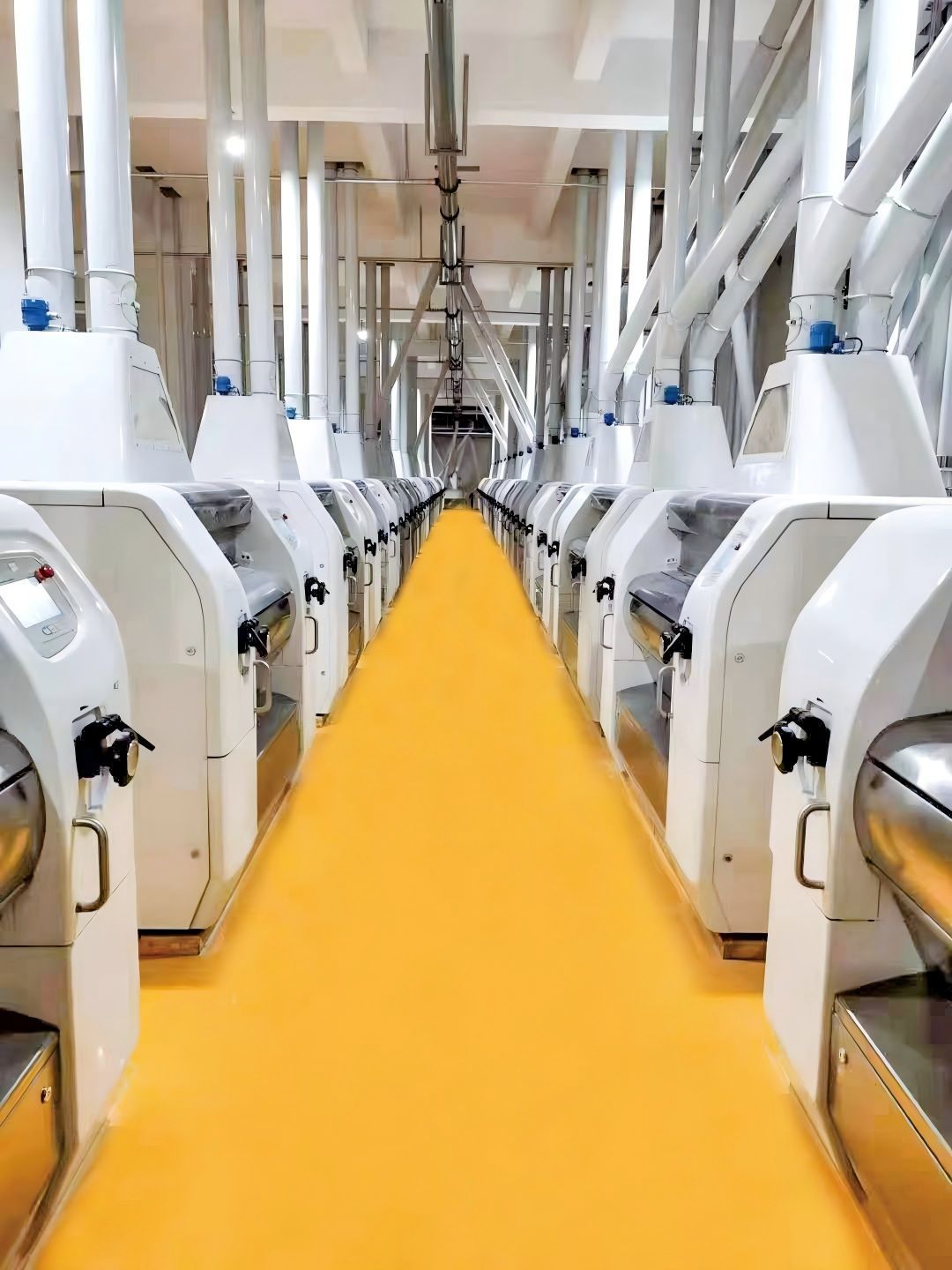
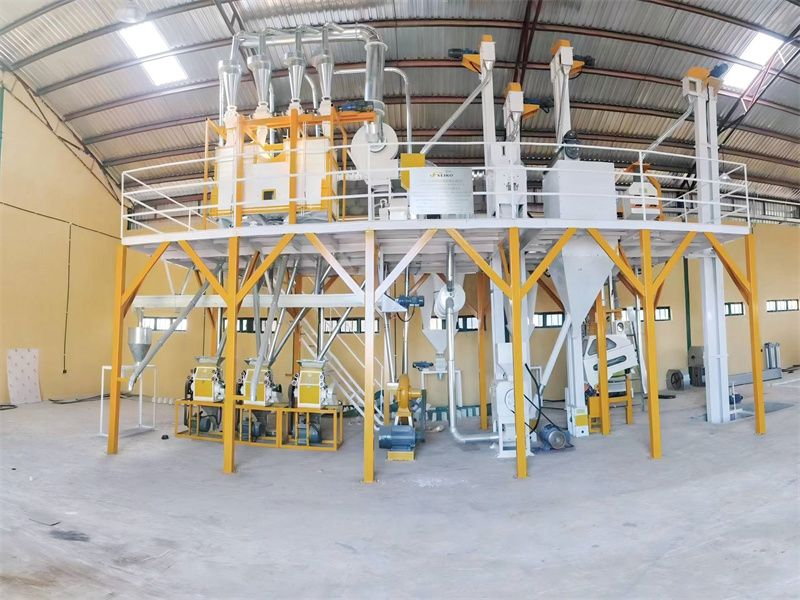
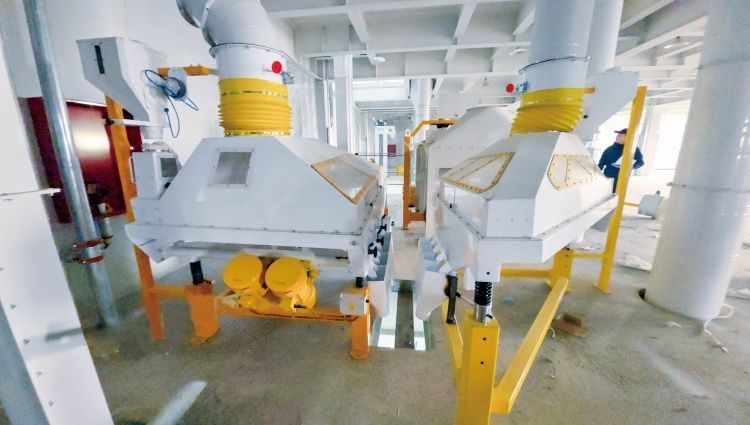
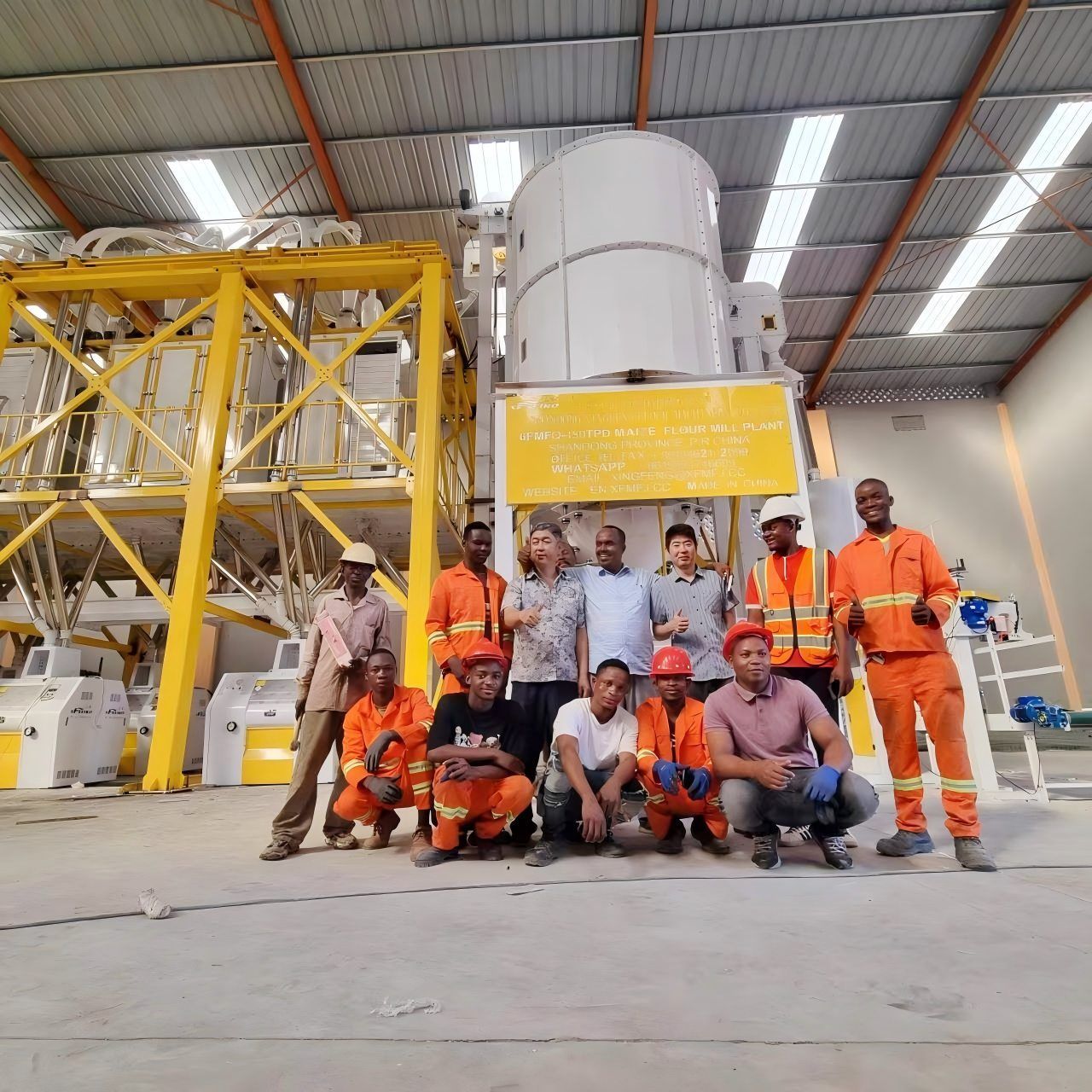
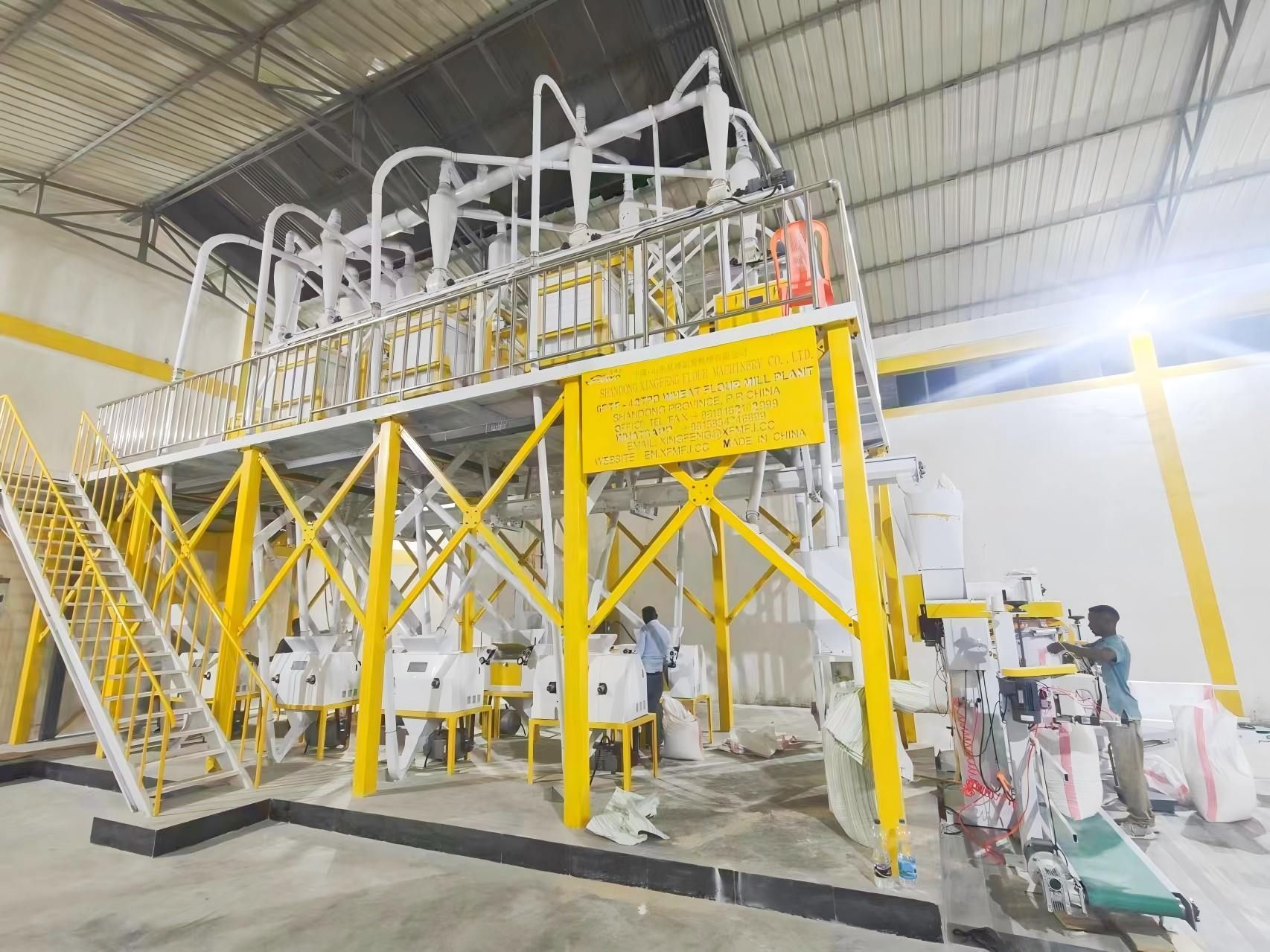
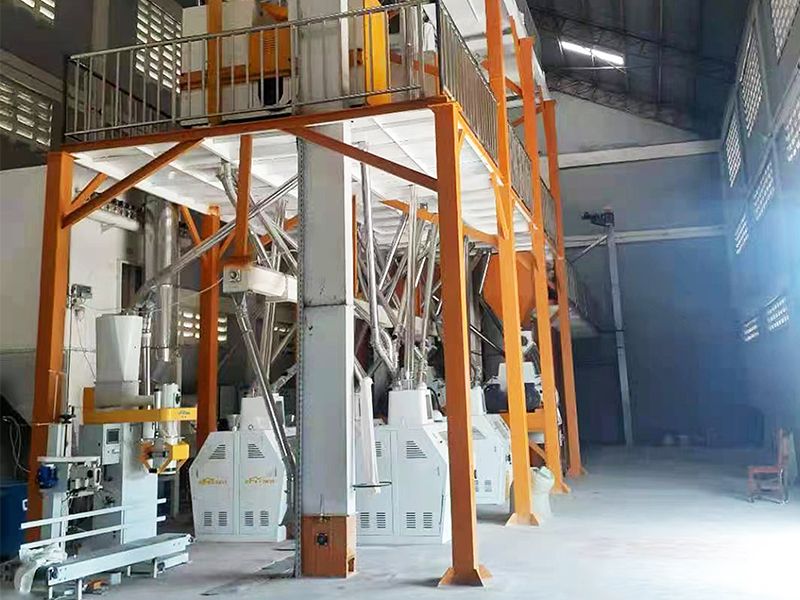
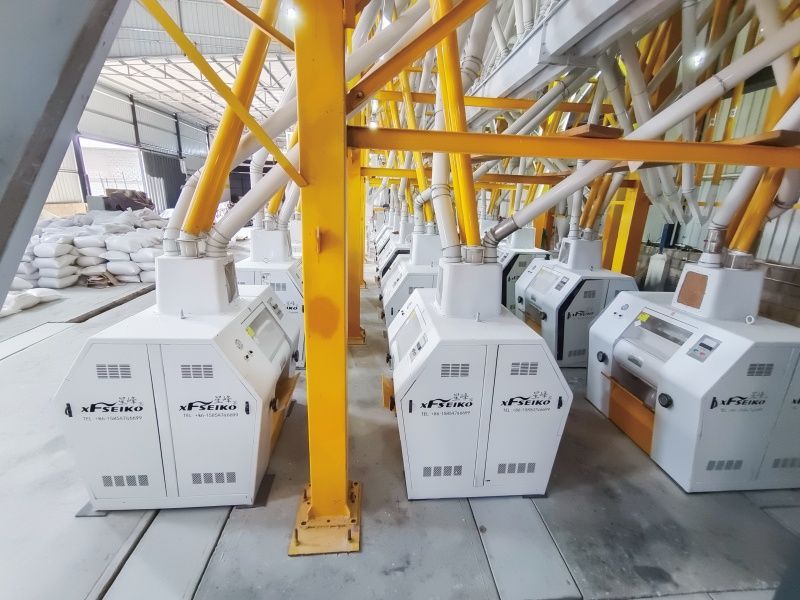
For a 50-80TPD Maize Flour Mill Plant, labor cost and unstable production are common concerns for overseas buyers and distributors. A practical plan combines maize cleaning, degermination, roller milling, pneumatic conveying, and PLC control system automation. With the right layout and training, one shift can often run with about 8-14 operators, depending on packaging style and working hours.
The main planning question is not whether to automate every machine. It is how to automate the jobs that need constant control, reduce manual handling, and keep enough people for quality checks, maintenance, warehouse work, and management.
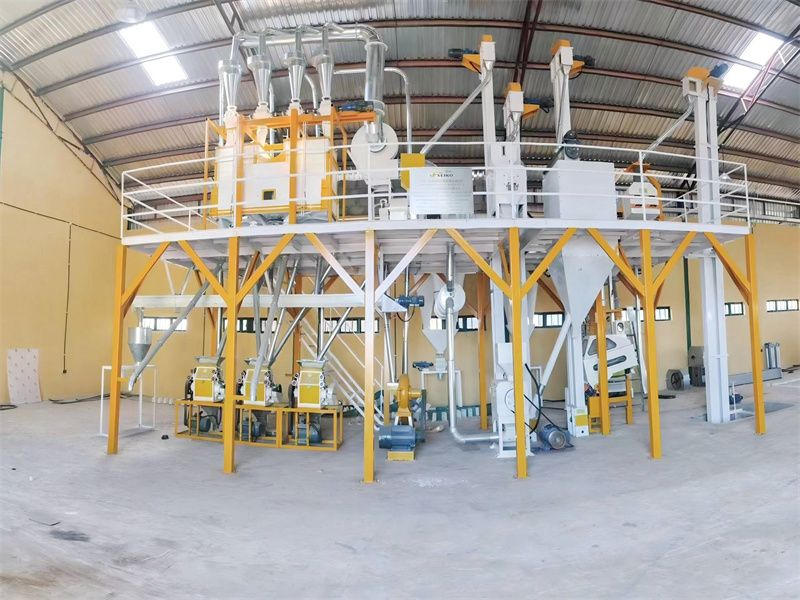
1. What Labor Does a 50-80TPD Maize Flour Mill Plant Need?
A 50-80TPD plant does not require the same workforce as a small village mill or a large industrial factory. The final number depends on the number of shifts, degree of automation, packaging method, raw maize quality, and local labor rules.
In this article, TPD means tons per day of finished maize products. A plant rated at 50TPD may process less than 50 tons during a short shift if cleaning, product changes, or maintenance takes time. An 80TPD plant may need two shifts to reach its daily target.
Recommended direct labor by plant size
| Plant capacity | Manual or semi-automatic layout | Highly automated layout | Typical production target |
|---|---|---|---|
| 50TPD | 12-18 people per shift | 8-11 people per shift | 40-50 tons per day |
| 60TPD | 14-20 people per shift | 9-12 people per shift | 50-60 tons per day |
| 80TPD | 16-24 people per shift | 10-14 people per shift | 65-80 tons per day |
These figures are planning ranges rather than fixed rules. A plant using 25kg bags with automatic weighing and sewing may need fewer workers than a plant filling many small consumer bags by hand.
Core positions for one production shift
- Control room operator: 1 person
- Cleaning and degermination operator: 1-2 people
- Roller mill and sifting operator: 2-3 people
- Packaging operators: 2-4 people
- Quality control worker: 1 person
- Maintenance technician: 1 person
- Material handling and warehouse workers: 2-4 people
- Shift supervisor: 1 person
Some positions can be shared. For example, one trained technician may supervise the mill during normal operation and perform first-level maintenance during planned stops. However, critical safety and quality duties should not be combined carelessly.
2. Which Jobs Should Be Automated First?
Automation should focus on repetitive work, high-dust areas, and operations where a small error can affect the whole batch. The goal is not only to save labor. It is also to improve feed accuracy, reduce product loss, and provide stable flour quality.
High-value automation areas
| Process area | Useful automation | Main benefit |
|---|---|---|
| Raw maize receiving | Intake hopper, level sensor, conveyor control | Fewer manual transfers |
| Cleaning | Magnetic separator, aspiration, automatic gates | Stable impurity removal |
| Conditioning | Water dosing, timer, moisture monitoring | More even degermination |
| Roller milling | PLC control, motor protection, load monitoring | Fast fault response |
| Sifting | Automatic product routing and level sensors | Better flour classification |
| Packaging | Weighing, bag filling, sealing or sewing | Higher packing accuracy |
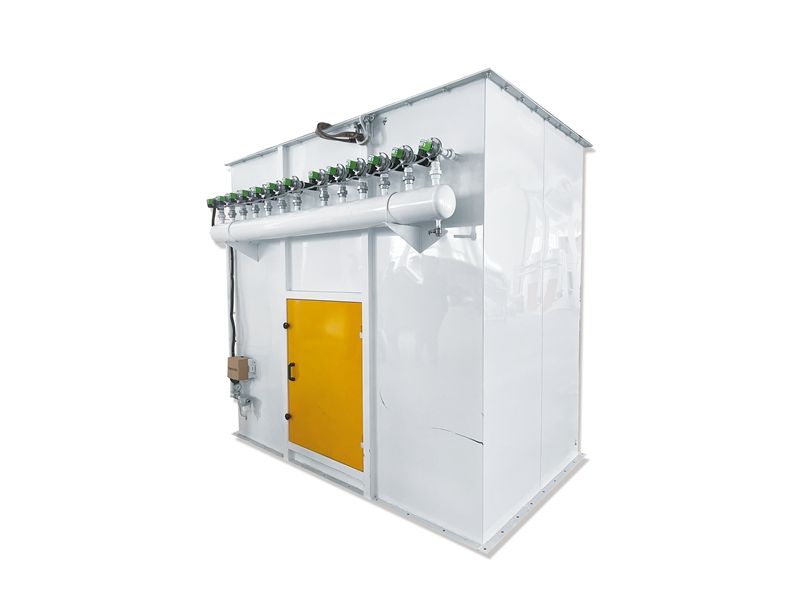
| Dust control | Pulse-jet filter, pressure monitoring | Cleaner and safer work areas |
For most 50-80TPD maize milling projects, automated weighing and packaging can create a larger labor saving than adding advanced control to every small conveyor. Buyers should compare the labor saved with the equipment price, spare parts cost, and local technical support.
Why a PLC control system matters
A PLC control system can start and stop motors in a planned order. It can also show alarms for overload, blocked conveyors, high temperature, low material level, or filter pressure. This helps one operator monitor several machines from a control panel.
PLC control does not remove the need for skilled workers. It changes their work from constant manual switching to monitoring, inspection, and problem solving. Operators still need to understand maize flow, machine settings, product quality, and emergency procedures.
3. Labor Plan by Production Zone
A zone-based labor plan is easier to manage than assigning workers randomly. Each worker should have a main responsibility and a backup responsibility. This prevents delays when a person is absent or when the plant changes product.
Zone A: Receiving and storage
One or two workers can check incoming maize, remove large foreign materials, record weight, and move raw material to storage. A moisture meter should be available. Wet or damaged maize can cause blockages, poor degermination, and mold risk.
Forklift or loader operation should be included in the warehouse plan. If bags are moved by hand, labor demand rises quickly. A 50-80TPD plant should consider pallets, a bag stacker, and clear storage lanes from the beginning.
Zone B: Cleaning and degermination
One trained operator can usually monitor the cleaner, destoner, magnetic separator, and degerminator in an automated layout. A second worker may be needed when raw maize contains high levels of stones, metal, husk, or other impurities.
The operator should check screens, aspiration air, waste discharge, and product flow. Good cleaning protects the roller mill and improves the color and safety of the finished flour.
Zone C: Milling and sifting
Two or three workers may cover the roller mill, plansifter, bran handling, and product transfer. Their key duties include checking roll gaps, monitoring motor loads, inspecting sieve performance, and confirming that flour enters the correct bin.
In a maize flour milling plant, stable particle size is more important than simply running the motor at full speed. Incorrect roll settings can increase power use, reduce yield, and overload the sifter.
Zone D: Packing and finished goods
Packaging often needs the highest number of workers. Manual weighing, bag filling, sewing, stacking, and labeling may require four or more people. An automatic packing machine can reduce this to two or three workers for normal operation.
For retail products, packing may need extra workers for small bags, date coding, carton packing, and pallet wrapping. For bulk flour in 25kg or 50kg bags, a simpler packing line may be more cost effective.
4. Step-by-Step Labor and Automation Flow Chart
The following flow shows how a 50-80TPD maize flour mill plant can combine machine control with human inspection.
Step 1: Receive and weigh maize
↓
Step 2: Inspect moisture, odor, insects, and foreign materials
↓
Step 3: Convey maize to cleaning equipment
↓
Step 4: Remove dust, stones, metal, and light impurities
↓
Step 5: Dose water and rest maize for conditioning
↓
Step 6: Degerminate and separate bran and germ
↓
Step 7: Mill maize through roller mills
↓
Step 8: Sift and route flour by grade
↓
Step 9: Check moisture, color, particle size, and weight
↓
Step 10: Pack, seal, stack, and record finished products
At each stage, sensors can control flow, but workers must confirm that the physical result is correct. A sensor may show that a conveyor is running, but it cannot replace a complete inspection of flour color, smell, sieve condition, or bag quality.
5. How Many Workers Are Needed for One Shift?
The table below gives a practical starting point for a modern layout. It assumes basic pneumatic conveying, centralized control, mechanical packing, and normal raw maize quality.
| Position | 50TPD plant | 80TPD plant | Automation effect |
|---|---|---|---|
| Supervisor | 1 | 1 | Not normally reduced |
| Control room operator | 1 | 1-2 | Centralized monitoring reduces duplication |
| Cleaning and milling operators | 2-3 | 3-4 | Automatic gates and sensors reduce routine work |
| Quality control | 1 | 1 | Testing remains essential |
| Packaging | 2-3 | 3-4 | Automatic weighing reduces manual filling |
| Maintenance | 1 | 1-2 | Preventive maintenance remains necessary |
| Warehouse and handling | 1-2 | 2-3 | Conveyors and pallets lower lifting work |
| Total per shift | 9-12 | 12-17 | Varies with product and packing format |
If the plant operates two shifts, the company may need additional operators, but not always double the total staff. Supervisors, maintenance technicians, and managers can work across shifts if working hours and local regulations allow it.
6. Manual, Semi-Automatic, or Highly Automated?
There is no single best automation level for every country. Labor wages, electricity prices, technical skills, product packaging, and access to spare parts should guide the decision.
| Automation level | Staff per shift | Investment level | Best fit | Main limitation |
|---|---|---|---|---|
| Manual or basic | 16-24 | Lower | Low wage markets and simple bulk packing | Higher labor and product handling loss |
| Semi-automatic | 10-17 | Medium | Most 50-80TPD commercial mills | Some manual bagging and material movement |
| Highly automated | 8-14 | Higher | High wage markets and consistent retail production | Needs skilled technicians and spare parts |
For many overseas buyers, semi-automatic equipment offers the best balance. It can include a PLC panel, automatic level control, pneumatic conveying, moisture dosing, automatic weighing, and a reliable dust collection system without making the entire plant difficult to operate.
7. Training Plan for New Operators
Automation reduces routine labor, but it increases the value of operator training. A new worker should learn the process in stages instead of pressing buttons without understanding the equipment.
- Day 1: Learn plant safety, protective clothing, emergency stops, and restricted areas.
- Days 2-3: Learn maize receiving, cleaning checks, and material flow.
- Days 4-5: Learn degerminator, roller mill, and plansifter operation.
- Days 6-7: Learn PLC alarms, motor protection, and safe restart procedures.
- Week 2: Learn packaging accuracy, product sampling, and production records.
- Week 3: Practice fault reporting, basic cleaning, and planned maintenance.
Training should use simple checklists. Each operator should know the normal sound, temperature, current, and product appearance of the machines under his or her care.
Minimum documents for daily control
- Raw maize receiving record
- Moisture and quality inspection sheet
- Machine start and stop checklist
- Flour sampling and test record
- Packaging weight record
- Daily cleaning checklist
- Maintenance and spare parts record
- PLC alarm and downtime report
8. Maintenance Labor and Spare Parts Planning
A plant may have enough production workers but still lose money when a small part stops the line. One maintenance technician per shift is a reasonable starting point. An 80TPD plant with two shifts may also need an electrical technician who understands motors, sensors, and the PLC control system.
Common spare parts include sieve cloth, roller bearings, belts, pneumatic valves, motor contactors, proximity sensors, filter bags, cleaning brushes, and packing machine parts. The exact list depends on the selected maize milling machine and local operating conditions.
Preventive maintenance should be planned by running hours. Operators can perform cleaning and visual checks. Technicians should handle alignment, bearing replacement, electrical tests, roll adjustment, and safety inspections.
9. How to Calculate the Labor Cost Benefit
Use a simple comparison before selecting automation. First, calculate the annual cost of workers removed by automation. Then compare it with the added equipment cost, electricity use, service cost, and expected downtime.
Annual labor saving = workers reduced x annual cost per worker x working shifts
Simple payback period = added automation investment / annual labor saving
For example, if automatic packing reduces three workers per shift and the plant runs two shifts, six positions may be reduced. The final saving depends on local wages, overtime, benefits, and whether the workers can be assigned to warehouse or quality work.
Labor saving is not the only return. Automation may also reduce incorrect bag weights, product contamination, dust exposure, material spills, and unplanned stops. These benefits should be included in a full project calculation.
10. Practical Recommendation for Overseas Buyers
For a 50TPD plant, Xingfeng generally recommends planning for 8-12 production workers per shift when the plant includes centralized control and efficient packaging. For an 80TPD plant, plan for 10-14 workers per shift in a well-organized automated layout.
Keep quality control, maintenance, and supervision in the budget. These positions should not be removed simply because machines are automatic. A low labor number is not useful if the plant has poor flour quality, frequent breakdowns, or unsafe working conditions.
Before ordering equipment, confirm the following points with the supplier:
- Expected output at the selected maize moisture and quality.
- Number of workers required for each shift.
- Which operations are automatic and which remain manual.
- PLC brand, control functions, alarms, and operator language.
- Packaging speed and acceptable weight tolerance.
- Dust collection method and cleaning requirements.
- Training period and installation support.
- Recommended spare parts for the first 12 months.
- Power supply, motor ratings, and compressed air needs.
- Space for future capacity or packaging upgrades.
A clear labor and automation plan helps a maize flour mill plant reach its target with fewer interruptions. The best design does not remove people from every process. It places people where judgment is needed and uses automation for repeated, dusty, and measurable tasks. With this balance, a 50-80TPD project can achieve stable production, controlled labor cost, and a safer workplace.
Frequently Asked Questions
How many workers are needed for an 80TPD maize flour mill?
A modern 80TPD maize flour mill plant commonly needs about 10-14 workers per shift. The number can increase when the plant uses manual bagging, several retail package sizes, or hand-operated material handling.
Can one person operate the whole maize milling plant?
No. One control room operator may monitor many machines, but the plant still needs workers for quality testing, packing, warehouse handling, cleaning, maintenance, and supervision.
Is full automation necessary for a 50TPD plant?
Full automation is not always necessary. A semi-automatic design with automatic weighing, PLC monitoring, pneumatic conveying, and mechanical product routing often provides a practical balance between investment and labor cost.
What is the most important automation equipment?
The most useful equipment often includes a PLC control system, automatic water dosing, level sensors, dust collection, automatic weighing, and a dependable packaging machine. The best combination depends on local labor cost and product requirements.
What should operators check every day?
Operators should check raw maize condition, material flow, motor current, unusual noise, sieve condition, flour quality, package weight, dust filter pressure, and all safety devices.