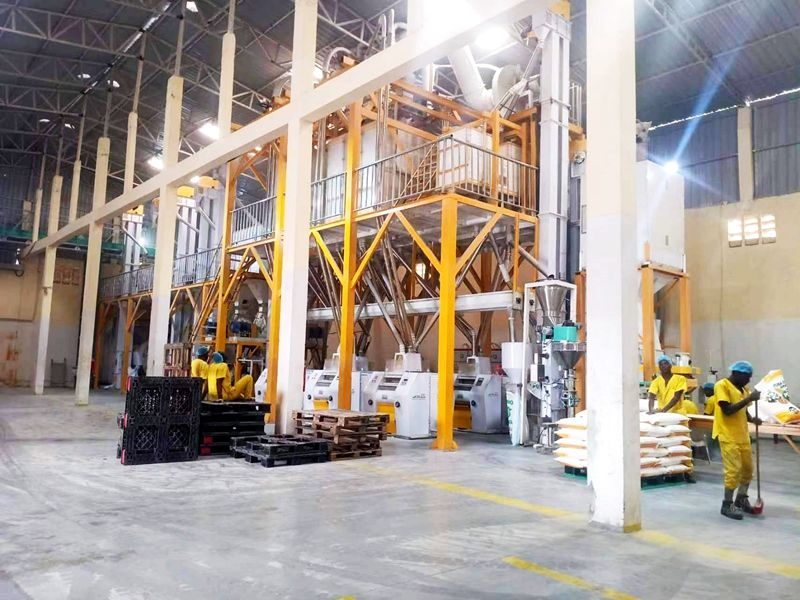
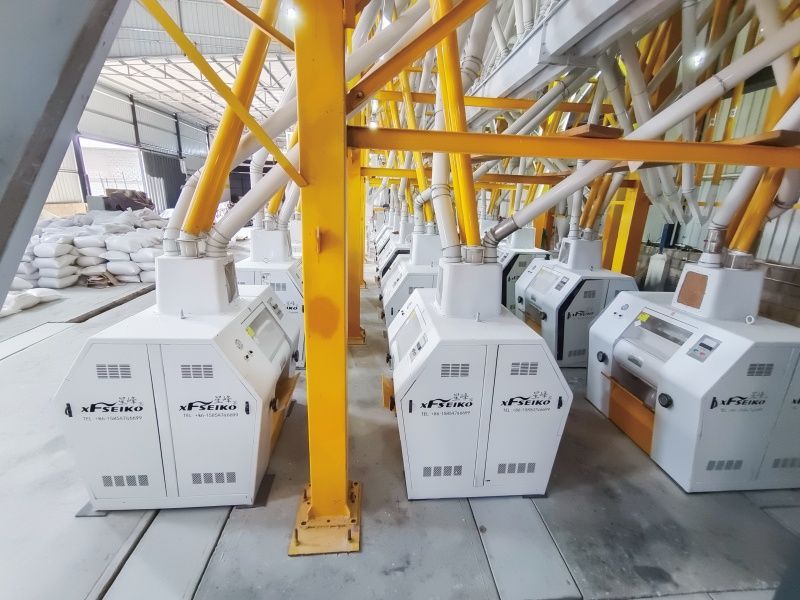
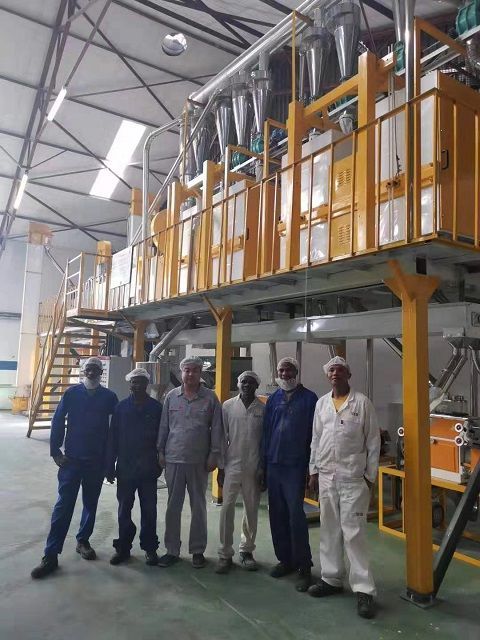
Choosing the correct mill size is one of the most important decisions in a flour business. With the Xingfeng 42TPD Wheat Flour Mill Plant, I can help you match daily wheat availability, flour sales, storage, and operating hours through a simple calculation process. By following the steps below, you can avoid over-investing in unused capacity, prevent raw-material shortages, and build a flour production plan that is practical, measurable, and easy to operate.
!
The term “TPD” means tons per day, but buyers must confirm whether the quoted capacity refers to:
For example, a 42TPD Wheat Flour Mill Plant may refer to a plant processing approximately 42 tons of wheat per 24 hours. It does not necessarily mean that the plant will produce 42 tons of finished flour.
The actual flour yield depends on the extraction rate, wheat moisture, bran separation, product specification, and milling diagram.
The basic calculation is:
Finished flour output = Wheat input × Flour extraction rate
Typical extraction rates may include:
| Product configuration | Approximate extraction rate | Flour from 42 tons of wheat |
|---|---|---|
| Standard refined flour | 72%–75% | 30.24–31.50 tons |
| Higher-extraction flour | 76%–80% | 31.92–33.60 tons |
| Multiple flour grades | 68%–75% | 28.56–31.50 tons |
These figures are planning ranges rather than guaranteed results. Wheat variety, kernel hardness, moisture content, ash target, and the mill’s roller adjustment all affect the final result.
If your business sells 30 tons of flour per day, a 42-ton wheat-processing line may be a suitable starting point. If you need 40 tons of finished flour daily, the same plant may be too small unless the extraction rate and operating schedule support that target.
The next step is to measure how much wheat you can reliably purchase, not how much wheat may be available during harvest season.
I recommend reviewing at least 12 months of supply data, including:
Use this formula:
Practical daily wheat supply = Annual usable wheat supply ÷ Operating days per year
For instance, assume a mill can purchase:
The average supply is:
12,600 ÷ 300 = 42 tons per day
This appears to match a 42TPD Wheat Flour Mill Plant, but the calculation still needs a reserve margin. A mill should not normally consume 100% of its theoretical supply because delays, quality rejection, transport interruptions, and seasonal shortages are common.
A safer calculation is:
Recommended plant capacity = Average dependable supply × 80%–90%
If dependable supply is 42 tons per day:
In this example, a 42TPD plant could be installed if the business has storage reserves or additional suppliers. Without those safeguards, a smaller line may provide better operating stability.
Wheat supply alone does not determine the correct TPD capacity. The sales channel is equally important.
A flour mill may sell:
Each product may have a different extraction rate, protein requirement, ash specification, and packaging format.
Start by separating expected sales into three categories:
Confirmed sales
Orders supported by contracts, purchase agreements, or regular distributors.
Repeat sales
Existing customers with a reliable purchasing history.
Projected sales
New markets or unconfirmed demand that may take time to develop.
For a new project, I recommend sizing the mill primarily around confirmed and repeat sales. Projected sales should be treated as expansion potential rather than guaranteed daily production.
For example:
| Sales channel | Daily flour demand | Demand reliability |
|---|---|---|
| Contract bakery customers | 12 tons | High |
| Wholesale distributors | 10 tons | Medium to high |
| Retail packaged flour | 5 tons | Medium |
| Projected institutional sales | 5 tons | Low during startup |
| Total expected demand | 32 tons/day | Mixed |
If the average extraction rate is 75%, the required wheat input is:
32 ÷ 0.75 = 42.67 tons of wheat per day
This indicates that a 42TPD Wheat Flour Mill Plant may be close to the required operating level, but the operator should confirm whether the plant’s actual wheat input capacity can reach the target under local conditions.
The Xingfeng 42TPD Wheat Flour Mill Plant is suitable for businesses that need a balance between commercial production and controlled investment.
This capacity can be considered by:
The main advantage is the ability to process a meaningful volume without immediately committing to a large industrial milling complex. However, capacity should always be evaluated together with the full process design.
A complete flour milling line may include:
Before placing an order with Xingfeng, I would request the following information in writing:
A serious technical proposal should distinguish between design capacity and guaranteed production capacity. It should also specify the raw-material conditions used for testing.
Not every mill needs to run continuously for 24 hours. Many businesses operate one or two shifts.
Use this formula:
Required hourly milling rate = Daily wheat requirement ÷ Operating hours
If the target is 42 tons of wheat per day:
| Operating schedule | Required hourly rate |
|---|---|
| 24 hours | 1.75 tons/hour |
| 20 hours | 2.10 tons/hour |
| 16 hours | 2.63 tons/hour |
| 12 hours | 3.50 tons/hour |
A plant rated at 42 tons per day may require longer operating hours if the actual hourly throughput is lower because of cleaning, maintenance, product changeover, or unstable wheat quality.
I recommend allowing at least 10%–15% operational flexibility for:
A flour mill cannot be selected correctly based only on tonnage. The wheat itself determines the required process configuration.
Important laboratory parameters include:
For reliable purchasing decisions, I recommend testing representative samples from different suppliers and harvest periods. Laboratory procedures should follow applicable local requirements and recognized methods such as ASTM or ISO methods where relevant. Mechanical components and dimensional inspections may also be specified using DIN standards, depending on the supplier’s technical documentation.
The goal is not simply to achieve a high extraction rate. The goal is to produce flour that consistently meets the customer’s specification.
For example:
Even when supply and sales appear balanced, insufficient storage can interrupt production.
At 42 tons of wheat input per day, storage should cover:
A practical starting point is to review at least 7–15 days of wheat inventory, depending on local supply reliability.
For a 10-day reserve:
42 tons/day × 10 days = 420 tons of wheat
Finished-flour storage must also reflect sales frequency. If the mill produces approximately 31.5 tons of flour per day at a 75% extraction rate, a 5-day finished product reserve would equal:
31.5 × 5 = 157.5 tons of flour
This does not mean every business needs exactly this amount. Storage construction costs, turnover speed, humidity, warehouse standards, and financing must be evaluated together.
Several problems can cause a capacity plan to fail even when the calculations look correct.
A mill may operate well during harvest but run below capacity later in the year.
Solution:
Many new flour businesses calculate capacity from optimistic market projections.
Solution:
Changes in hardness, moisture, or protein can reduce yield and affect flour quality.
Solution:
A mill that stops for several hours can lose significant production and delay customer deliveries.
Solution:
Flour dust can create housekeeping, product-quality, and occupational-safety concerns.
Solution:
The right tools make the planning process faster and more reliable.
I recommend using:
Your spreadsheet should include at least these columns:
| Data category | Recommended measurement |
|---|---|
| Wheat received | Tons per lot |
| Wheat moisture | Percentage |
| Wheat rejected | Tons and reason |
| Daily input | Tons/day |
| Flour output | Tons/day |
| Extraction rate | Percentage |
| Bran output | Tons/day |
| Downtime | Hours |
| Energy consumption | kWh/ton |
| Customer sales | Tons by product |
| Inventory | Tons by storage location |
Precision matters. For example, moisture readings should be recorded consistently, and equipment dimensions in technical drawings should be checked to the stated tolerance, such as 0.01 mm where precision machining or component inspection requires it. Every measurement should have a defined method rather than relying on visual judgment.
After collecting the data, I use this decision sequence:
For many regional operators, the Xingfeng 42TPD Wheat Flour Mill Plant can be a reasonable choice when dependable wheat supply is close to 40–45 tons per day and flour demand is approximately 28–33 tons per day, depending on extraction and product mix.
If demand is significantly lower, a smaller plant may reduce capital and operating costs. If demand is much higher, a larger line or a modular expansion plan may be more appropriate.
Before taking action, I recommend confirming the following:
By following these steps, we can match wheat supply and flour sales to the correct capacity instead of choosing a mill based only on a headline number. The Xingfeng 42TPD Wheat Flour Mill Plant should be evaluated through dependable raw-material supply, realistic extraction, confirmed customer demand, operating hours, storage, and quality-control data. When these factors are aligned, the investment becomes easier to finance, operate, and expand with confidence.
< Previous: None
> Next: Producing Grade I, Grade II and All-Purpose Flour on One Milling Line

June. 06, 2025

March. 03, 2026

January. 01, 2024

July. 07, 2024

August. 08, 2024
How to Use Wheat Flour Mill Plant Correctly?
This article provides a comprehensive guide on how to use a wheat flour mill plant correctly.

February. 02, 2024