A properly designed 20TPD Maize Flour Mill Plant can produce both fine maize flour and clean, uniform grits without unnecessary reprocessing or excessive energy consumption. In this guide, we explain How to Configure a 20TPD Maize Mill for Flour and Grits Co-Production with practical capacity calculations, equipment selection, process routing, quality controls, and commissioning steps so that Xingfeng customers can move from raw maize to saleable products efficiently.
!
Before selecting machinery, we first confirm what “20 TPD” means. In grain-processing projects, capacity may refer to raw maize input or finished product output. For most small and medium maize milling plants, a 20TPD Maize Flour Mill Plant means processing approximately 20 metric tons of maize per day.
The mill should not be sized only for a theoretical 24-hour operating schedule.
| Operating schedule | Required maize throughput |
|---|---|
| 24 hours/day | Approximately 0.83 tons/hour |
| 20 hours/day | Approximately 1.00 ton/hour |
| 16 hours/day | Approximately 1.25 tons/hour |
For practical operation, we recommend selecting equipment with a 10–20% reserve capacity. Therefore, a 20TPD plant operating for 16–20 hours should generally use a cleaning and milling line rated around 1.2–1.5 tons per hour.
This reserve helps the factory handle:
The first step in How to Configure a 20TPD Maize Mill for Flour and Grits Co-Production is therefore to define daily working hours, product targets, and the actual raw material condition.
A flour-and-grits mill cannot be configured accurately without a product ratio. The grinding passage, sieve area, degermination intensity, and purifier settings all depend on the desired output.
A practical starting formulation for 20 tons of cleaned maize is:
| Product | Typical daily output | Main application |
|---|---|---|
| Fine maize flour | 8–11 tons | Ugali, porridge, bakery blends, retail flour |
| Medium maize grits | 3–5 tons | Snacks, brewing, breakfast cereals |
| Coarse grits or meal | 2–4 tons | Food processing and traditional meals |
| Germ, bran, and screenings | 3–6 tons | Feed, oil extraction, or secondary markets |
Actual recovery depends on maize variety, kernel hardness, moisture, germ removal, sieve specifications, and the final purity requirement. We should not promise a fixed extraction rate before testing the customer’s maize.
For a retail flour business, the line should emphasize:
For a brewing, snack, or cereal customer, the system should emphasize:
A reliable Xingfeng maize milling line should use a logical process route rather than sending all material directly into a single hammer mill. The recommended process is:
Raw maize intake → Pre-cleaning → Intensive cleaning → Destoning → Conditioning → Degermination → Roller milling or impact milling → Plansifting → Grit purification → Product collection → Weighing and packing
The intake section removes oversized foreign material before it reaches the main cleaning equipment.
Recommended equipment includes:
The magnetic separator protects downstream machines from ferrous particles. A dust aspiration system is also important because maize dust can reduce visibility, contaminate products, and create an explosion risk if poorly controlled.
The cleaning section should remove:
A typical configuration includes a vibrating cleaner, rotary screen or separator, aspirator, and destoner. The destoner should be positioned before degermination and milling because stones can damage abrasive surfaces, roller surfaces, and sieve frames.
We recommend checking cleaning performance using a defined sample size, such as 1–5 kg of maize per test. The plant operator should record residual stones, foreign matter, and loss of good maize for each shift.
Conditioning adjusts maize moisture so that the bran becomes tougher while the endosperm becomes easier to separate. This improves degermination and reduces bran contamination in the flour.
A practical operating range is often:
The correct values depend on maize hardness, storage conditions, and the required product. Hard maize may need longer tempering, while soft maize may require less water and shorter residence time.
The operator should use a calibrated moisture meter and record:
Adding too much water can cause blockages, poor sifting, and sticky product. Too little water can increase flour ash, bran specks, and germ carryover.
The degerminator removes part of the germ and loosens the pericarp from the endosperm. This step is especially important when the customer wants:
For a 20TPD Maize Flour Mill Plant, the degerminator should be matched to the actual throughput instead of oversized machinery. Excessive abrasion can create unnecessary flour and reduce grits recovery.
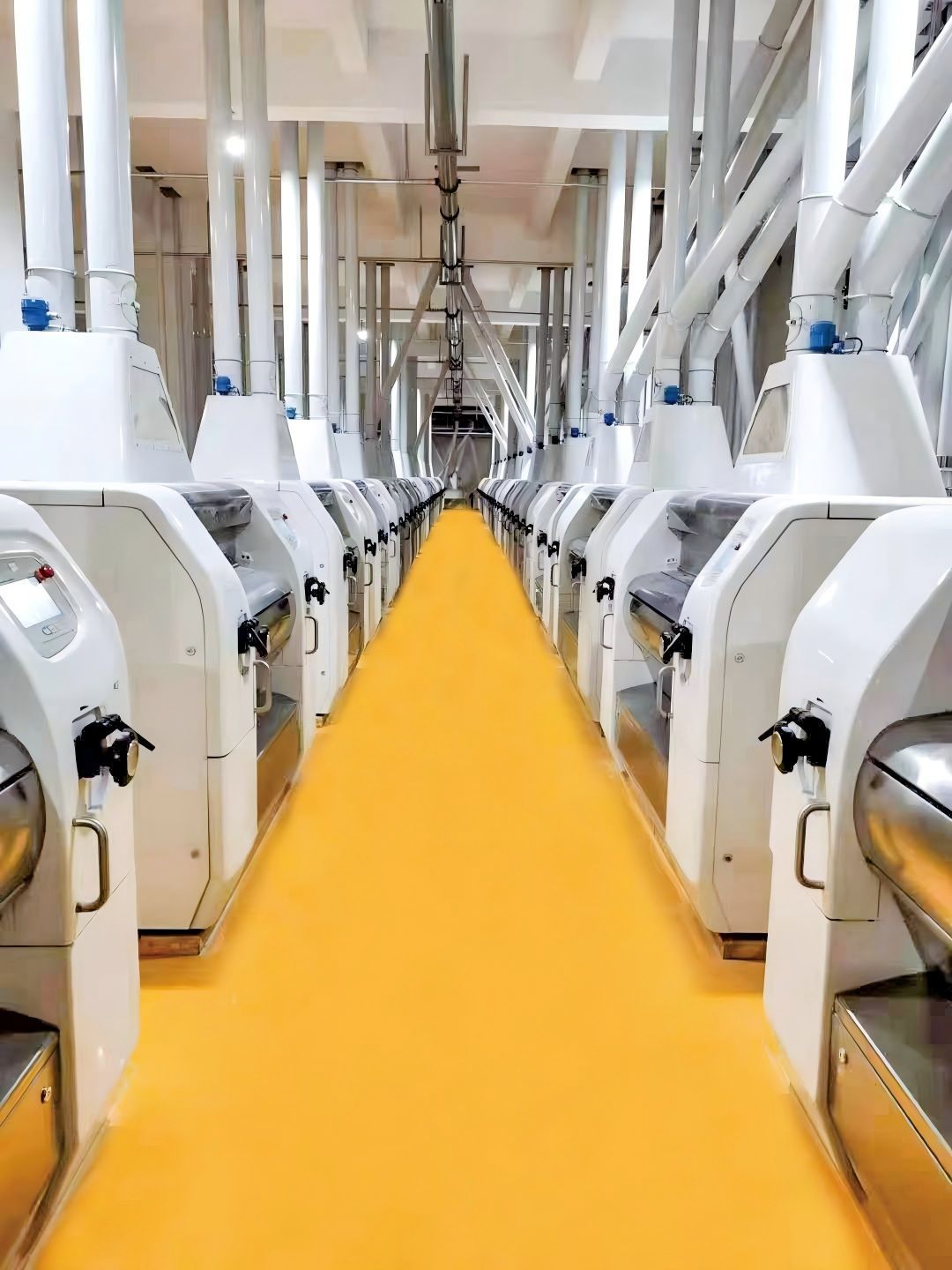
A roller mill provides better control over particle size and is suitable for flour-and-grits co-production. Different roll gaps and differential speeds can be used for break and reduction passages.
A hammer or impact mill may be appropriate for simpler maize meal production, but it usually offers less precise separation between flour and grits. If the product specification requires narrow grits grading, roller milling combined with plansifting and purification is normally the stronger configuration.
Key parameters include:
For precision adjustment, the roller gap mechanism should allow repeatable settings to approximately 0.01 mm, although the real operating tolerance depends on the machine design and maize condition.
The plansifter separates milled stock into different particle-size fractions. A typical 20TPD configuration may use separate sieve passages for:
The grits purifier removes light bran particles from heavier endosperm particles by using controlled air aspiration and sieving. Without purification, the grits may contain excessive bran specks and fail the buyer’s color or purity requirements.
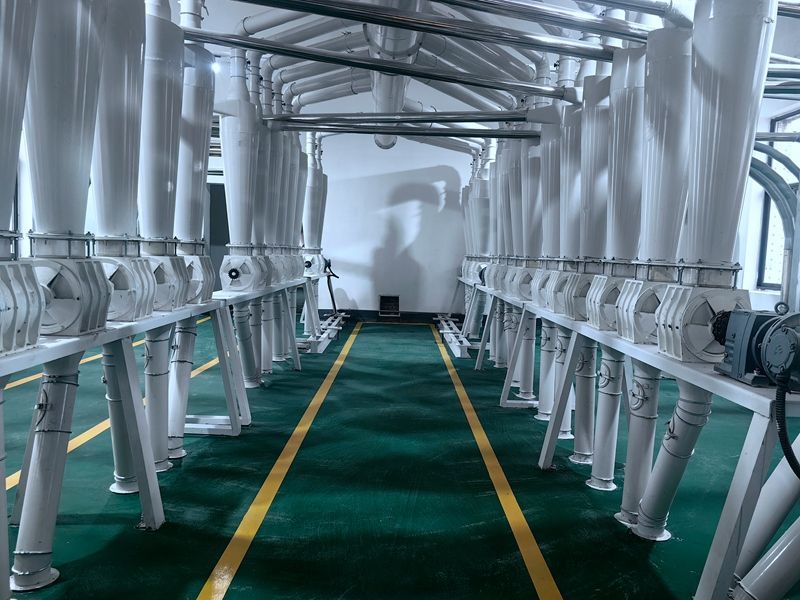
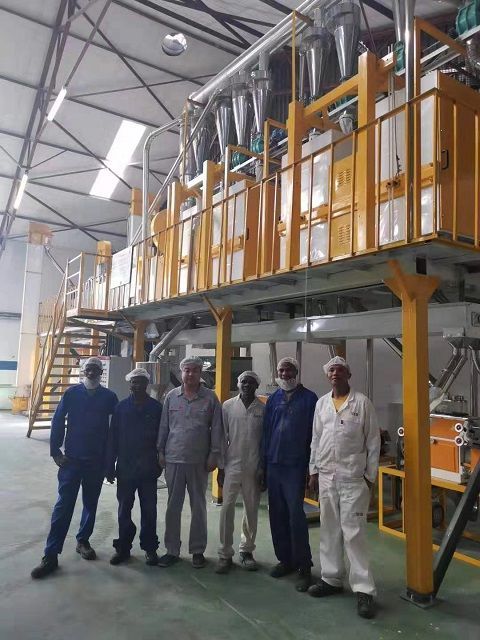
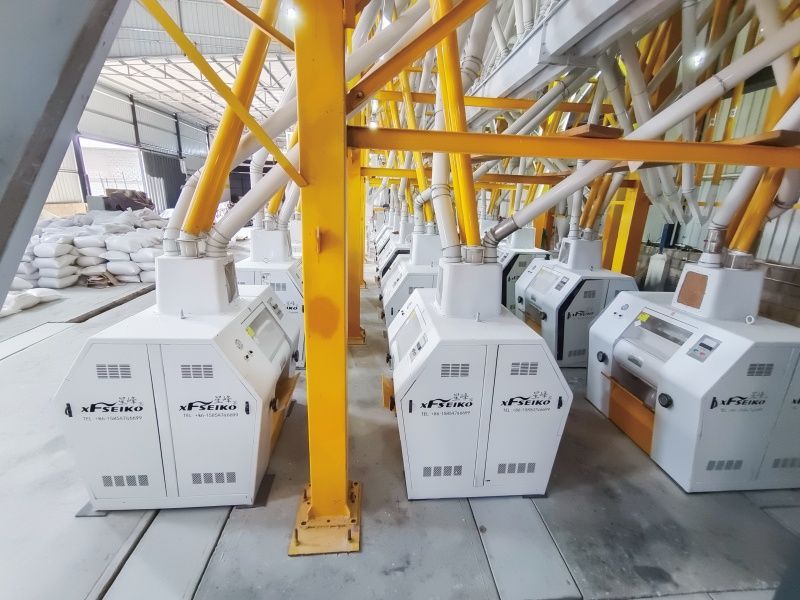
A practical Xingfeng configuration for How to Configure a 20TPD Maize Mill for Flour and Grits Co-Production may include the following modules:
| Section | Recommended equipment | Function |
|---|---|---|
| Intake | Hopper, conveyor, magnet | Controlled feeding and metal protection |
| Cleaning | Vibrating cleaner, aspirator, destoner | Removes foreign material and stones |
| Conditioning | Water dosing unit, tempering bins | Stabilizes maize moisture |
| Degermination | Maize degerminator | Separates germ and loosens bran |
| Milling | Roller mill or maize mill | Reduces endosperm into flour and grits |
| Separation | Plansifter | Grades material by particle size |
| Purification | Grit purifier | Removes bran from grits |
| Conveying | Pneumatic or mechanical conveyors | Transfers intermediate products |
| Packing | Flour and grits weighing machine | Accurate final packaging |
| Control | PLC cabinet, sensors, emergency stops | Centralized operation and safety |
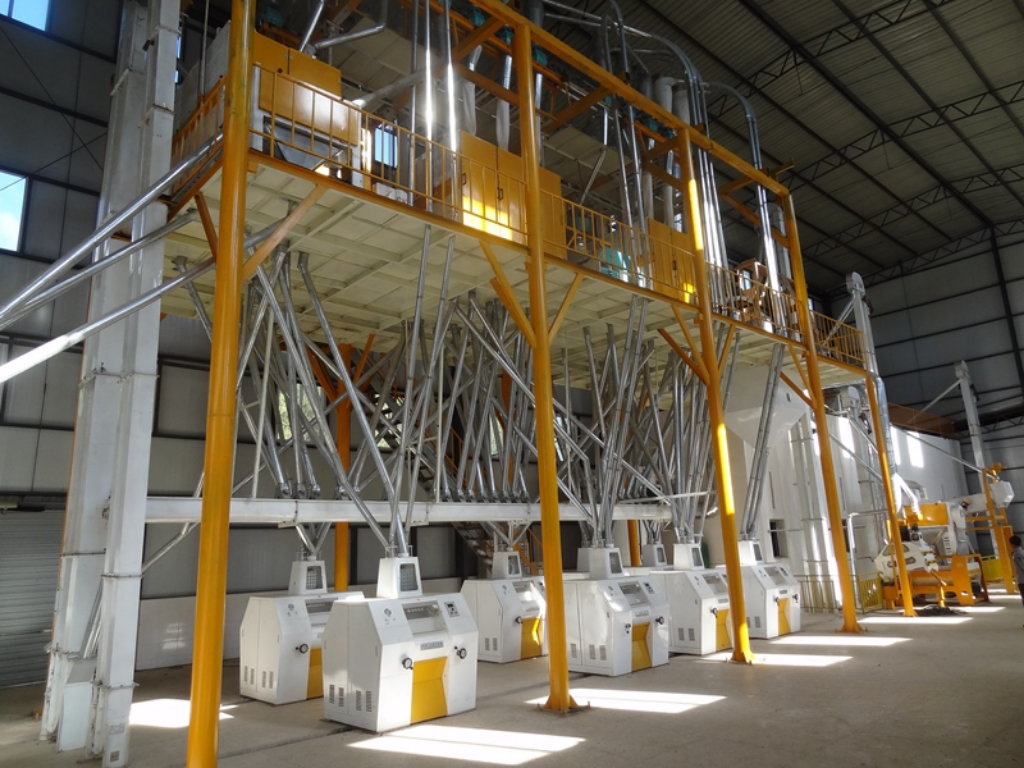
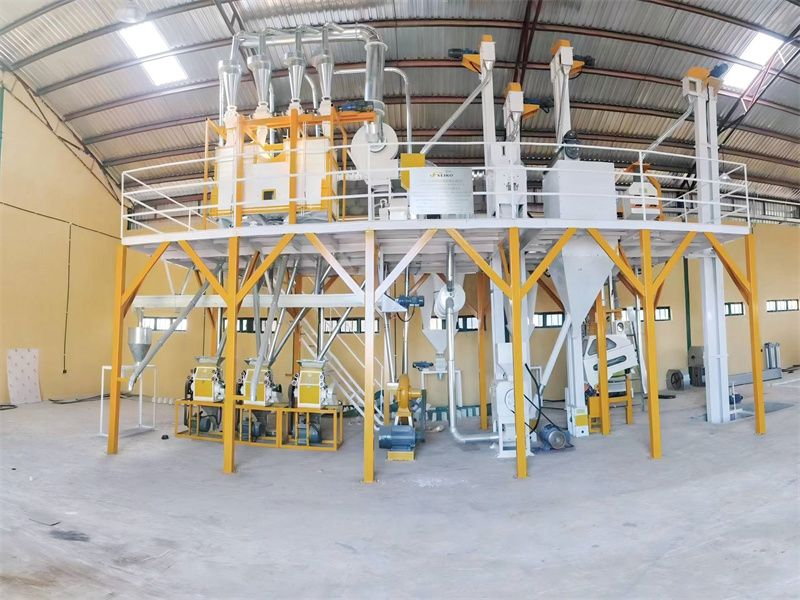
The final layout may be linear, U-shaped, or multi-level. A multi-level layout can reduce conveyor length and save floor space, while a single-level layout may simplify maintenance and construction.
The packing system should be selected according to the target market. Common pack sizes include:
For a flour-and-grits operation, we recommend separate surge bins and packing outlets for each finished product. This prevents cross-contamination between fine flour and grits.
The weighing system should be verified at several test weights. For example:
A practical quality program should include 100% inspection of packed bags for seal integrity, label accuracy, and visible contamination during the commissioning period. The operator can later move to statistically controlled sampling after stable production is achieved.
Quality should be controlled at raw material, process, and finished-product stages.
Check each incoming lot for:
Use calibrated laboratory sieves for flour and grits grading. Sieve meshes should be verified according to ASTM E11, which specifies requirements for woven wire test sieves. This helps ensure that “fine flour,” “medium grits,” and “coarse grits” have consistent meanings from one production batch to another.
During factory acceptance and installation, we recommend checking:
Electrical control panels should be reviewed against applicable local regulations and relevant requirements such as DIN EN 60204-1 for the electrical equipment of machines. The complete quality system can also be managed under an ISO 9001 framework.
Record the following for every production shift:
These records help identify whether a problem comes from cleaning, conditioning, milling, or sifting.
Possible causes include insufficient tempering, excessive grinding pressure, poor aspiration, or worn sieve cloth.
Corrective actions:
Possible causes include incorrect roll gap, damaged sieve frames, excessive feed rate, or unstable maize moisture.
Corrective actions:
Low recovery may result from excessive aspiration, poor cleaning adjustment, high bran loss, or inaccurate weighing.
We recommend weighing all major streams for at least one full production day:
A basic mass-balance calculation is:
Total input = Total saleable products + By-products + Process loss
If the difference exceeds the plant’s expected tolerance, inspect conveyors, aspiration ducts, cyclone discharge, and dust-collection filters.
High power consumption often comes from over-tightened rolls, blocked screens, poor lubrication, overloaded conveyors, or excessive recirculation.
A simple energy benchmark can be established by recording total kWh and dividing it by tons of cleaned maize processed. Compare the result across several shifts rather than relying on a single reading.
We use several simple tools to improve operating consistency:
The control system should display motor status, overload alarms, bin-level signals, and emergency-stop conditions. A documented response procedure is also valuable. For export projects, Xingfeng customers should request a defined technical-support arrangement, including spare-parts identification and a 24-hour response target for urgent commissioning issues.
A 20TPD plant requires more than milling machinery. The building should provide adequate space for:
Keep raw material and finished product routes separate. Avoid placing packing outlets directly beside dusty intake equipment.
Utility planning should include:
The exact installed power depends on the selected machine combination, but the supplier should provide a complete motor list, starting current information, cable recommendations, and expected kWh-per-ton performance before installation.
Follow this sequence to reduce commissioning delays:
We recommend retaining samples from the first three production batches. These samples provide a useful reference when future customers report changes in color, texture, or grits size.
The most practical approach to How to Configure a 20TPD Maize Mill for Flour and Grits Co-Production is to finalize the process from the product backward:
With the correct process design, a 20TPD Maize Flour Mill Plant can supply stable flour and grits quality while reducing manual sorting, reprocessing, and product losses. Xingfeng’s role is to help match the machinery, layout, and control system to the customer’s raw maize and market requirements—not simply provide a standard machine list. When these steps are followed carefully, How to Configure a 20TPD Maize Mill for Flour and Grits Co-Production becomes a manageable engineering project with measurable production, quality, and commercial results.

August. 08, 2024
How to Use Wheat Flour Mill Plant Correctly?
This article provides a comprehensive guide on how to use a wheat flour mill plant correctly.

July. 07, 2024

March. 03, 2026

February. 02, 2024

June. 06, 2025

January. 01, 2024