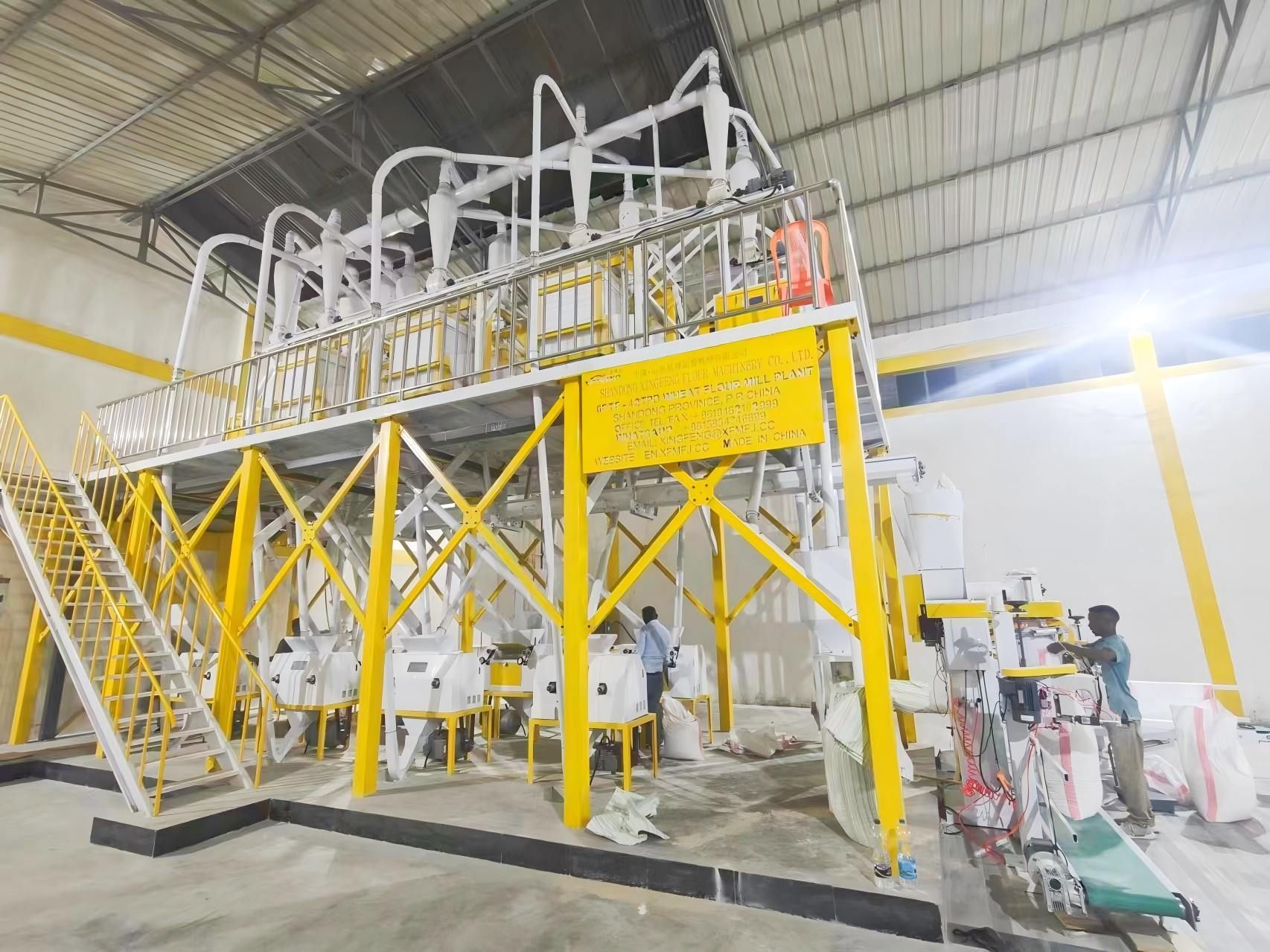
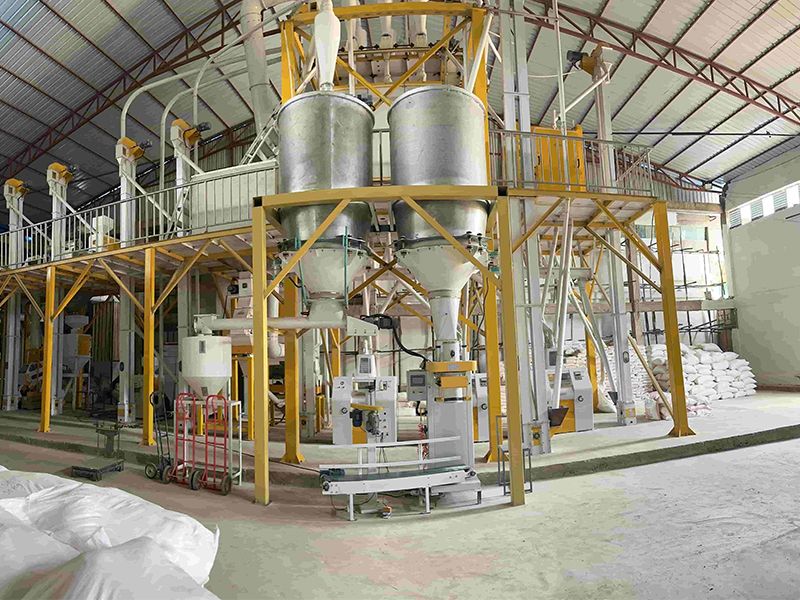
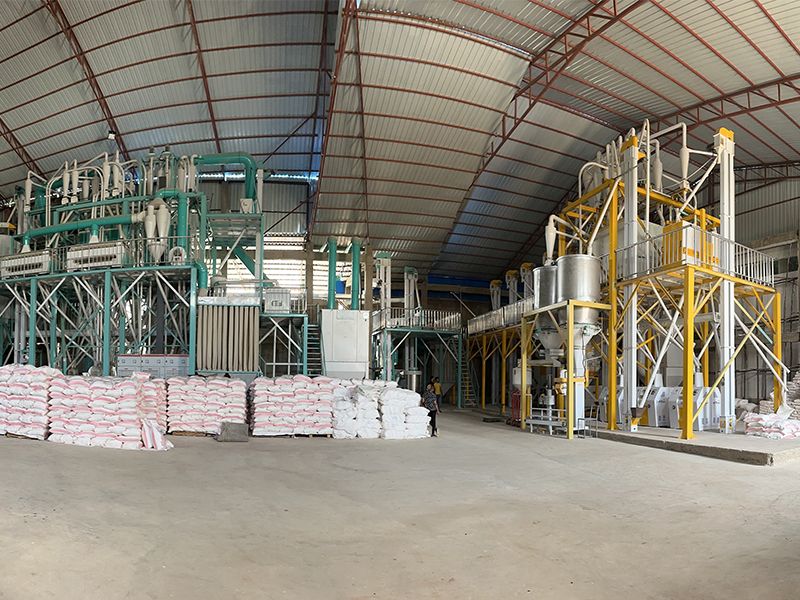
Choosing maize mill capacity when raw maize supply changes by season is a key decision for any commercial maize flour business. A plant that is too small may miss sales during the harvest season. A plant that is too large may sit idle when maize becomes scarce. Seasonal maize availability, storage capacity, and maize flour demand must be reviewed together before equipment is selected. A maize flour mill plant must also match the quality of the available maize. Kernel moisture control affects cleaning, degermination, grinding, and flour extraction rate. This article explains how to compare a 50TPD maize mill with an 80TPD maize mill and how to plan production for changing raw maize supply.
Choose a 50TPD maize mill when the annual maize supply is limited, seasonal storage is below 5,000 metric tons, or the expected average plant utilization is under 65 percent. Choose an 80TPD maize mill when the business can secure at least 24,000 metric tons of maize for 300 operating days, has enough storage and working capital, and expects strong flour demand. If supply is high for only a short harvest period, an 80TPD maize flour production line can be useful when the plant includes enough silos and can operate extended shifts. For most new projects with uncertain supply, a modular 50-80TPD maize mill plant offers a lower risk path because extra cleaning, milling, and packing capacity can be added later.
Daily capacity is easy to compare. Annual raw material supply is more important. A plant rated at 50 tons per day cannot operate at full output without a steady supply of suitable maize. The same applies to an 80TPD maize mill.
Use this basic calculation:
Annual maize requirement = Daily plant capacity x Operating days x Utilization rate
| Plant size | Nominal daily input | Annual input at 300 days | Annual input at 70 percent utilization |
|---|---|---|---|
| 50TPD maize mill | 50 metric tons | 15,000 metric tons | 10,500 metric tons |
| 60TPD maize mill | 60 metric tons | 18,000 metric tons | 12,600 metric tons |
| 70TPD maize mill | 70 metric tons | 21,000 metric tons | 14,700 metric tons |
| 80TPD maize mill | 80 metric tons | 24,000 metric tons | 16,800 metric tons |
These figures describe maize input, not finished flour output. A plant also produces bran, germ, grits, and cleaning waste. If a plant has a commercial flour extraction rate of 70 percent, 50 metric tons of maize may produce about 35 metric tons of flour and other saleable products. The actual result depends on maize variety, moisture, degermination level, product grade, and the mill design.
| Supply condition | Recommended planning action | Suitable capacity |
|---|---|---|
| Low supply for 4 to 6 months | Buy during harvest and store in silos or warehouses | 50TPD or modular 50-60TPD |
| Stable supply for 8 to 10 months | Use planned procurement and moderate storage | 60-70TPD |
| Strong supply for most of the year | Maintain high utilization and secure long-term contracts | 70-80TPD |
| High supply during a short harvest window | Increase storage and consider two-shift operation | 80TPD with suitable storage |
A 50TPD plant and an 80TPD plant can produce similar types of maize flour. Their main differences are feed requirement, equipment size, building area, power demand, storage needs, and investment level.
| Item | 50TPD maize mill | 80TPD maize mill | Planning meaning |
|---|---|---|---|
| Nominal maize input | 50 metric tons per day | 80 metric tons per day | 80TPD needs 60 percent more daily supply |
| Input per 24-hour day | About 2.08 metric tons per hour | About 3.33 metric tons per hour | Actual hourly rate depends on working hours |
| Input during a 16-hour shift | About 3.13 metric tons per hour | About 5.00 metric tons per hour | Conveyors and sifters must match this rate |
| Input over 300 days | 15,000 metric tons | 24,000 metric tons | Storage and procurement must support the target |
| Recommended starting point | New business or uncertain supply | Established demand and strong supply | Capacity should follow cash flow and market size |
A 50TPD commercial maize mill can also support product testing. The operator may begin with refined maize flour, whole maize meal, breakfast meal, or grits. More maize grinding machines can be installed after sales become stable.
Storage changes the capacity decision. Without storage, the plant must follow the harvest cycle. With storage, the plant can buy maize when prices and supply are favorable and mill it during the low-supply period.
A practical storage estimate is:
Storage requirement = Daily maize input x Number of supply gap days x Safety factor
For example, an 80TPD maize mill facing a 90-day supply gap needs:
80 x 90 = 7,200 metric tons of maize before adding a safety reserve.
If a 10 percent safety reserve is used, the target becomes about 7,920 metric tons. The final design must also account for bulk density, silo shape, aeration space, and handling losses. Maize bulk density commonly falls near 0.70 to 0.78 metric tons per cubic meter, but the project engineer should use the tested density of the local grain.
| Plant capacity | 60-day supply gap | 90-day supply gap | 120-day supply gap |
|---|---|---|---|
| 50TPD | 3,000 metric tons | 4,500 metric tons | 6,000 metric tons |
| 80TPD | 4,800 metric tons | 7,200 metric tons | 9,600 metric tons |
Stored maize should be checked at receiving and during storage. Common control points include:
Food safety limits differ by country and product. A laboratory should test moisture, aflatoxin, foreign matter, and microbial quality according to the applicable national standard and customer specification. The Codex General Standard for Contaminants and Toxins in Food and Feed is often used as a reference framework, but it does not replace local legal requirements.
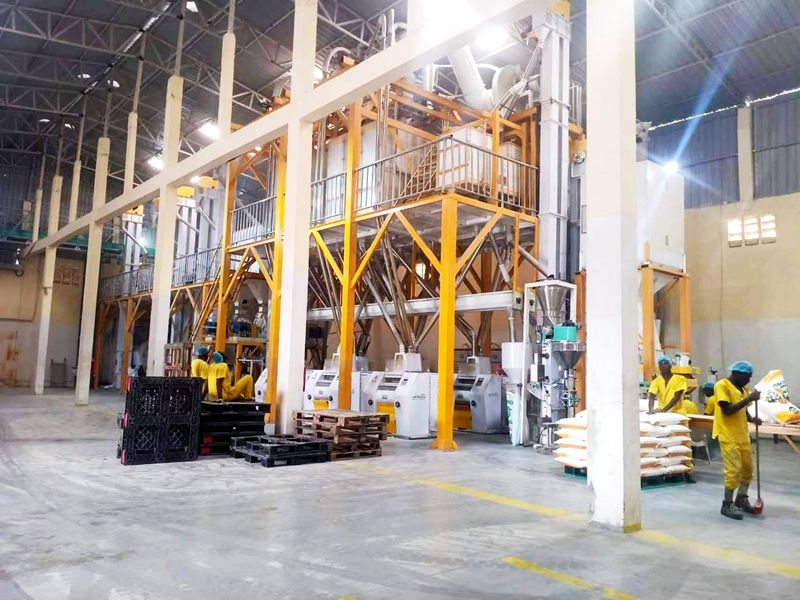
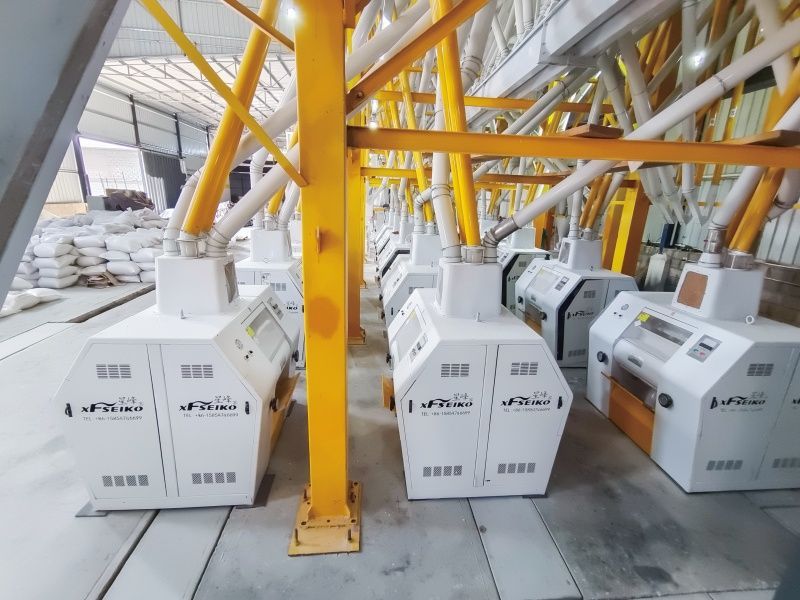
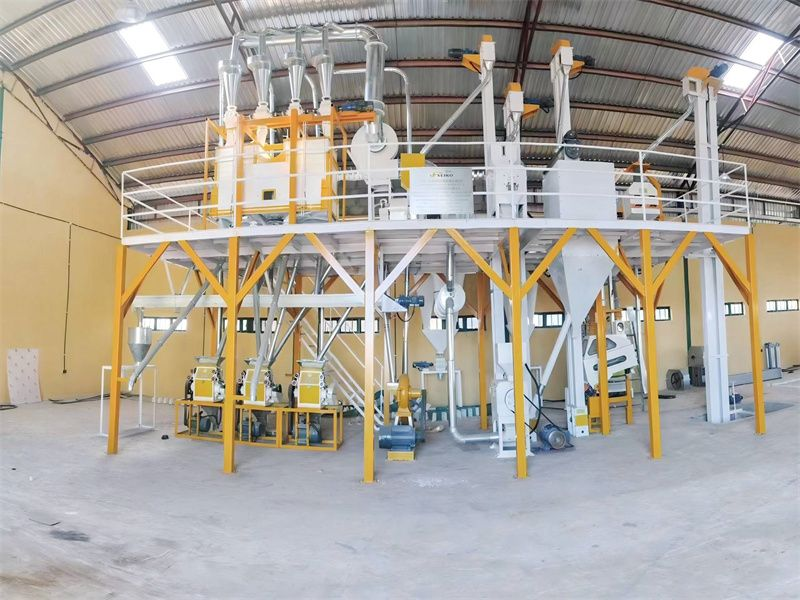
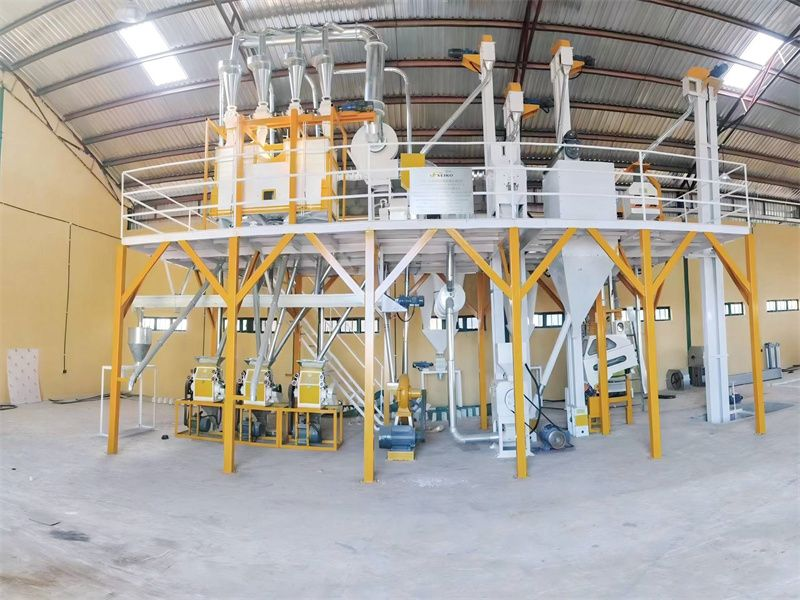
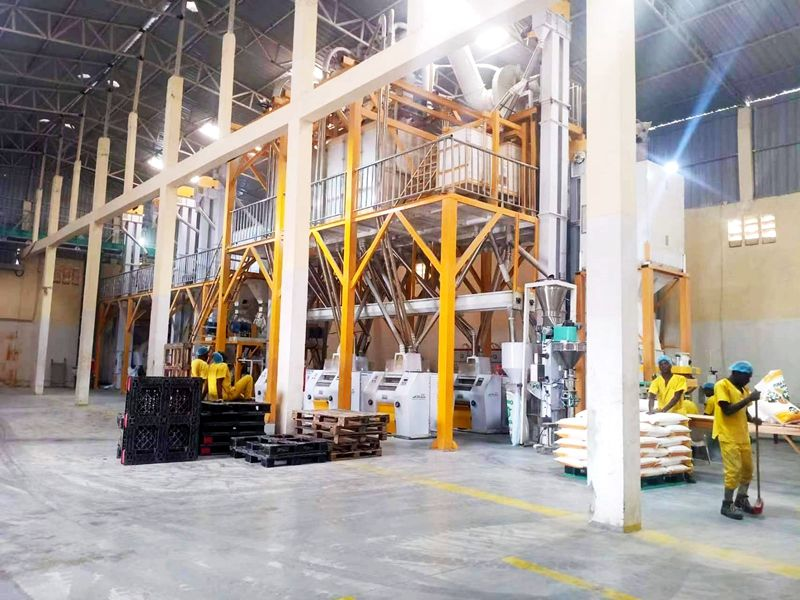
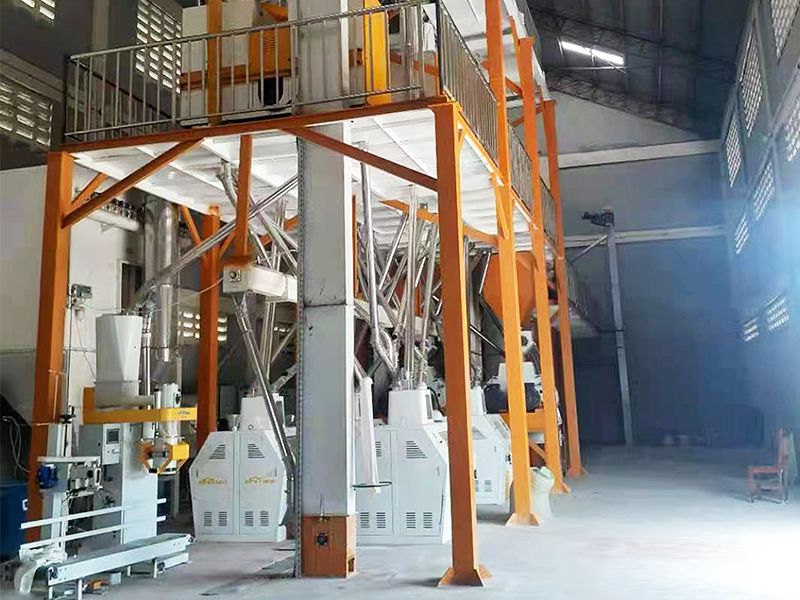
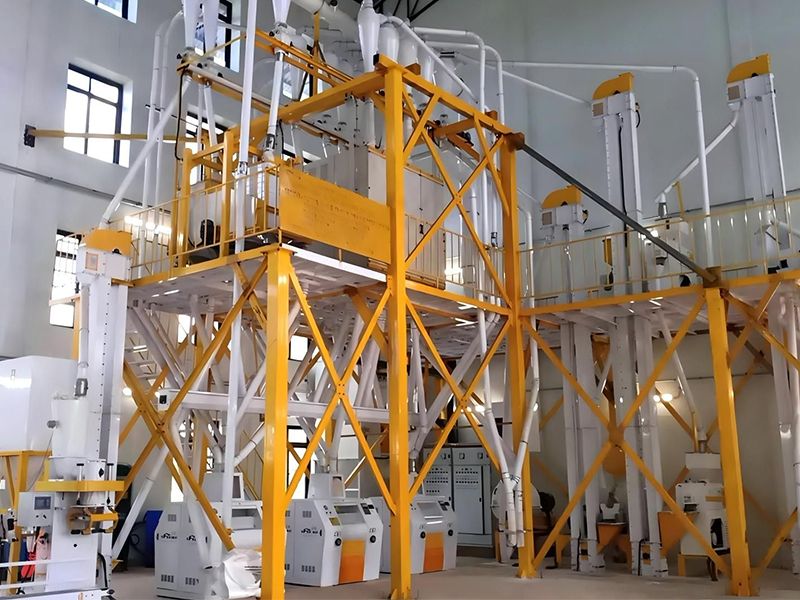
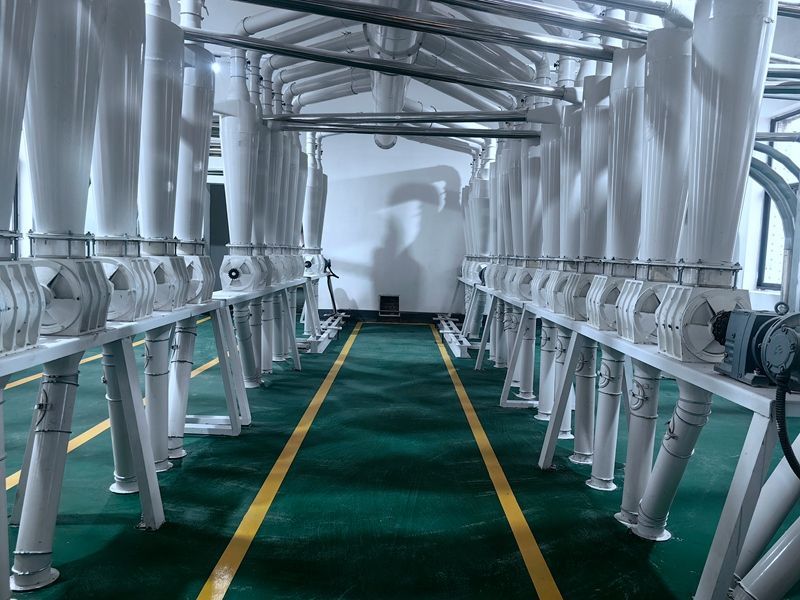
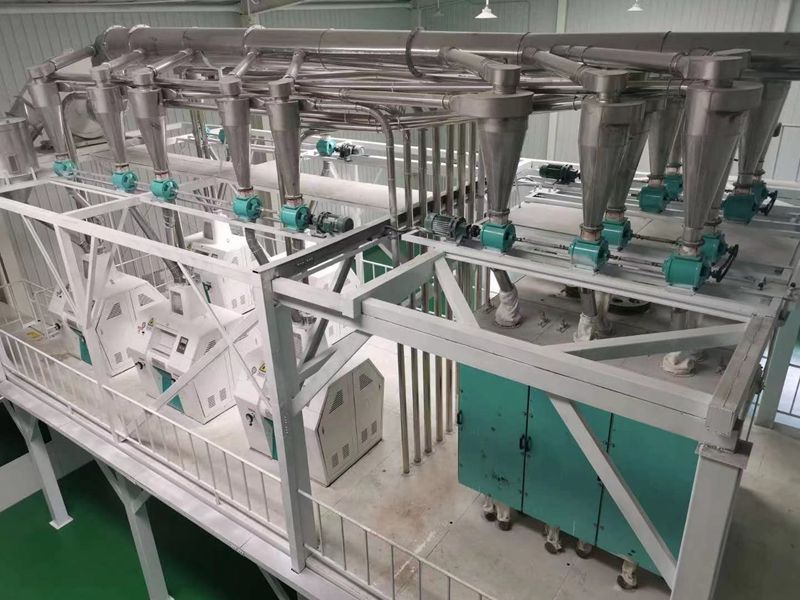
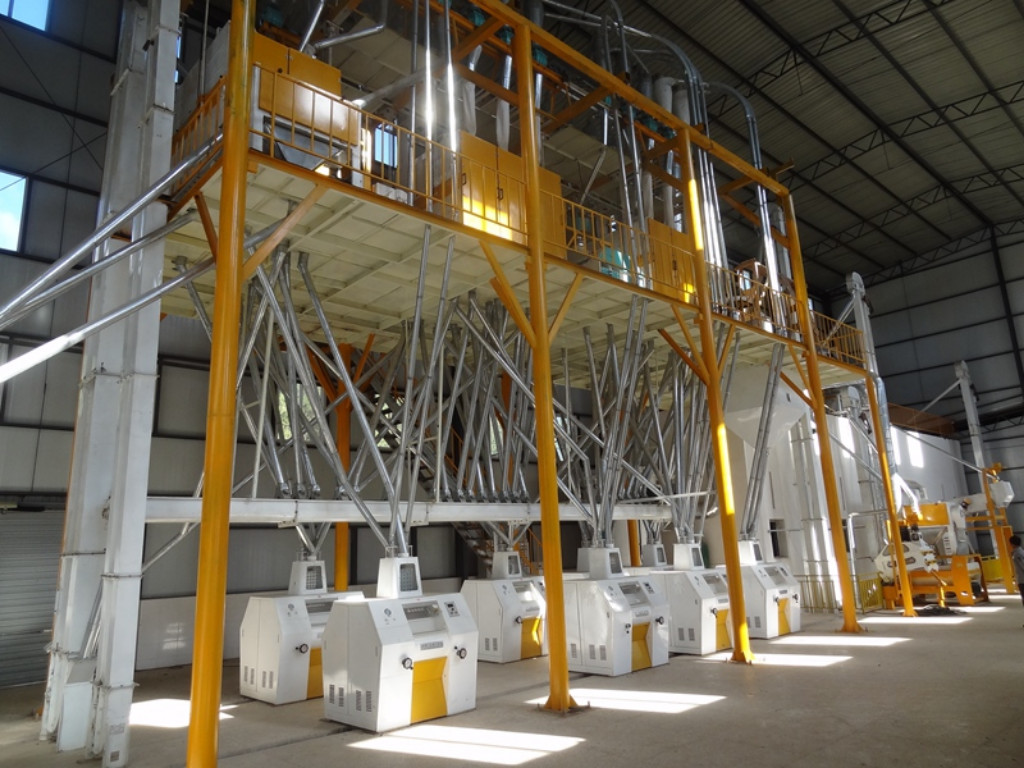
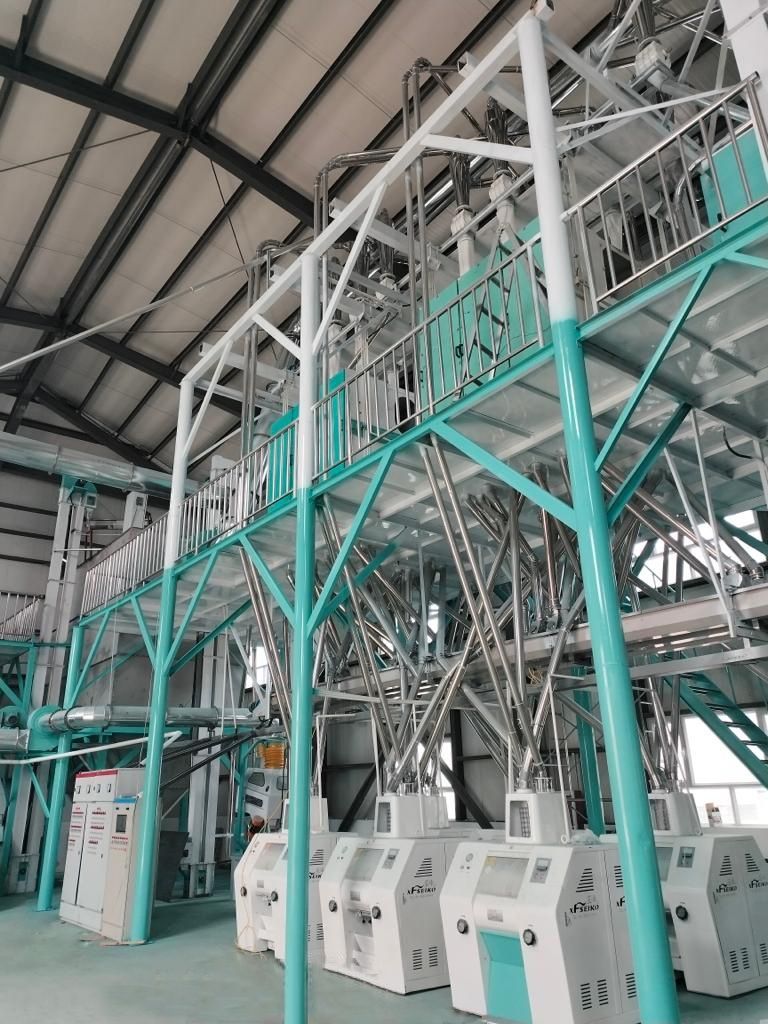
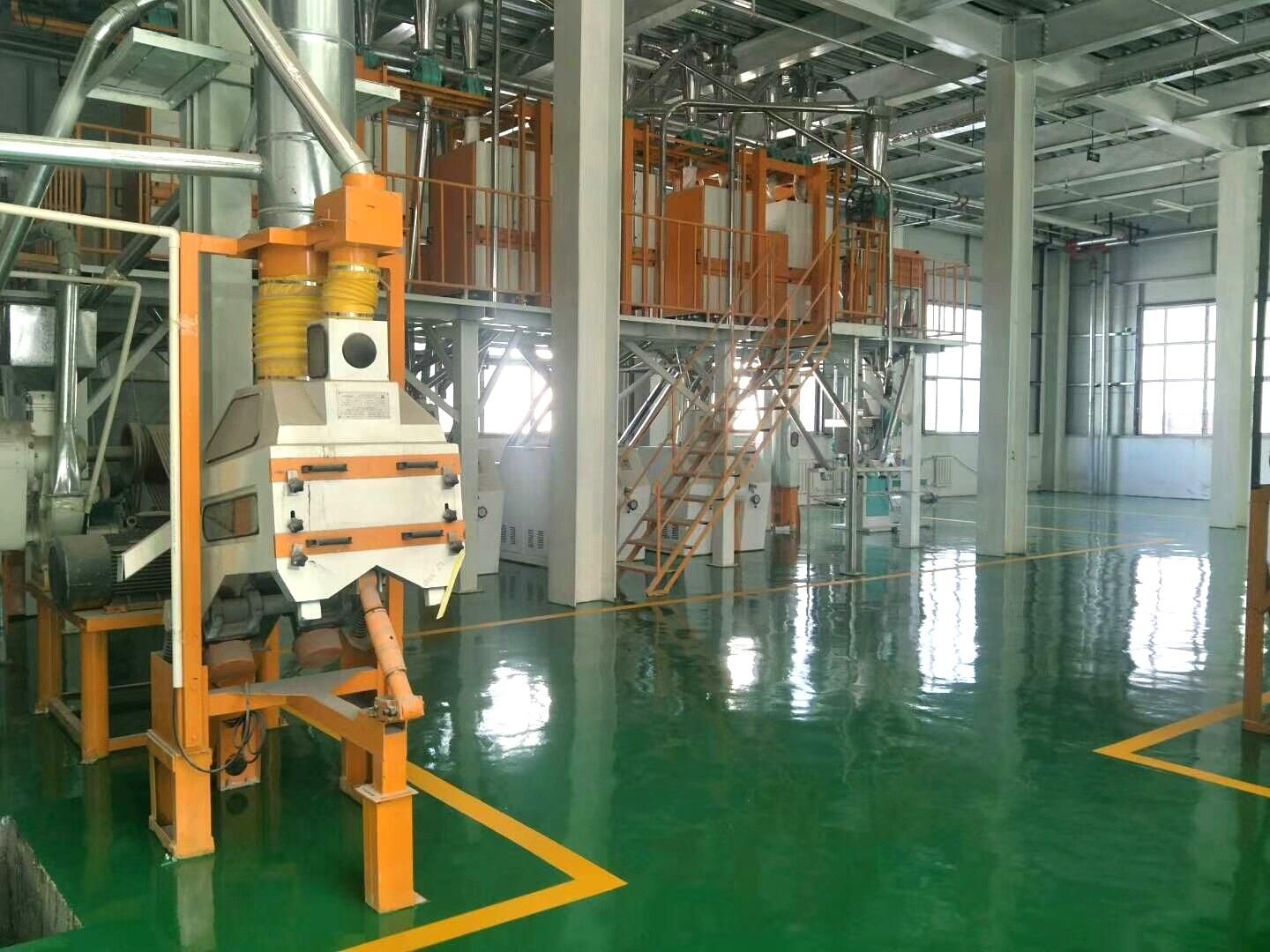
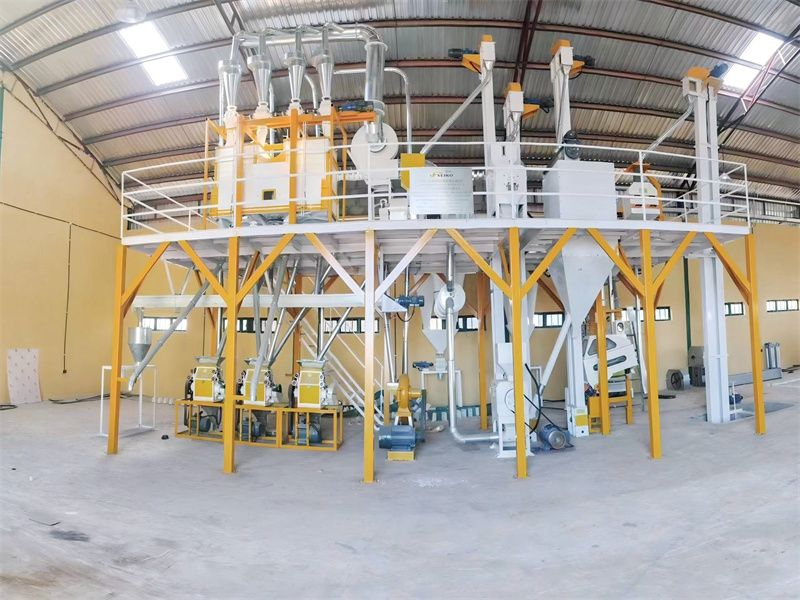
A maize processing plant is not only a grinder. It is a connected system. Each machine must handle the required flow without creating a bottleneck.
Raw maize receiving -> Sampling and testing -> Pre-cleaning -> Destoning -> Magnetic separation -> Dampening or conditioning -> Degermination -> Roller milling or maize grinding -> Plansifting -> Bran separation -> Product blending -> Weighing -> Packing -> Finished product storage
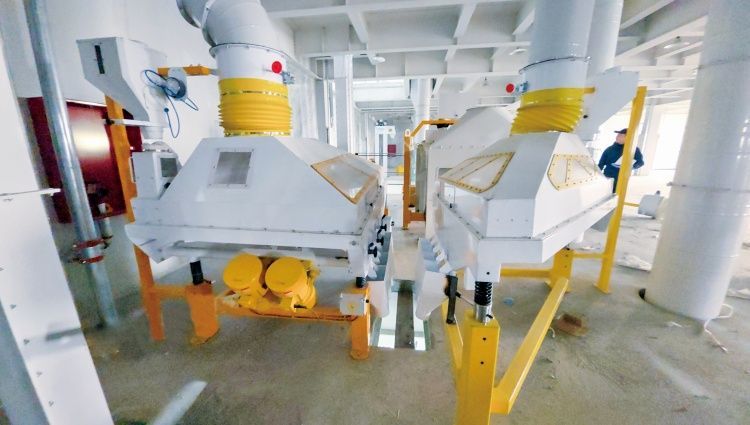
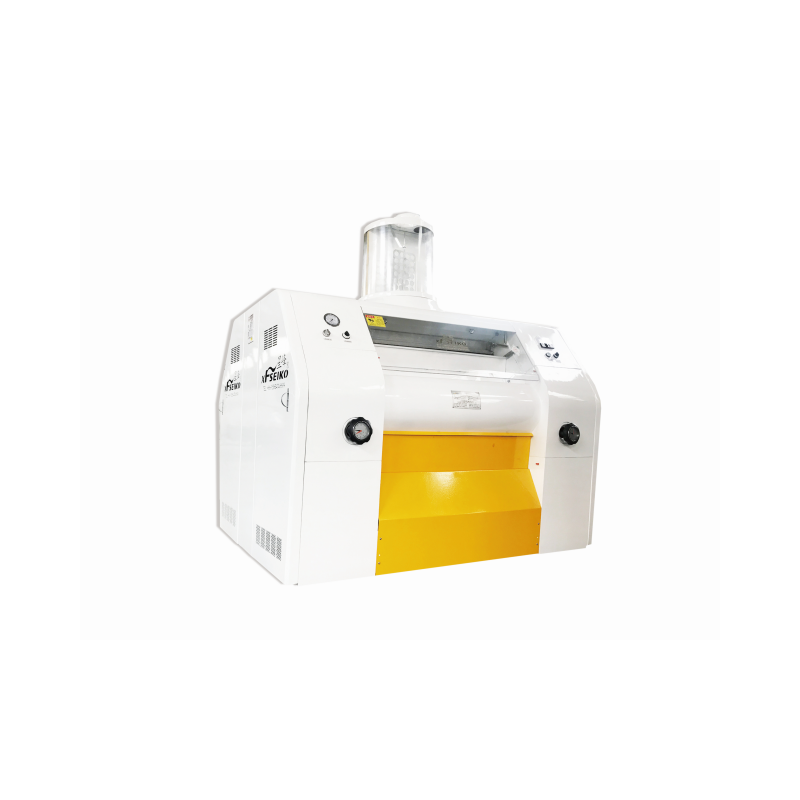
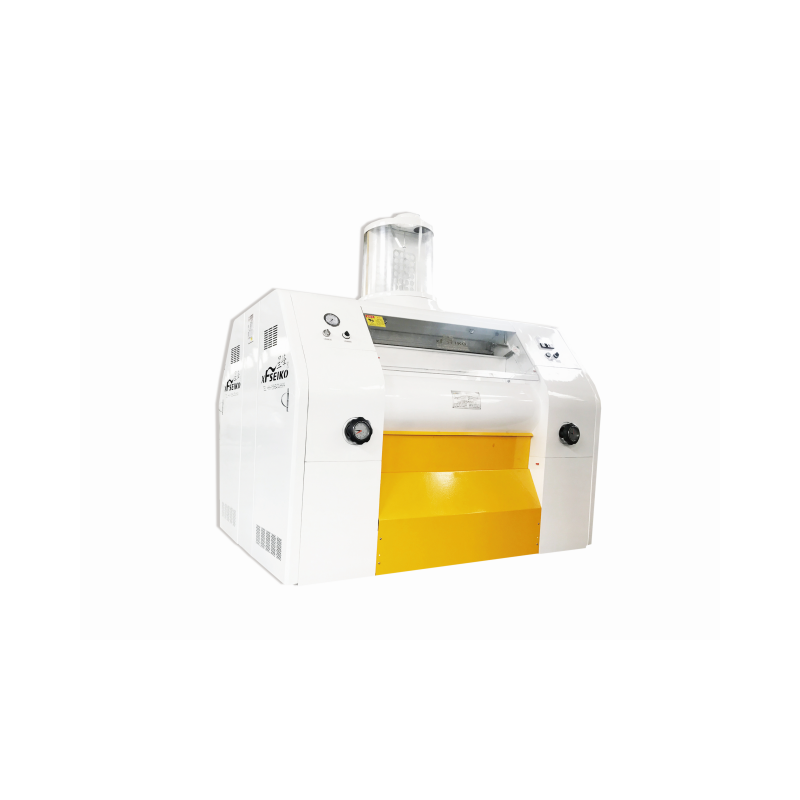
The equipment list usually includes intake hoppers, bucket elevators, conveyors, vibrating screens, aspiration channels, destoners, magnetic separators, dampening units, degerminators, roller mills, hammer mills where suitable, plansifters, bran finishers, dust collectors, packing machines, and electrical control panels.
| Equipment | Typical control point | Why it matters |
|---|---|---|
| Pre-cleaner | Screen opening selected for local maize size | Removes large and small impurities |
| Destoner | Airflow and deck inclination adjusted by grain density | Removes stones that can damage the mill |
| Magnetic separator | Installed before major grinding equipment | Reduces metal contamination risk |
| Degerminator | Adjusted for hardness, moisture, and desired extraction | Controls germ and bran removal |
| Roller mill | Roll gap, feed rate, and differential speed | Controls particle size and energy use |
| Plansifter | Mesh size and screen condition | Separates flour, meal, grits, and bran |
| Dust collector | Air volume and filter pressure difference | Controls dust and improves working conditions |
| Packing machine | Filling accuracy and bag size | Supports accurate sales and lower product loss |
For a 50TPD maize flour production line, the cleaning and milling sections must handle about 3.1 metric tons per hour when operated for 16 hours. For an 80TPD line, the same design basis becomes about 5.0 metric tons per hour. The design should include a reasonable surge margin so short feed interruptions do not stop the whole line.
Capacity is only one part of the project. Product type also changes the equipment configuration and yield.
| Product | Typical process need | Business consideration |
|---|---|---|
| Refined maize flour | Strong cleaning, degermination, roller milling, and plansifting | Higher quality control and finer particle size |
| Whole maize meal | Cleaning and grinding with more germ retained | Simple process and strong local demand in many markets |
| Maize grits | Degermination, grading, and controlled particle separation | Useful for food, brewing, and snack applications |
| Breakfast meal | Cleaning, milling, blending, and optional fortification | Requires stable quality and accurate formulation |
Maize moisture affects kernel hardness and separation. If maize is too dry, bran and germ may break into the flour stream. If it is too wet, the product may stick to screens and reduce throughput. Many plants use controlled dampening followed by a conditioning rest period. The exact moisture target must be confirmed through a milling test because maize varieties behave differently.
A test mill should measure:
Is annual usable maize supply below 15,000 metric tons?
Yes -> Select a 50TPD maize mill or a smaller modular configuration.
No -> Continue to the next question.
Can the business secure 16,800 to 24,000 metric tons for a 70 to 80 percent utilization plan?
No -> Select 50TPD to 70TPD and expand storage or supply contracts.
Yes -> Continue to the next question.
Can storage cover the longest seasonal supply gap?
No -> Build storage first or reduce the selected plant capacity.
Yes -> Select 70TPD or 80TPD according to demand and investment capacity.
A professional maize flour mill plant should use documented inspection points from raw material receiving to finished product packing. This protects food safety and keeps product quality stable during seasonal changes.
| Inspection item | Recommended control method | Action when results fail |
|---|---|---|
| Moisture | Calibrated grain moisture meter plus laboratory confirmation | Dry, condition, or reject the lot |
| Foreign matter | Visual inspection and laboratory sieve test | Adjust cleaning and review supplier quality |
| Mycotoxins | Rapid screening and confirmatory laboratory testing | Hold or reject the lot according to local limits |
| Kernel damage | Sampling by lot and visual grading | Separate lower-grade maize for suitable products |
Finished maize flour should be checked against the buyer's specification and local food standard. Typical checks include moisture, particle size, color, odor, foreign matter, ash, microbiological quality, and mycotoxin level. A common commercial target is a low moisture level that supports shelf life, but the exact limit depends on the product and legal market.
Inspection equipment may include laboratory balances with 0.01 gram readability, moisture analyzers, test sieves, thermometers, sample dividers, and calibrated weighing scales. Packing machines should be checked for fill accuracy. For example, a 25 kilogram bagging system should be tested over repeated bags, and the average net weight should meet the legal tolerance for the destination market.
An 80TPD maize mill requires more than a larger grinding machine. The intake, elevators, conveyors, sifters, dust collection system, packing area, and warehouse must all support the higher flow rate.
| Planning item | 50TPD plant | 80TPD plant |
|---|---|---|
| Material handling rate at 16 hours | About 3.13 metric tons per hour | About 5.00 metric tons per hour |
| Production supervision | Small operating team may be suitable | More operators and maintenance coverage are usually needed |
| Storage movement | Lower daily intake and dispatch volume | Higher turnover and stronger loading systems required |
| Maintenance planning | Shorter planned shutdowns may be easier to manage | Spare parts and preventive maintenance become more important |
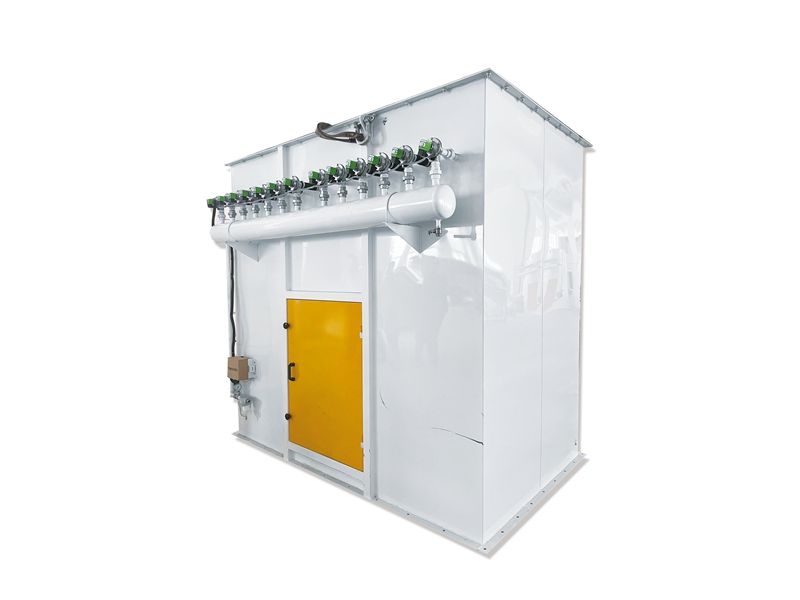
The factory layout should separate raw maize, processing areas, finished flour, and by-products. It should also provide safe access for cleaning and maintenance. Dust control is important because maize dust can affect worker health and create a fire risk. The dust collection system should be designed with proper grounding, inspection access, and local safety measures.
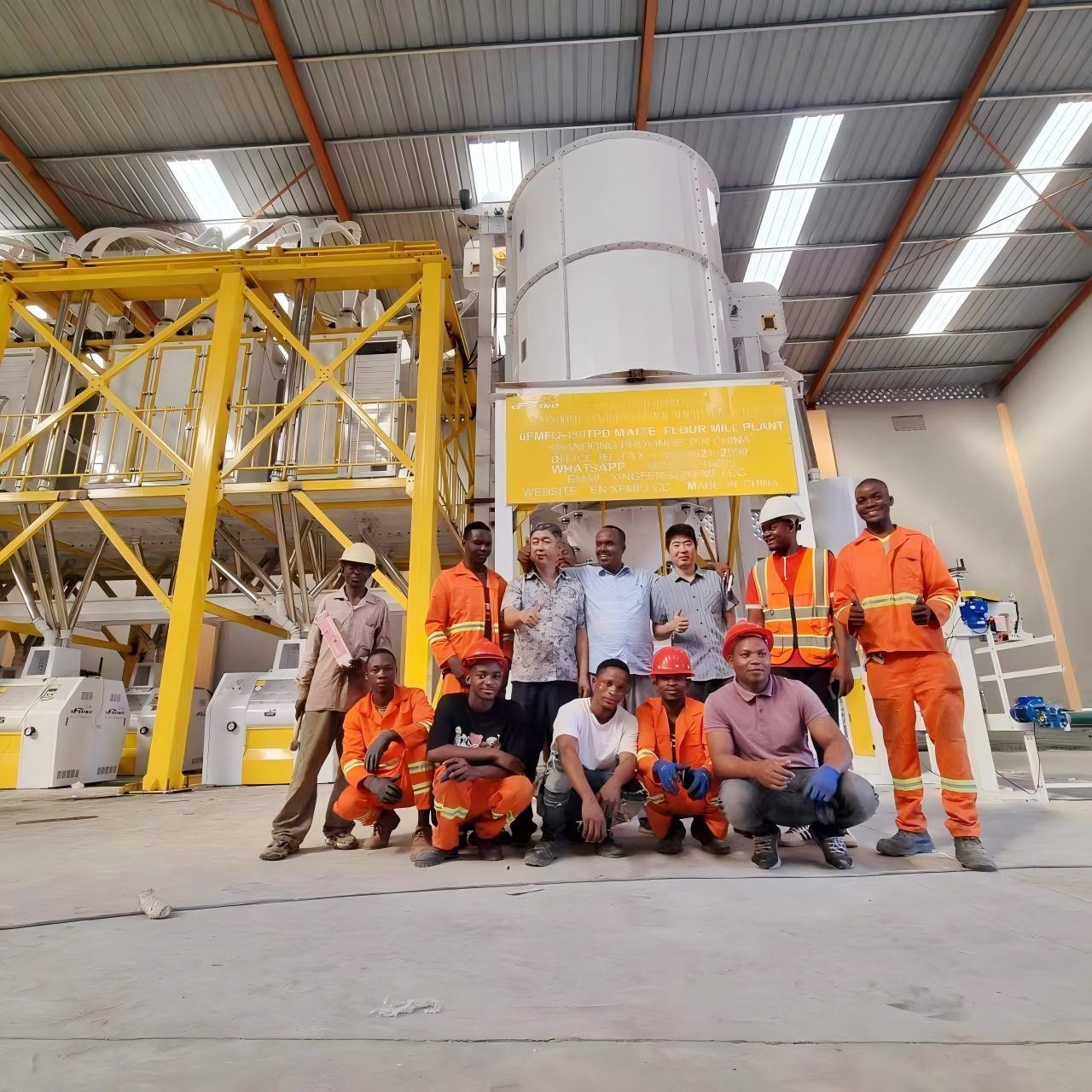
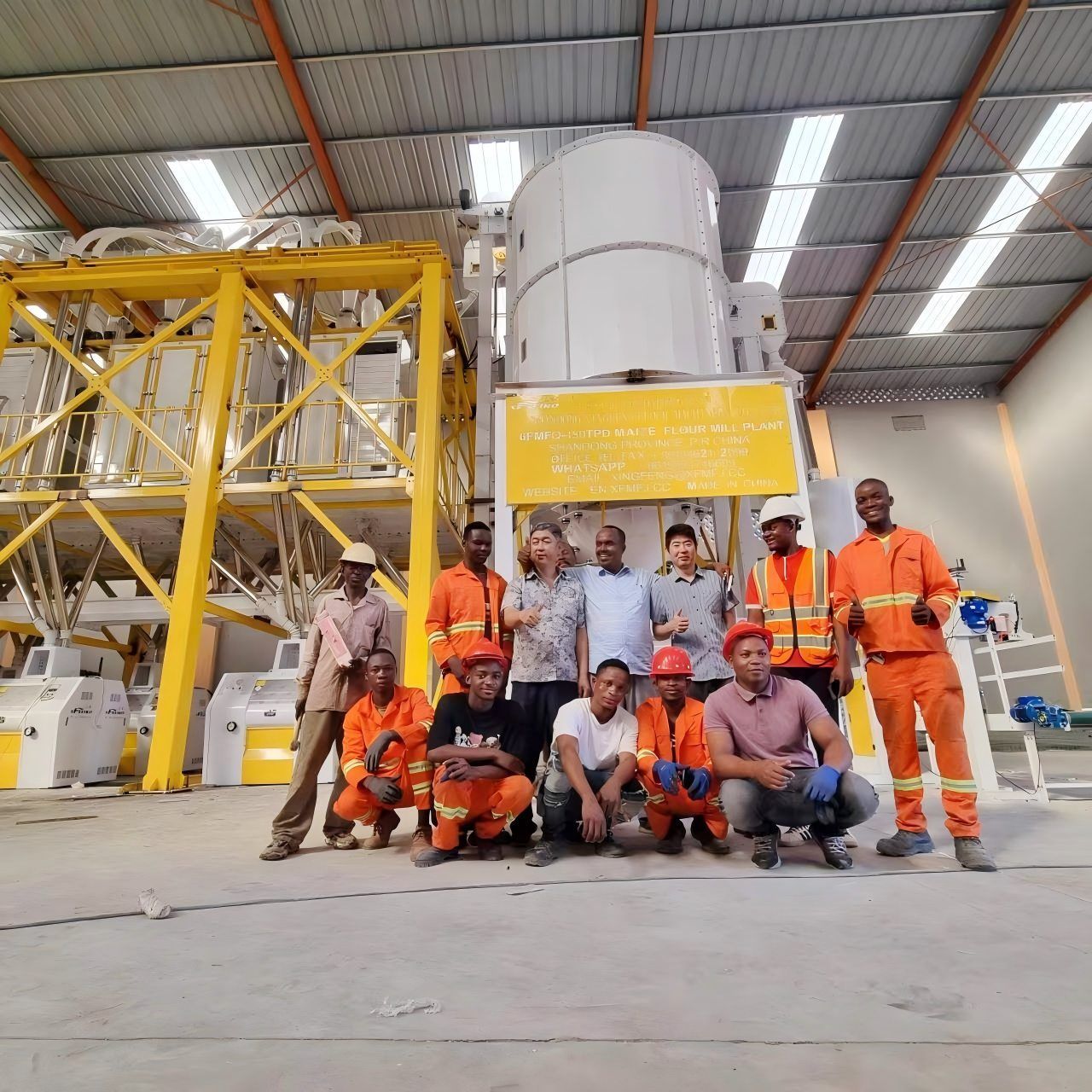
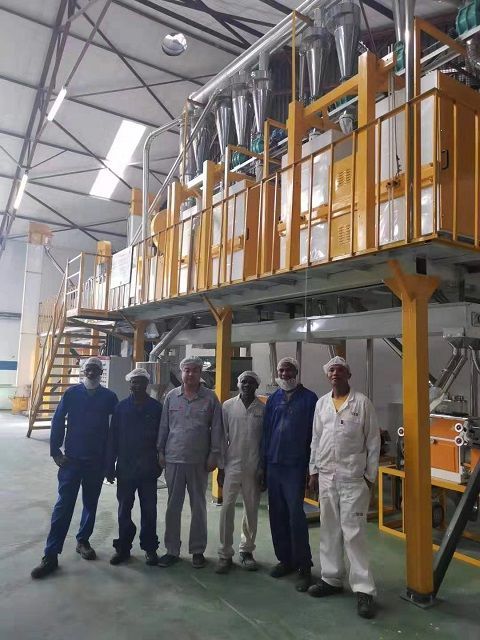
Capacity selection is more reliable when the equipment supplier studies the local maize and the expected products. Xingfeng can support a project through process design, equipment selection, layout planning, commissioning, and operator training. The final plan should be based on test results instead of capacity figures alone.
Before signing a contract, ask the supplier for measurable project information. Useful records include:
A suitable factory acceptance test may include a continuous production run of at least 4 to 8 hours, depending on the contract. The test can record feed rate, product yield, flour moisture, screen performance, motor current, dust leakage, packing accuracy, and abnormal vibration. Site acceptance testing should repeat the main checks after installation.
| Metric | How to evaluate it |
|---|---|
| Capacity | Measure stable maize input over a defined test period |
| Flour yield | Weigh flour, meal, bran, germ, and waste separately |
| Particle size | Use a test sieve set and record the percentage retained |
| Moisture | Test raw maize and finished products with calibrated instruments |
| Power use | Record kilowatt-hours per metric ton during stable production |
| Cleaning efficiency | Inspect product for stones, metal, husk, and other foreign matter |
| Packing accuracy | Check repeated bags against the declared net weight |
Choosing a 50-80TPD maize mill plant should be based on annual maize supply, seasonal availability, storage, product demand, and plant utilization. A 50TPD maize mill is often the safer option for a new project or a region with uncertain supply. An 80TPD maize mill is suitable when the business has strong procurement contracts, sufficient storage, and stable sales.
The best decision is not always the largest capacity. It is the capacity that can run efficiently across the full year. Test the local maize, calculate the longest supply gap, compare total operating costs, and confirm equipment performance through measurable factory and site tests. With a suitable modular design and careful planning, a maize flour mill plant can grow as raw maize supply and market demand become more stable.
< Previous: None
> Next: Preventing Product Loss During Cleaning, Degermination, Sifting and Packing

January. 01, 2024

February. 02, 2024

March. 03, 2026

August. 08, 2024
How to Use Wheat Flour Mill Plant Correctly?
This article provides a comprehensive guide on how to use a wheat flour mill plant correctly.

June. 06, 2025

July. 07, 2024