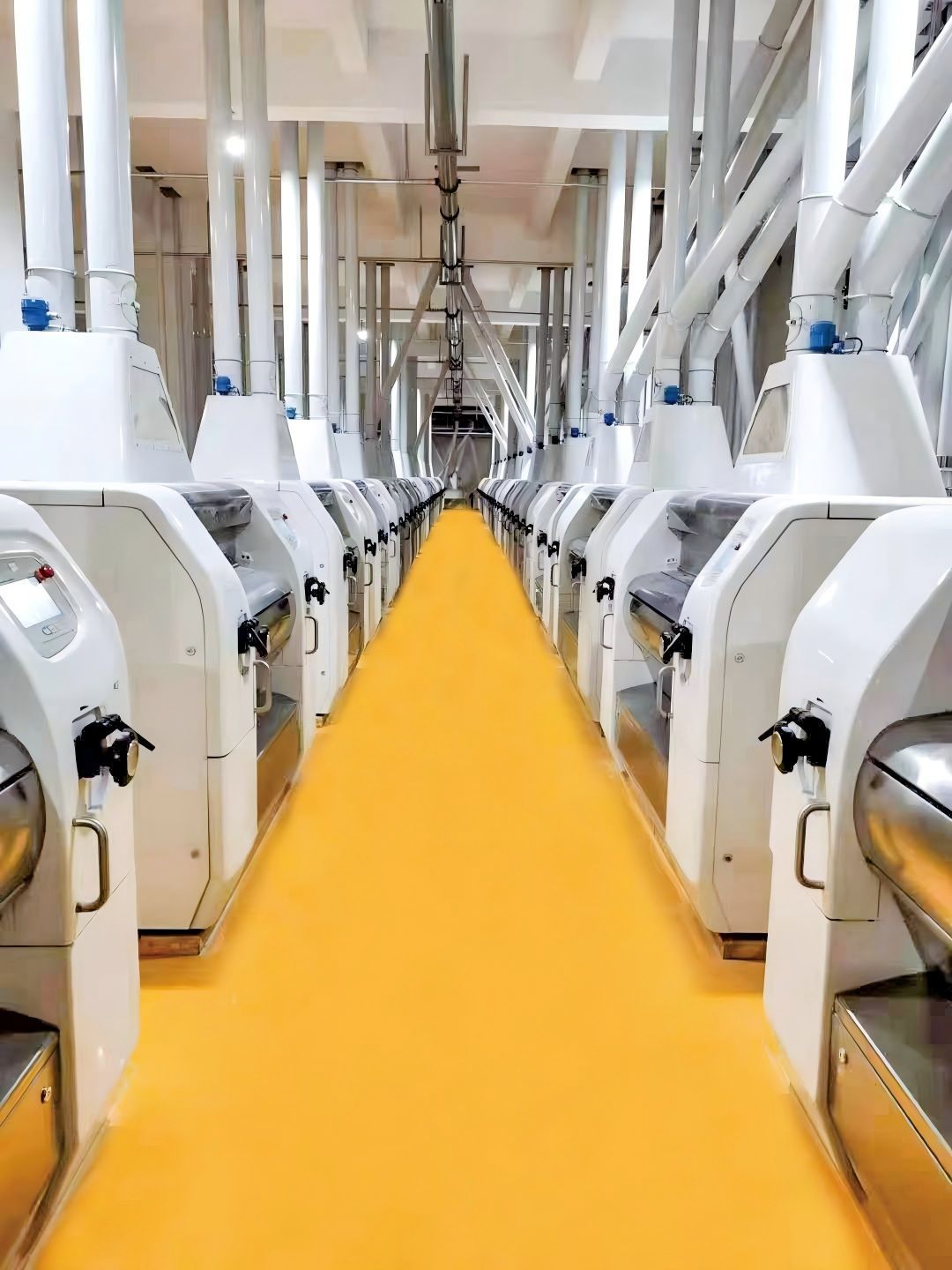
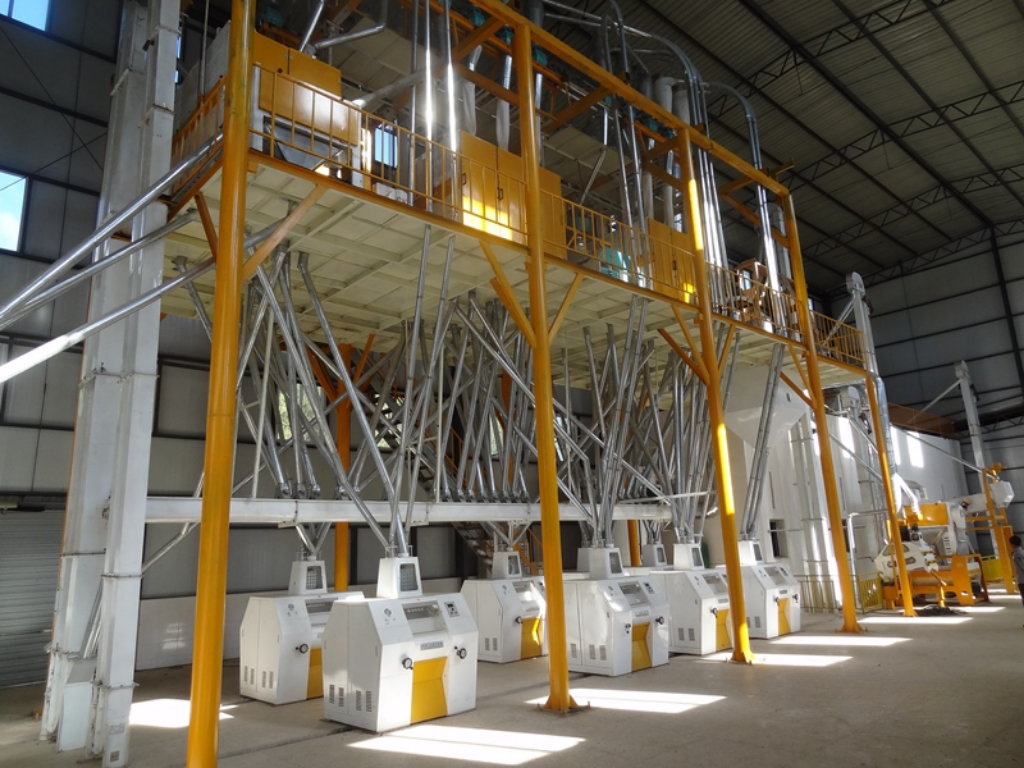
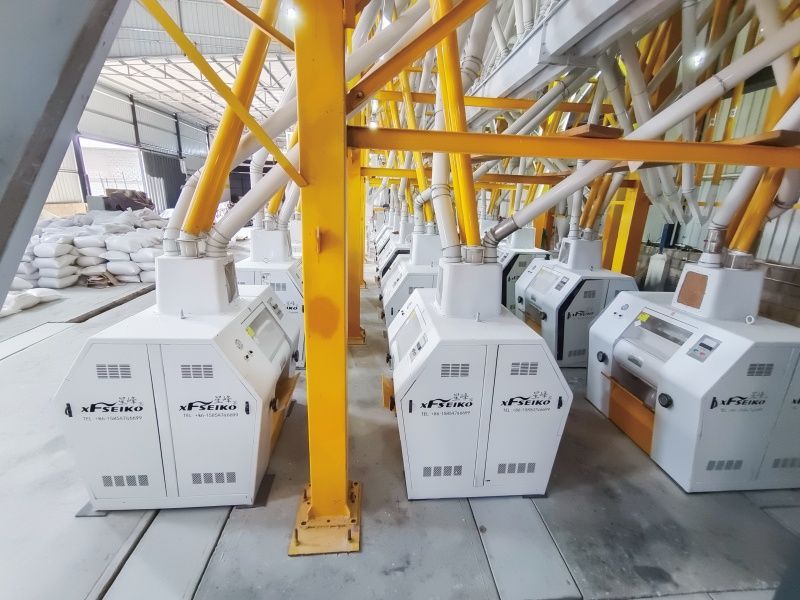
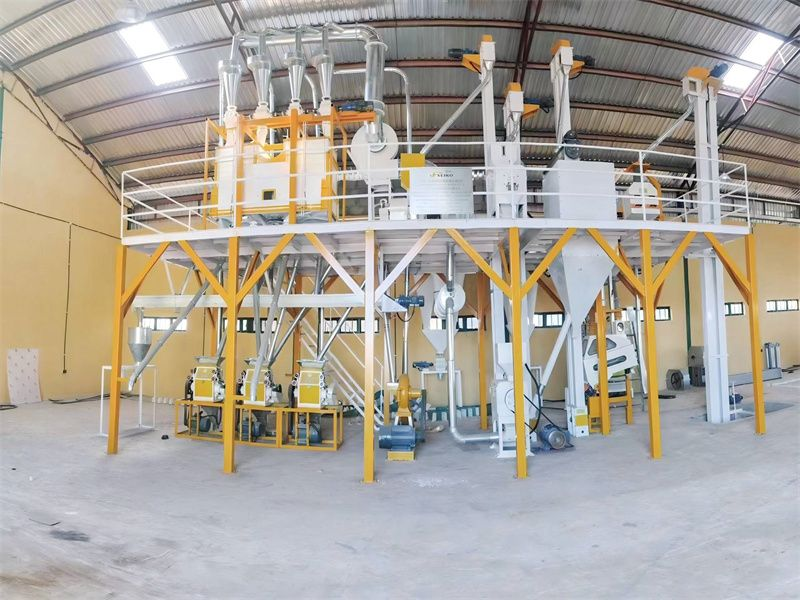
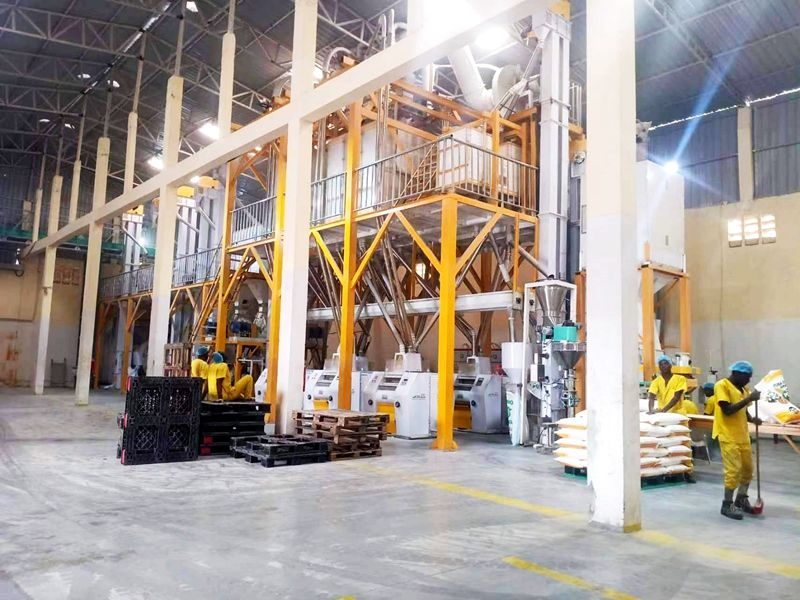
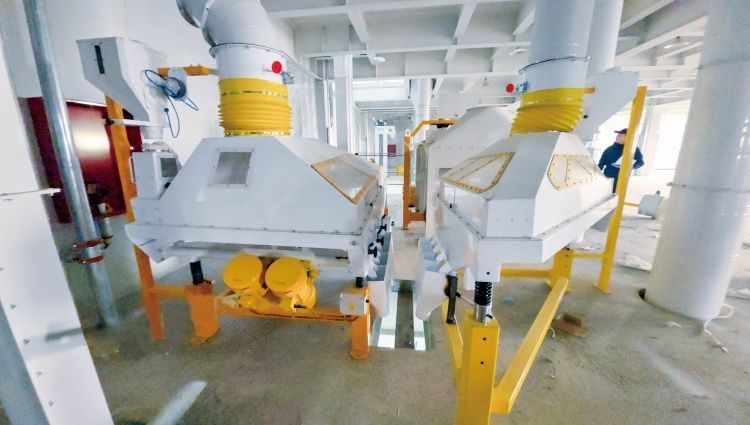
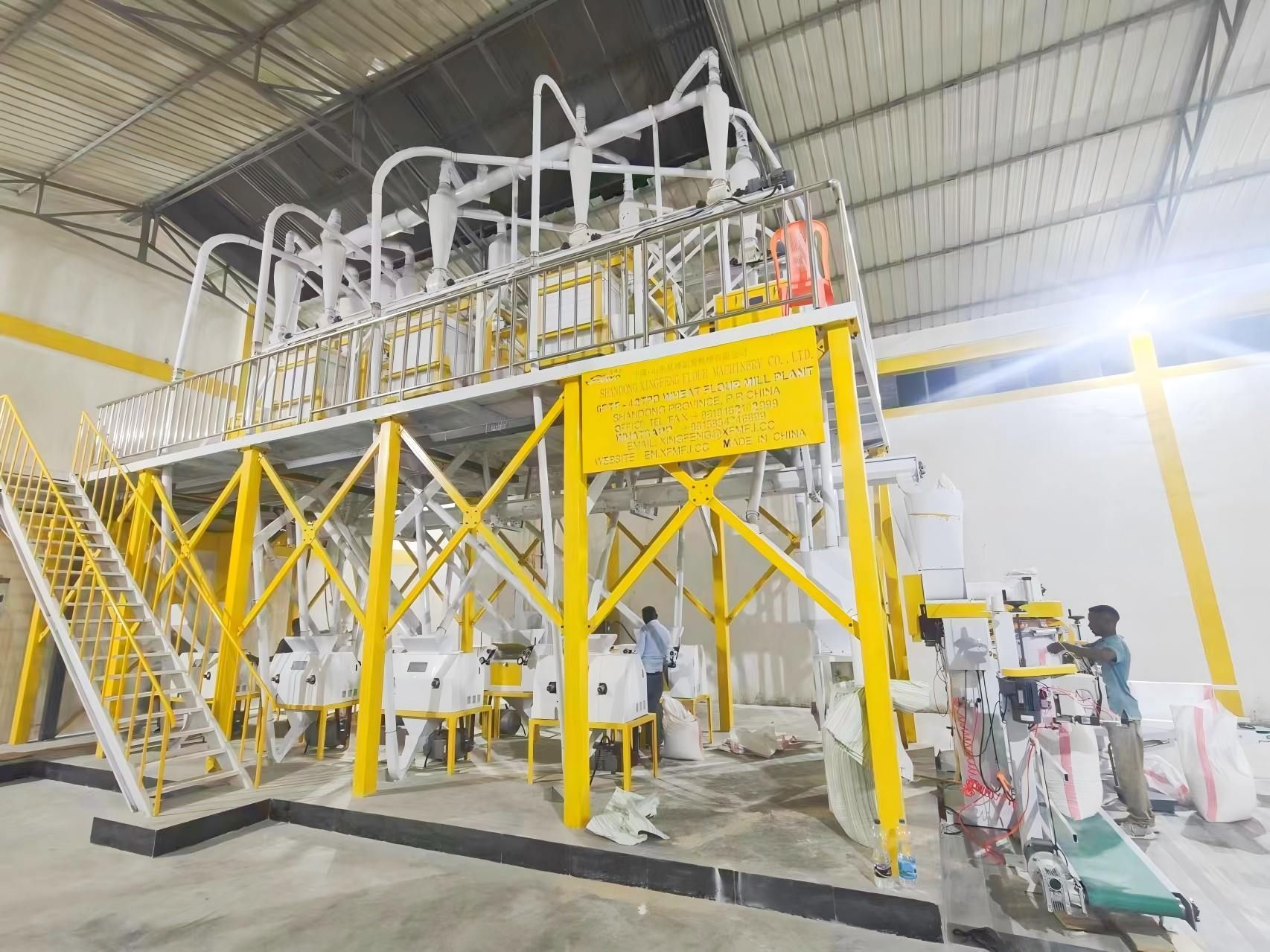
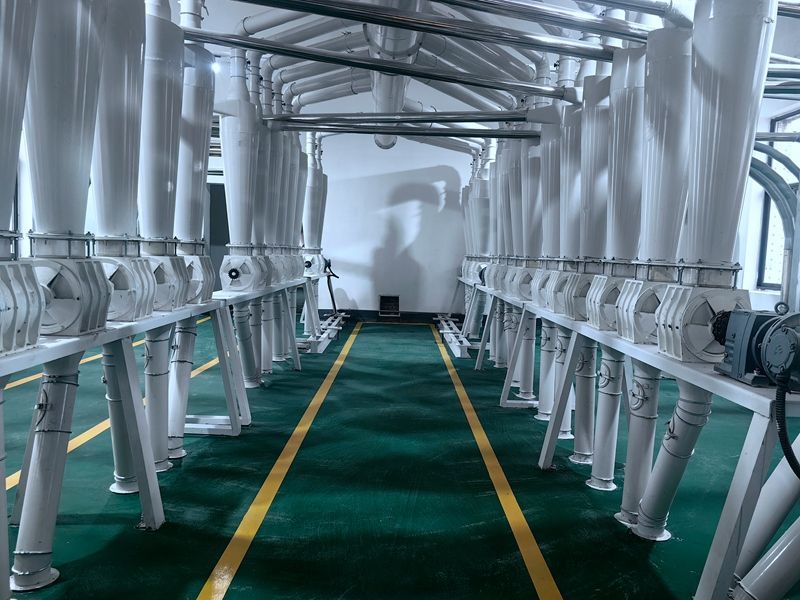
Choosing between a 50TPD maize flour mill plant and a 60TPD Maize Flour Mill Plant is not simply a question of buying the larger machine. Buyers comparing 60TPD maize flour mill plant cost and asking how to choose maize flour mill capacity must examine daily demand, maize quality, working hours, power supply, storage, and cash flow. A complete maize milling machine line with a degerminator and roller mill is judged by measurable throughput, extraction rate, and specific energy consumption, not by equipment size alone.

For a growing maize processor, the wrong capacity can create two opposite problems. A plant that is too small may lose wholesale orders during harvest season, while an oversized plant may leave expensive equipment idle for much of the year. The practical comparison is therefore between usable output and total operating cost, not just the additional 10 tonnes per day shown on a quotation.
Under a 24-hour production schedule, a 50TPD line produces approximately 2.08 tonnes per hour, while a 60TPD line produces approximately 2.50 tonnes per hour. If both plants operate 16 hours daily, the hourly requirement rises to 3.13 tonnes and 3.75 tonnes respectively. This difference affects the cleaning section, degerminator, roller mills, plansifter, aspiration system, elevators, packing machines, and finished-product storage.
Before requesting a final quotation from Xingfeng or another manufacturer, the buyer should answer four questions:
The table below uses common engineering ranges for a commercial maize flour production line. Exact values vary with maize variety, initial moisture, impurity content, target particle size, plant layout, and the number of products recovered. A technical audit should replace estimates with test-milling results before purchase.
| Parameter | 50TPD Maize Flour Mill Plant | 60TPD Maize Flour Mill Plant | Practical Meaning |
|---|---|---|---|
| Nominal finished output | 50 tonnes per 24 hours | 60 tonnes per 24 hours | The 60TPD line adds 10 tonnes of nominal daily capacity, or 20% more than the 50TPD line. |
| Approximate hourly throughput at 24-hour operation | 2.08 tonnes/hour | 2.50 tonnes/hour | Useful for sizing conveyors, sifters, storage bins, and packing equipment. |
| Typical raw maize requirement | About 55–65 tonnes/day | About 66–78 tonnes/day | The difference reflects cleaning loss, bran, germ, screenings, and product mix. |
| Typical flour extraction range | 70%–78% | 70%–78% | Extraction rate depends more on maize condition and product specification than plant nameplate capacity. |
| Indicative total connected load | Approximately 150–220 kW | Approximately 180–260 kW | Motor selection, aspiration, pneumatic conveying, and packing automation can change the final load. |
| Specific energy consumption | Approximately 25–45 kWh/tonne of finished product | Approximately 25–45 kWh/tonne of finished product | Actual consumption should be measured during commissioning; larger capacity does not automatically mean lower energy per tonne. |
| Recommended operating model | One shift, two shifts, or flexible seasonal production | Two shifts or continuous commercial production | The 60TPD option is more suitable when confirmed orders justify longer utilization. |
| Indicative land requirement | Approximately 1,000–2,000 m² including circulation and storage | Approximately 1,300–2,500 m² including circulation and storage | Land requirements depend on silo capacity, warehouse height, packing format, and local construction rules. |
For example, if the extraction rate is 74%, a plant producing 50 tonnes of finished flour may require about 67.6 tonnes of cleaned maize input before accounting for additional process losses. A 60TPD plant would require about 81.1 tonnes under the same assumption. This raw-material difference is more important than the 10-tonne output gap when transport, inventory financing, and seasonal maize prices are calculated.
A 60TPD maize flour mill plant is not always a simple 20% enlargement of a 50TPD line. The cleaning capacity must remove stones, dust, metal, husk, and light impurities at a higher rate. The degerminator must maintain stable residence time, and the plansifter must separate flour fractions without excessive recirculation.
The usual process includes raw-maize receiving, pre-cleaning, magnetic separation, intensive cleaning, conditioning, degermination, roller milling, sifting, bran and germ separation, product blending, and packing. If the buyer wants breakfast meal, fine flour, grits, and animal-feed by-products from the same line, the product-routing system can influence the investment more than the nominal 10TPD difference.
At either capacity, quality control should monitor maize moisture, broken-kernel percentage, ash content, particle-size distribution, flour moisture, and contamination risk. In many commercial operations, maize entering milling at approximately 12%–14% moisture is easier to handle, but the correct conditioning target must be established through laboratory and pilot testing rather than copied from a generic specification.
The best choice becomes clearer when the plant is placed inside a real operating scenario.
A 50TPD line is generally better suited to a regional processor with confirmed demand of approximately 30–45 tonnes per day and room to expand distribution. It can also fit a business that buys maize from several small suppliers, sells mainly in 25-kilogram or 50-kilogram bags, and expects strong seasonal fluctuations.
Consider a regional miller serving several towns. If the business sells 900 bags of 25 kilograms per day, its daily flour requirement is 22.5 tonnes. Even after adding wholesale growth and production downtime, a 50TPD plant provides a substantial operating buffer. Selecting 60TPD in this situation could increase idle hours without increasing revenue.
The smaller option is also useful when the electrical grid is limited. If the site can reliably support only around 200 kW after other factory loads are deducted, the 50TPD configuration may reduce generator fuel consumption and simplify transformer selection.
A 60TPD line becomes financially reasonable when the buyer has recurring demand, sufficient raw-maize supply, and a distribution network capable of moving at least 50 tonnes of flour and related products per production day. It is particularly relevant for institutional supply contracts, large wholesalers, supermarket distribution, and processors that run two shifts.
Suppose a buyer has a signed requirement for 48 tonnes per day and expects 10%–15% seasonal growth. A 50TPD plant would operate close to its practical ceiling after maintenance downtime, quality rework, and product changeovers. A 60TPD line provides more scheduling flexibility and can reduce overtime pressure. However, the extra capacity creates value only if the additional output is sold at a positive contribution margin.
A simple calculation helps. If the additional 10 tonnes per day generates a contribution margin of 45 US dollars per tonne, the extra gross contribution is 450 US dollars per operating day. At 300 operating days per year, that equals 135,000 US dollars before financing, maintenance, labor, and additional working-capital costs. If the 60TPD upgrade costs 180,000 US dollars more than the 50TPD option, the simple payback is about 16 months under these assumptions. If the extra production is sold only 100 days per year, the payback picture changes considerably.
Equipment price is only one part of the investment. A realistic budget should include the milling machinery, steel platform or building, electrical installation, dust-control equipment, silos or bins, laboratory instruments, packing equipment, spare parts, freight, customs, installation, commissioning, staff training, and working capital for maize procurement.
| Cost category | 50TPD plant tendency | 60TPD plant tendency |
|---|---|---|
| Core processing equipment | Lower initial purchase price and fewer large-capacity machines | Higher price because of larger cleaning, milling, conveying, and sifting capacity |
| Building and steel structure | Usually requires less floor area and lower handling volume | May require taller or larger structures, especially with expanded storage |
| Electrical infrastructure | Often compatible with a smaller transformer or generator | May require additional transformer capacity, cables, motor starters, and backup power |
| Storage and working capital | Lower daily maize inventory requirement | Higher funds tied up in raw maize, packaging, and finished stock |
| Cost per tonne at high utilization | Can be competitive when operated near planned capacity | May become lower because fixed costs are spread over more tonnes |
| Risk when demand is weak | Lower idle-capacity exposure | Higher idle-capacity and financing exposure |
In practice, a 60TPD plant may deliver a lower cost per tonne when it operates above approximately 75%–85% of its planned utilization. Below that level, depreciation, building costs, salaries, and financing can outweigh the efficiency gained from higher throughput. Buyers should request a five-year model showing utilization at 50%, 70%, and 90%, rather than relying on a single optimistic production forecast.
Capacity does not by itself determine flour quality. A well-designed 50TPD maize flour mill plant can outperform a poorly configured 60TPD line if its cleaning efficiency, moisture control, milling gap, aspiration balance, and sifting accuracy are better managed.
The following indicators deserve attention during technical evaluation:
A 60TPD system also requires disciplined preventive maintenance. If the line loses two hours per day because of blocked aspiration ducts or unplanned roller adjustment, the lost production can reach five tonnes or more, depending on the actual hourly rate. Therefore, a supplier’s training, spare-parts availability, and remote troubleshooting procedure should be evaluated alongside the machine list.
Public customer comments about maize milling equipment often focus on three practical issues: whether the stated capacity is achieved with the buyer’s maize, whether technicians support commissioning, and whether replacement parts arrive on time. A quotation that promises 60TPD but measures capacity only with dry, uniform maize may create disappointment when the plant processes mixed local varieties with higher impurity levels.
One useful customer-case pattern comes from regional millers that begin with a 50TPD line and expand storage and packing capacity first. Their reasoning is straightforward: the processing line is used for one or two shifts, while demand is built through distributors. Once daily orders consistently approach 40–45 tonnes and the business has reliable maize contracts, a larger line or an additional milling section becomes easier to finance.
Another common pattern is seen in established food companies with institutional contracts. They prefer the 60TPD configuration because a single shift can cover a larger order, leaving the second shift for cleaning, maintenance, or additional products. Their evaluation is less focused on the lowest purchase price and more focused on delivery consistency, product uniformity, and the cost of missed contracts.
When reviewing testimonials supplied by Xingfeng or any other manufacturer, the buyer should request verifiable project details: country and climate, maize moisture range, actual operating hours, final extraction rate, installed motor power, product types, commissioning date, and contact permission. This approach separates useful operational evidence from vague claims such as “high efficiency” or “large capacity.”
| Ranking | Buyer profile | Recommended level | Reason |
|---|---|---|---|
| 1 | Regional startup or family-owned mill with uncertain demand | 50TPD | Lower capital exposure, easier staffing, and better protection against idle capacity. |
| 2 | Existing processor selling 35–45 tonnes daily with distributor growth | 60TPD | Provides a measurable 20% capacity buffer if raw materials, power, and storage are available. |
| 3 | Contract supplier with confirmed demand above 48 tonnes daily | 60TPD | Reduces the risk of overtime and missed deliveries, provided the contract margin is positive. |
| 4 | Seasonal operator with limited electricity and irregular maize supply | 50TPD | More flexible for intermittent production and lower backup-power requirements. |
| 5 | Large company planning rapid market expansion | 60TPD with expansion provision | Allows higher initial output while reserving space for silos, extra sifters, or a second milling section. |
These rankings are not a substitute for a feasibility study. They simply connect output level with demand certainty, infrastructure, and financial tolerance. A supplier such as Xingfeng may be able to configure either capacity with different product streams, automation levels, and building arrangements, so the comparison should be made on an equivalent technical scope.
Start with sales data rather than machine capacity. Add the average daily orders from the previous 12 months, remove unusually high one-off purchases, and then include only demand supported by distributor commitments or contracts. Next, calculate raw-maize availability by month. A plant designed for 60 tonnes per day can still operate below target if local suppliers cannot provide approximately 80 tonnes of suitable maize input each production day.
Then test the financial model under conservative conditions:
The final quotation should specify guaranteed input moisture, output definitions, extraction assumptions, installed power, expected energy consumption, sieve configuration, dust-control equipment, warranty terms, commissioning scope, training days, spare parts, and delivery schedule. Without these details, comparing a 50TPD quotation with a 60TPD quotation can be misleading because two suppliers may be pricing different levels of automation and auxiliary equipment.
Choose the 50TPD maize flour mill plant if demand is still developing, power infrastructure is limited, maize supply is seasonal, or preserving cash for distribution is more important than maximum output. It is not an inferior option; at high utilization, it can provide a stronger return on invested capital and simpler daily management.
Choose the 60TPD maize flour mill plant if confirmed demand is close to 50 tonnes per day, the site can support approximately 180–260 kW of connected load, raw-maize procurement is dependable, and the additional 10 tonnes can be sold with a verified margin. The larger line is most valuable when it prevents lost orders and spreads fixed costs over a consistently high volume.
For the next step, prepare your maize sample, target products, expected daily sales, available power, land dimensions, and local electricity price. Ask Xingfeng to issue two equivalent process designs—a 50TPD and a 60TPD option—with extraction rate, specific energy consumption, floor plan, equipment list, commissioning scope, and a five-year operating model. That side-by-side evidence will show whether the 60TPD maize flour mill plant cost is justified or whether the 50TPD maize flour mill plant offers the safer path. In short, maize milling machine configuration, degerminator performance, and throughput should be selected around real sales and raw-material data, not a larger number on a brochure.
< Previous: None
> Next: Labor and Automation Planning for a 50–80TPD Maize Flour Mill Plant

February. 02, 2024

January. 01, 2024

March. 03, 2026

June. 06, 2025

August. 08, 2024
How to Use Wheat Flour Mill Plant Correctly?
This article provides a comprehensive guide on how to use a wheat flour mill plant correctly.

July. 07, 2024