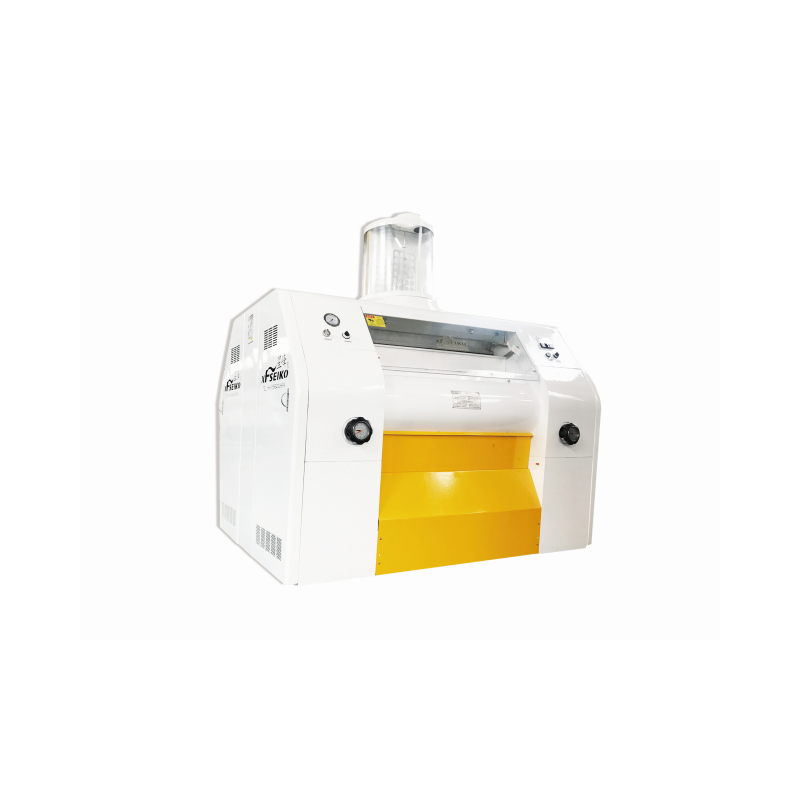
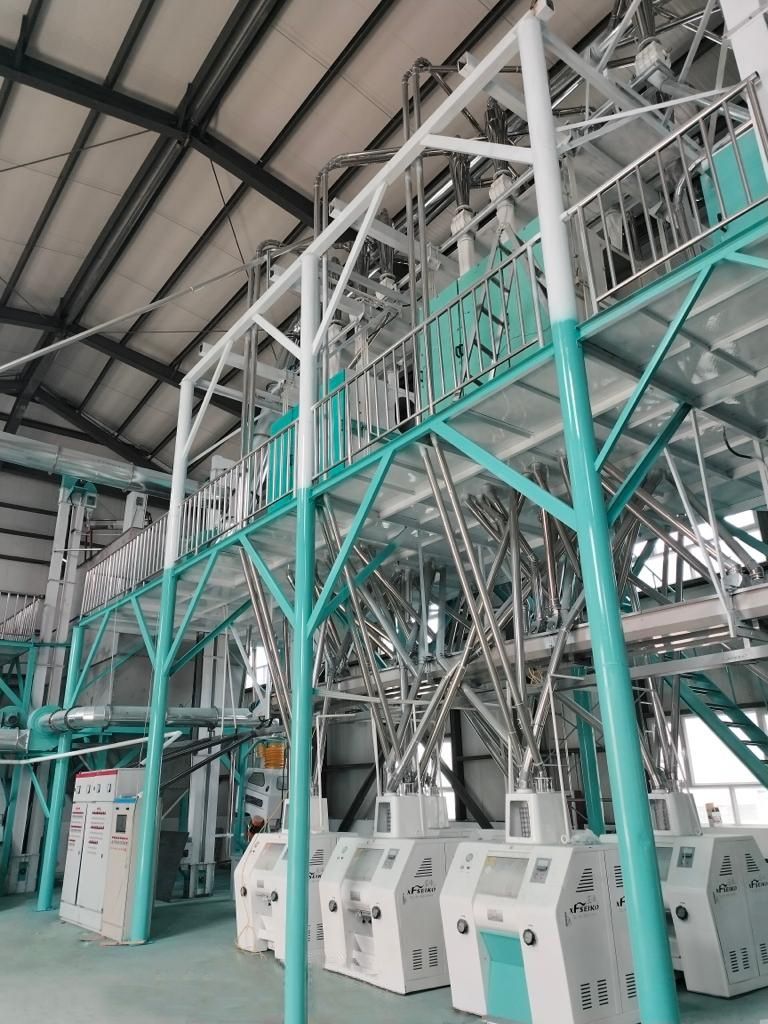
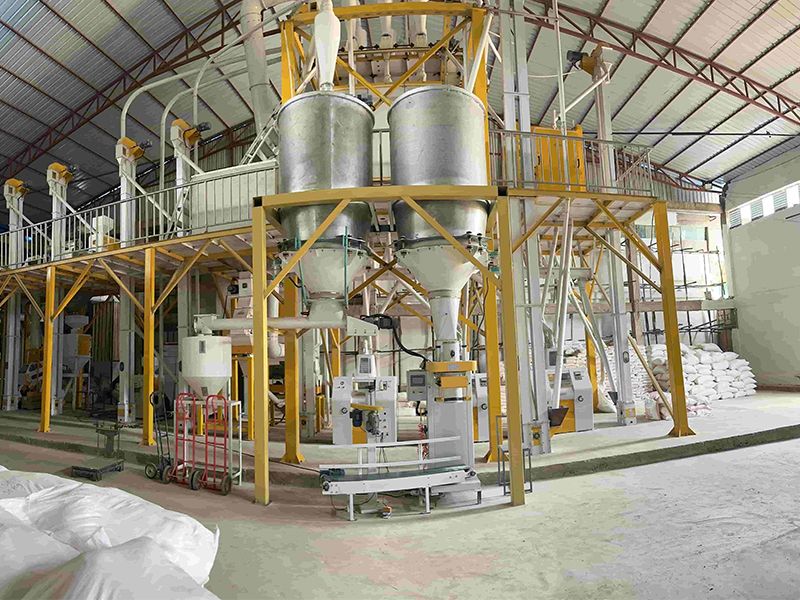
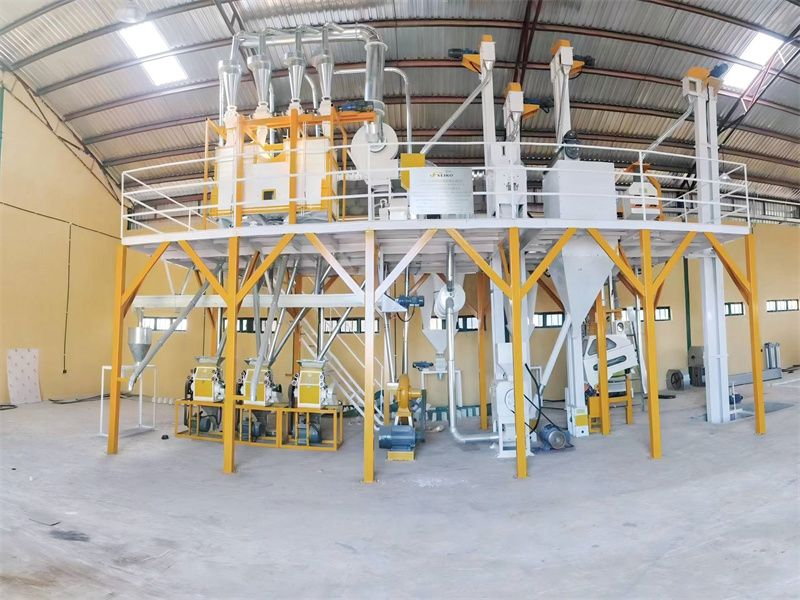
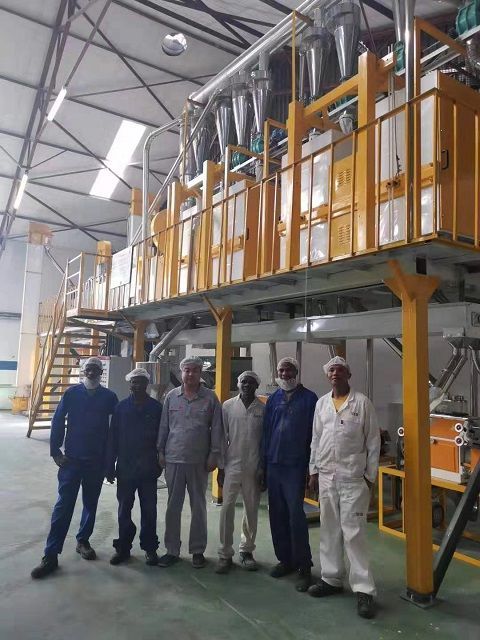
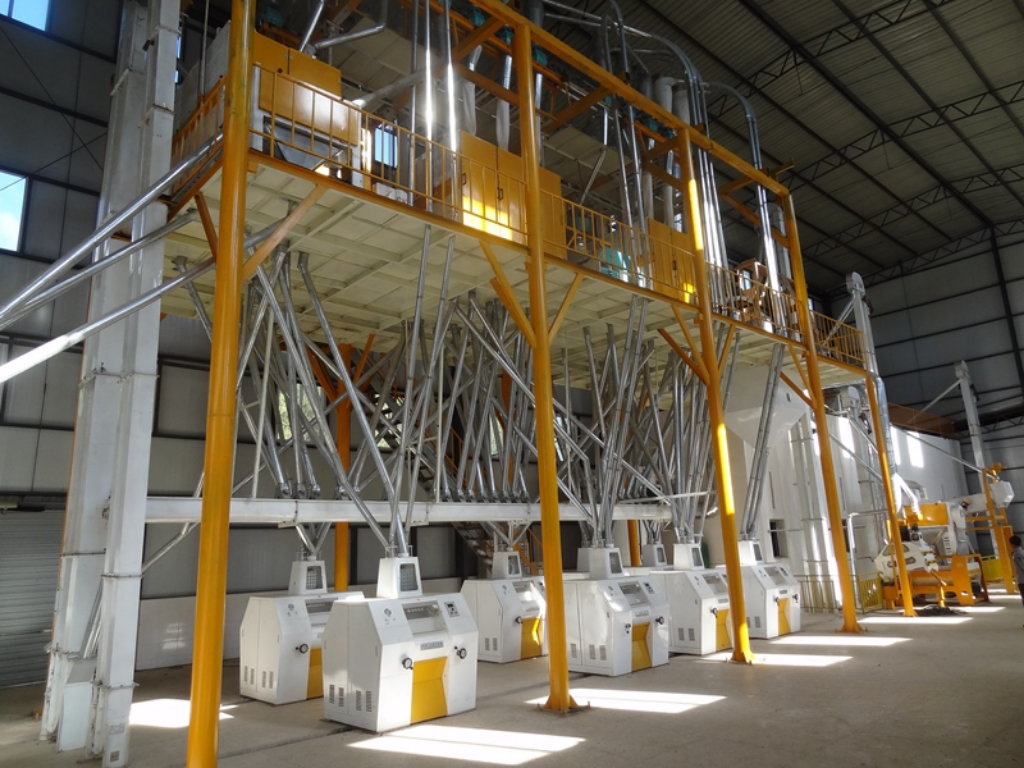
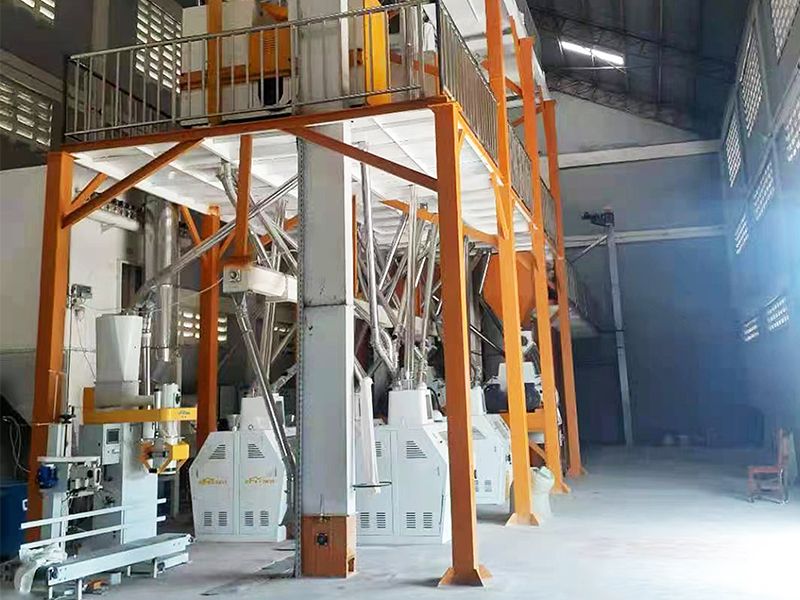
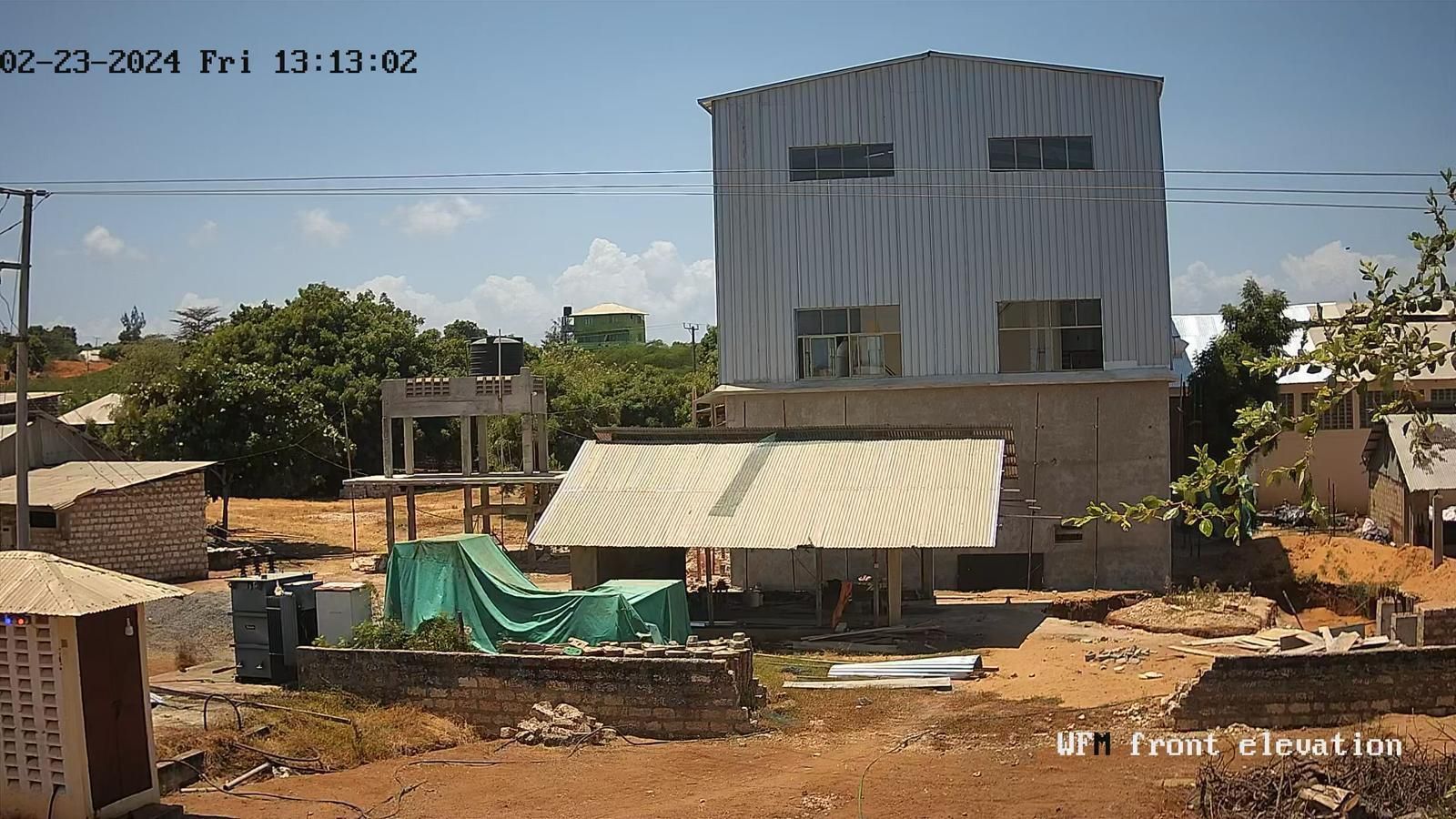
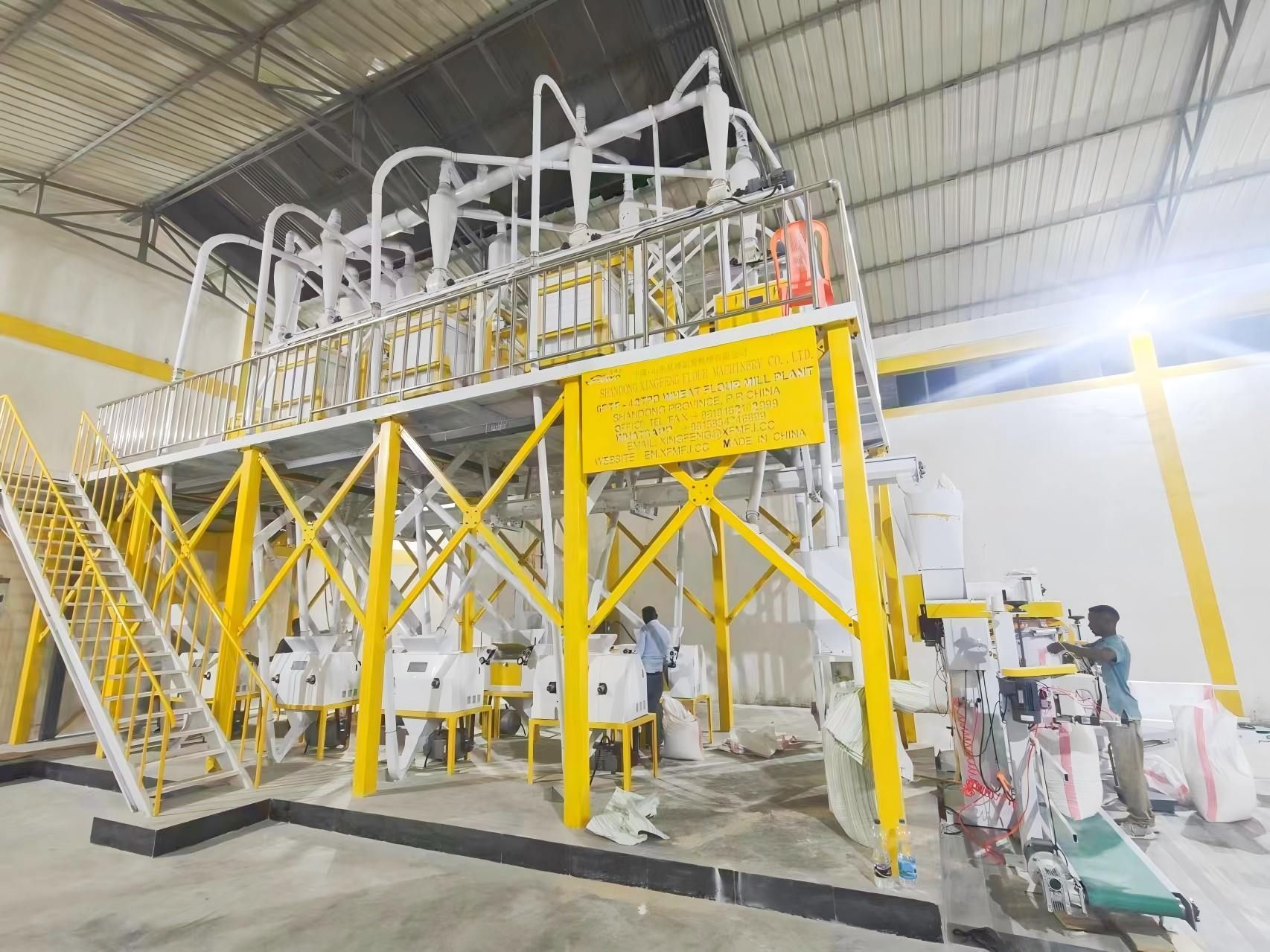
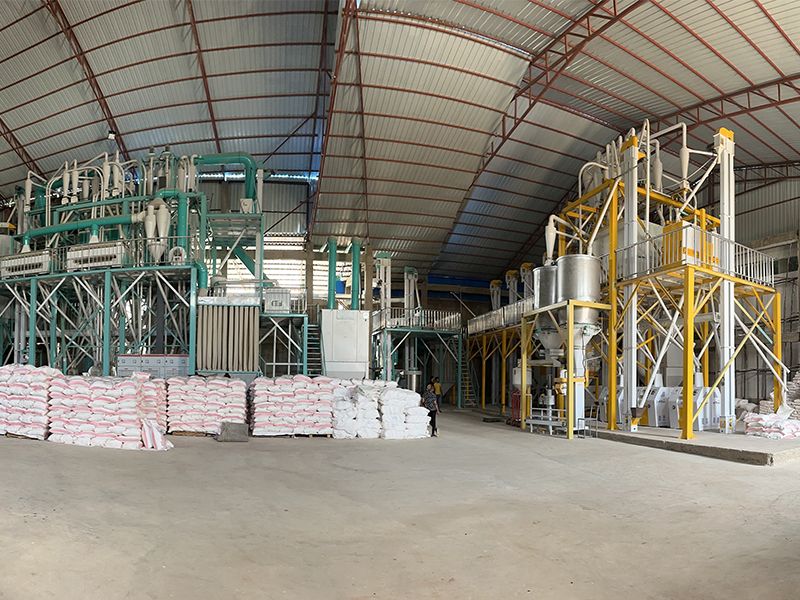
Choosing between a 40-50TPD Wheat Flour Mill Plant and a 50-60TPD Wheat Flour Mill Plant is not simply a matter of selecting the larger number. The right choice depends on wheat supply, flour demand, power reliability, warehouse space, labor costs, financing capacity, and the buyer's ability to sell the daily output.
Buyers researching this topic usually want more than a basic capacity comparison. They want to know how much wheat each plant can process in actual operation, whether the equipment can run continuously, how sensitive it is to wheat quality, how much power and labor it requires, and which option is less risky for their market.

A 40-50TPD plant is generally designed to process approximately 40 to 50 metric tons of wheat within 24 hours under suitable operating conditions. A 50-60TPD plant normally targets approximately 50 to 60 metric tons per day.
Actual production may be lower than the rated figure because of wheat hardness, moisture content, impurity levels, product specifications, cleaning frequency, operator skill, and planned working hours. A plant that is rated at 50TPD may not produce 50 tons of finished flour every day if the wheat has high moisture or the mill is operated for only one shift.
Before selecting equipment, the buyer should estimate how much flour can be sold consistently. Unsold flour creates storage pressure, cash flow problems, packaging costs, and quality risks. A larger mill only creates a financial advantage when its extra output can be sold at a profitable margin.
A 40-50TPD Wheat Flour Mill Plant may be more suitable when the buyer is entering the market, has a developing distribution network, or wants to control investment risk. A 50-60TPD plant may be more suitable when the buyer already has reliable wheat suppliers and stable customers who can absorb the additional production.
In practice, steady operation at 45TPD can be more profitable than irregular operation at 60TPD. Continuous utilization improves labor productivity, equipment stability, flour consistency, and return on investment.
The following table provides a planning-level comparison. Exact values vary according to flour grade, wheat variety, automation level, cleaning system, brand of motor, local voltage, and the final process design.
| Parameter | 40-50TPD Wheat Flour Mill Plant | 50-60TPD Wheat Flour Mill Plant |
|---|---|---|
| Nominal wheat processing capacity | Approximately 40 to 50 metric tons per 24 hours | Approximately 50 to 60 metric tons per 24 hours |
| Typical finished flour output | Approximately 28 to 38 metric tons per day, depending on extraction rate and product mix | Approximately 35 to 46 metric tons per day, depending on extraction rate and product mix |
| Typical flour extraction range | Approximately 70% to 78% for common commercial flour programs | Approximately 70% to 78% for common commercial flour programs |
| Daily bran and by-product output | Approximately 10 to 15 metric tons, depending on wheat and extraction settings | Approximately 12 to 18 metric tons, depending on wheat and extraction settings |
| Recommended operating pattern | One long shift or two moderate shifts | Two shifts or extended daily operation |
| Approximate installed power | Often about 90 to 160 kW, subject to design | Often about 120 to 200 kW, subject to design |
| Land and building requirement | Moderate footprint with lower storage demand | Larger footprint with greater cleaning, storage, and packing requirements |
| Staffing requirement | Generally lower, especially with centralized control | Generally higher because of increased material flow and packing volume |
| Investment level | Lower initial equipment and supporting infrastructure cost | Higher equipment, electrical, building, and working capital cost |
| Best fit | Growing markets, regional mills, and cautious first-time investors | Established distributors, large bakeries, and high-demand regional markets |
Both plant scales can produce commercial flour with suitable whiteness, ash content, moisture, particle size, and extraction rate when the cleaning, conditioning, milling, sifting, and pneumatic conveying systems are properly configured.
A larger plant is not automatically better at flour quality. It may provide more flexibility and higher output, but poor roller adjustment, unstable feeding, inadequate wheat conditioning, or overloaded sifters can reduce quality in either size category.
Buyers should not compare only the motor nameplate power. The complete electrical requirement includes main motors, fans, elevators, compressors, dust collection equipment, conveyors, packing machines, lighting, and control systems.
For areas with unstable electricity, a smaller plant may be easier to protect with a properly sized generator. A larger plant can still be practical, but the backup power system must be designed for the actual operating load instead of only the average load.
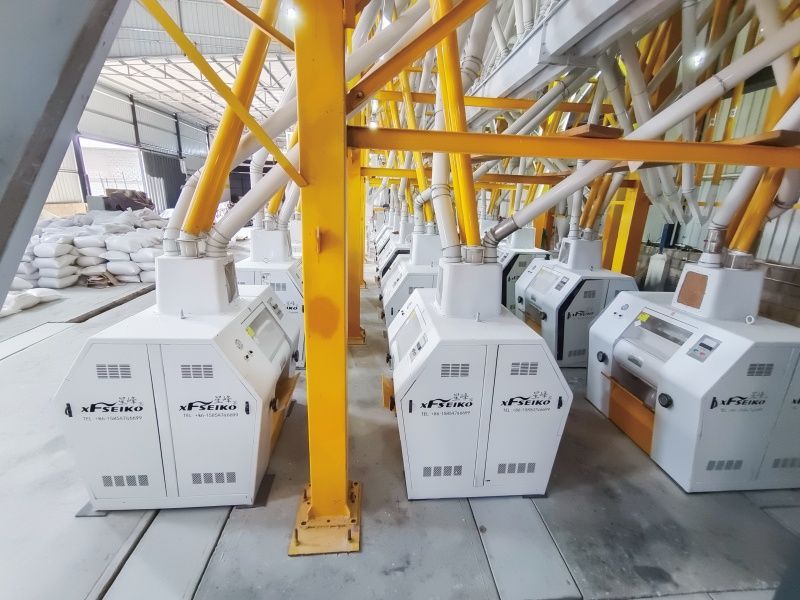
In daily use, a 40-50TPD plant usually has lower material flow and fewer simultaneous operating points. This makes it easier for a small team to monitor wheat feeding, cleaning, roller pressure, sifter loading, flour collection, and packing.
New operators can often identify abnormal noise, blocked pipes, excessive bran carryover, or inconsistent flour flow more quickly because the system is less complex. This can reduce the time needed for commissioning and routine troubleshooting.
A 50-60TPD plant can produce more flour with a similar basic process structure. When customer demand is reliable, the higher throughput can reduce the average labor and management cost per ton.
The larger scale also gives the operator more room to separate flour streams, handle multiple wheat batches, and supply several customer categories. However, the benefit appears only when the plant has enough wheat, storage, power, labor, and orders to keep the system loaded.
Both sizes require stable feeding. Sudden changes in wheat flow can affect grinding pressure, sifter loading, flour particle size, and extraction rate. The larger plant generally has more equipment operating at the same time, so a small feeding problem can influence more production points.
During commissioning, operators should record the following information for each shift:
Unlike a battery-powered product, a wheat flour mill plant does not operate on battery life. The relevant issue is power continuity. Buyers should evaluate generator endurance, fuel storage, automatic transfer equipment, control system backup, and protection against voltage fluctuation.
If the mill uses a backup generator, the practical question is how many operating hours the generator can support at the plant's actual load. A plant with a stable electrical supply may not need a large backup system, while a plant in an area with frequent outages may require additional investment before production can be considered reliable.
A 40-50TPD Wheat Flour Mill Plant generally requires less spending on milling equipment, steel structures, electrical systems, elevators, packing lines, building space, and initial inventory. It can also reduce the amount of working capital tied up in wheat and finished flour.
This lower entry cost can be valuable for investors who want to test a regional market before expanding. It also gives the owner more flexibility to invest in quality control, packaging, distribution, or a backup power system.
A 50-60TPD plant may require additional investment in the following areas:
The 50-60TPD plant may have a lower cost per ton when it operates close to full capacity. However, a plant operating at 60% utilization may have a higher cost per ton than a smaller plant operating at 90% utilization.
A practical return calculation should include:
Bran and other milling by-products may be sold to feed mills, livestock farms, or local traders. Buyers should confirm the local selling price and transport cost before assuming that by-products will provide a large additional margin.
A larger plant produces more by-products, but it also requires a reliable outlet. If bran accumulates because local buyers cannot absorb it, storage and handling problems can reduce the advantage of higher capacity.
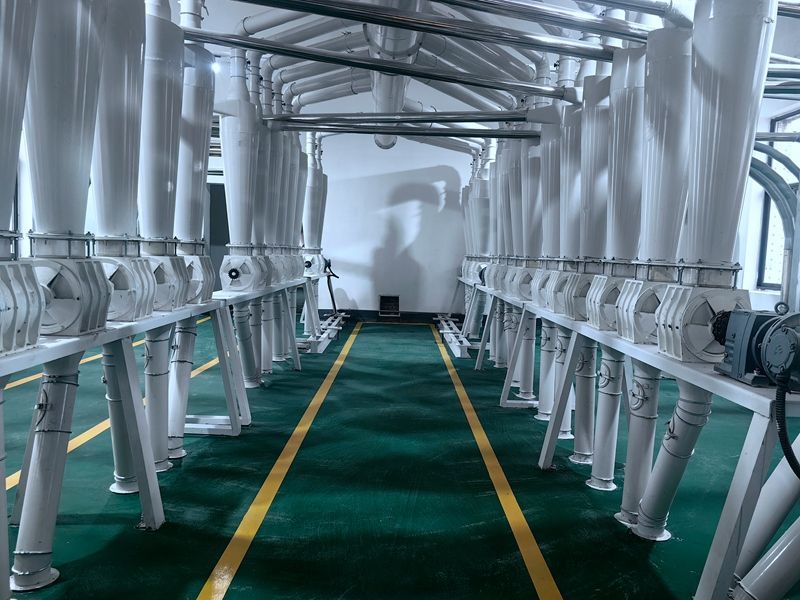
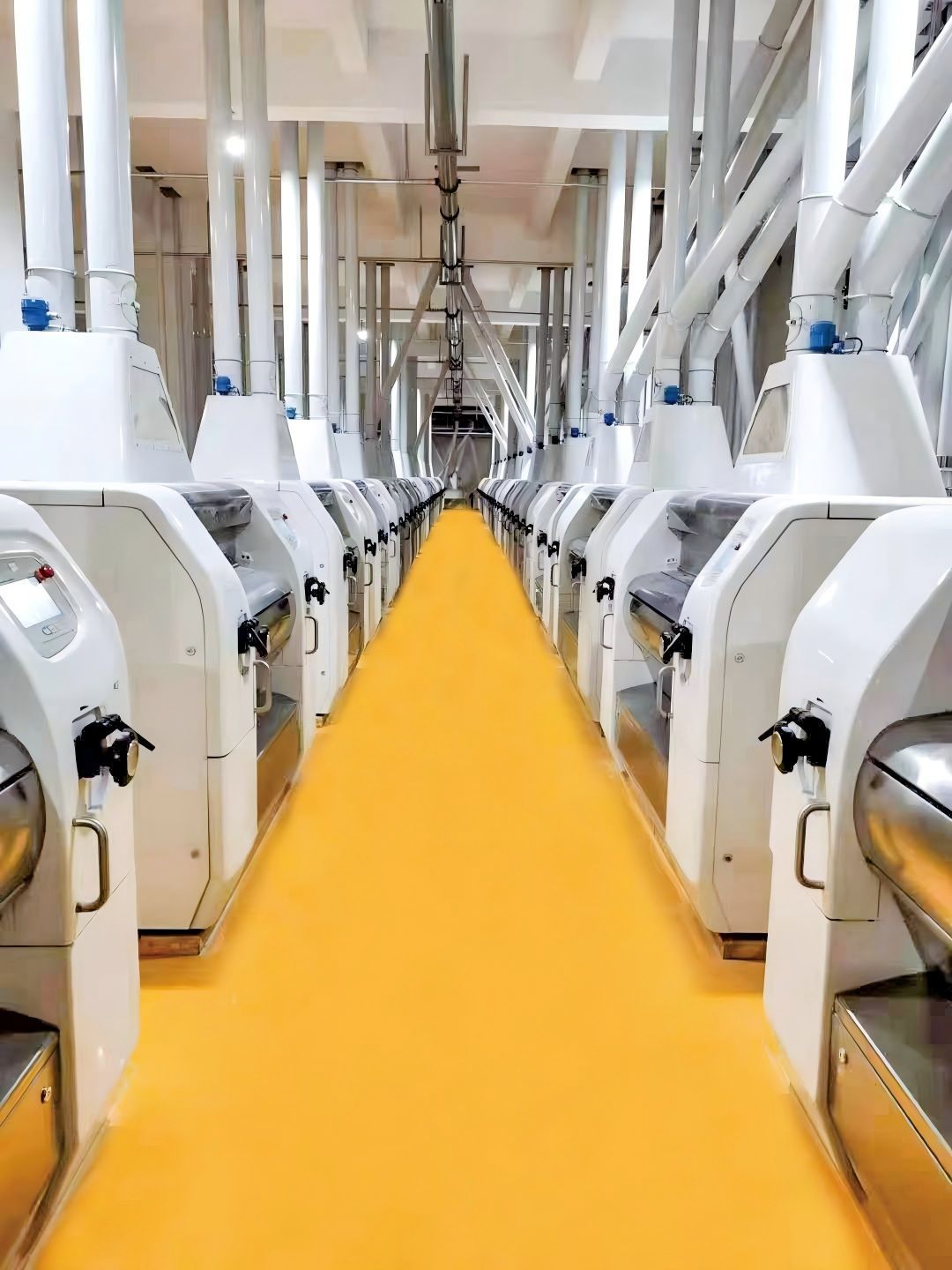
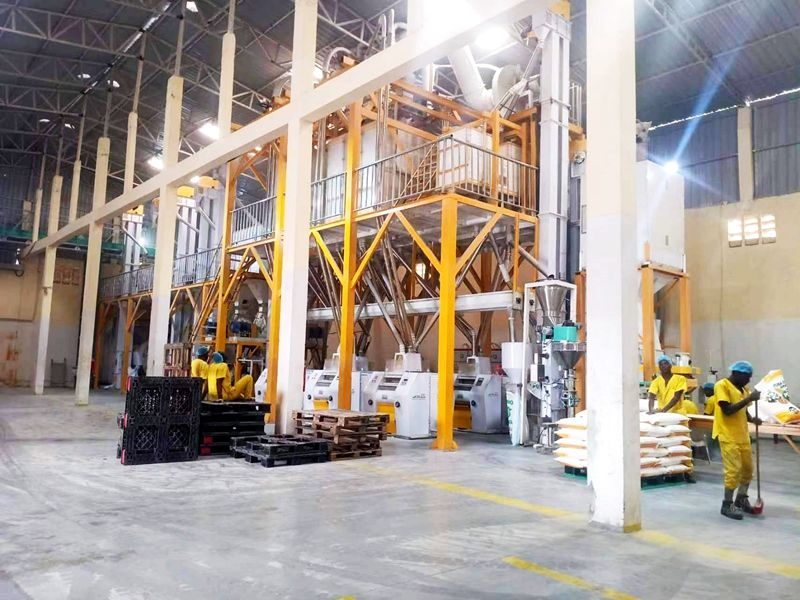
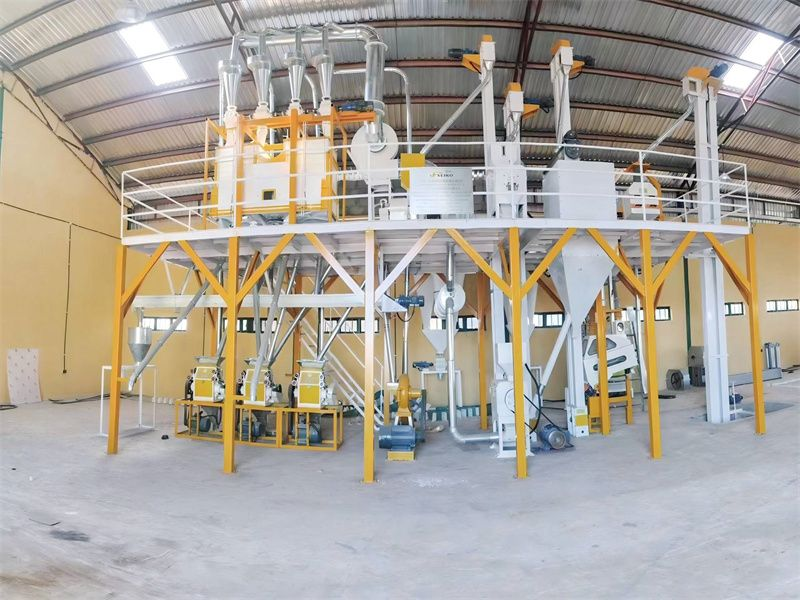
Both plant sizes require a logical flow from wheat receiving to cleaning, conditioning, milling, sifting, flour storage, packing, and dispatch. The building should allow raw materials and finished products to move without unnecessary crossing or manual lifting.
A basic workflow includes:
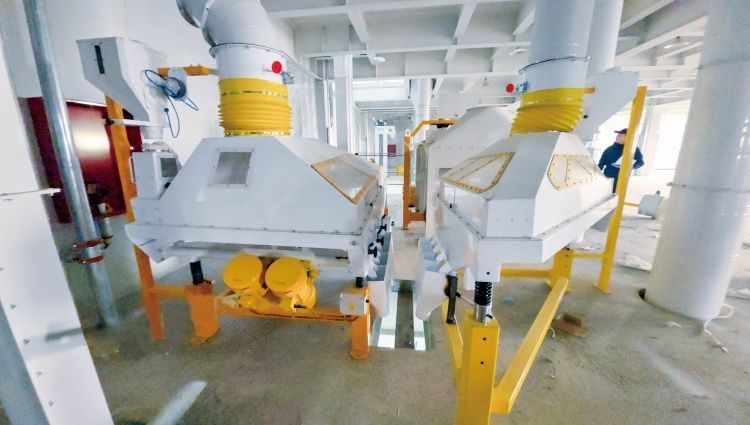
At 50-60TPD, the increased flow rate can expose weaknesses in elevator capacity, pipe design, bin discharge, dust control, and packing logistics. A small bottleneck can stop the whole line even when the milling section itself has enough capacity.
The building design should provide:
A 50-60TPD plant can fill a warehouse quickly if flour is not dispatched every day. Buyers should calculate the storage requirement for wheat, flour, packaging materials, and bran separately.
Where warehouse space is limited, the 40-50TPD option may provide better operational control. Where the buyer has a strong distribution network and frequent truck dispatches, the larger plant can use its higher output more effectively.
Wheat flour milling equipment operates under continuous dust and mechanical load. Preventive maintenance is more economical than waiting for a breakdown that interrupts production and damages customer confidence.
Because a 50-60TPD plant may contain more motors, fans, conveyors, sifters, and control points, the cost of an unplanned stop can be higher. The owner should establish a spare parts inventory before commercial production begins.
When comparing suppliers, ask about technical training, remote support, commissioning assistance, maintenance manuals, recommended spare parts, and response time for service requests. These items can have a greater effect on actual uptime than a small difference in the equipment purchase price.
Automatic control can improve feeding consistency, reduce manual adjustment, and provide alarms for abnormal conditions. It does not replace the need for operators who understand wheat conditioning, roller adjustment, sifter balance, moisture control, and product inspection.
A smaller plant may be manageable with a compact team, while a larger plant usually benefits from dedicated personnel for production control, quality inspection, packing, maintenance, and warehouse management.
A 40-50TPD Wheat Flour Mill Plant is usually a practical fit for:
This option is particularly reasonable when confirmed demand is close to 30 to 40 tons of wheat processing per day and future growth is expected to be gradual.
A 50-60TPD Wheat Flour Mill Plant is generally a better fit for:
This option becomes more attractive when confirmed demand can absorb at least 45 to 50 tons of wheat processing per day and the buyer has enough working capital to operate through price and seasonal fluctuations.
When demand is uncertain but future growth is promising, the buyer can discuss a staged design with the supplier. The first stage may focus on a 40-50TPD processing line with building space, electrical capacity, and material handling provisions for a later upgrade.
Expansion planning should be discussed before the foundation and building are completed. The buyer should confirm whether future expansion would require replacing the plansifter, elevators, cleaning machines, control cabinet, or packing system.
Capacity statements can refer to wheat input, finished flour output, or theoretical machine throughput. These terms are not identical. The quotation should clearly state the basis of the capacity calculation.
The buyer should request the equipment list, process flow diagram, foundation drawing, elevation drawing, power list, air requirement, water requirement, and recommended building dimensions. These documents allow the buyer to compare complete projects instead of comparing only the price of individual machines.
Wheat quality strongly affects cleaning difficulty, conditioning time, flour color, extraction rate, energy use, and roller settings. A supplier should receive representative wheat samples or detailed laboratory data when preparing the process design.
The buyer should define the required flour properties, including:
Price is important, but the purchasing group should also compare process design quality, equipment materials, motor efficiency, control system reliability, commissioning support, operator training, spare parts availability, and after-sales service.
Xingfeng can be evaluated as part of this broader comparison by asking for a customized process proposal, complete technical parameters, equipment layout, expected power demand, commissioning plan, and references for similar wheat processing projects. The purpose is to confirm that the proposed 40-50TPD Wheat Flour Mill Plant or 50-60TPD Wheat Flour Mill Plant matches the buyer's wheat, market, building, and utility conditions.
The 40-50TPD option is usually more suitable when capital is limited, demand is still being developed, power supply is restricted, or the buyer wants a simpler operation. It can provide a stable foundation for building a customer network and learning the local flour market.
The 50-60TPD option is usually more suitable when the buyer has confirmed sales, reliable wheat procurement, sufficient storage, stable utilities, and the personnel needed for continuous operation. Its additional capacity can improve revenue and cost efficiency when the line is kept busy.
As a general decision rule, choose the 40-50TPD Wheat Flour Mill Plant when expected average utilization is below the larger plant's safe operating level or when the project is still testing the market. Choose the 50-60TPD plant when the buyer can support high utilization from the start and has a clear plan for selling both flour and by-products.
The most reliable project is not necessarily the largest one. It is the plant that can receive suitable wheat, operate safely and steadily, produce the required flour quality, and sell its output every day. With a complete process evaluation and realistic demand forecast, buyers can work with Xingfeng to select the scale that offers the best balance between investment, stability, flexibility, and long-term growth.
< Previous: None
> Next: Semi-Automatic vs Fully Automatic Wheat Flour Milling Lines

August. 08, 2024
How to Use Wheat Flour Mill Plant Correctly?
This article provides a comprehensive guide on how to use a wheat flour mill plant correctly.

March. 03, 2026

June. 06, 2025

January. 01, 2024

July. 07, 2024